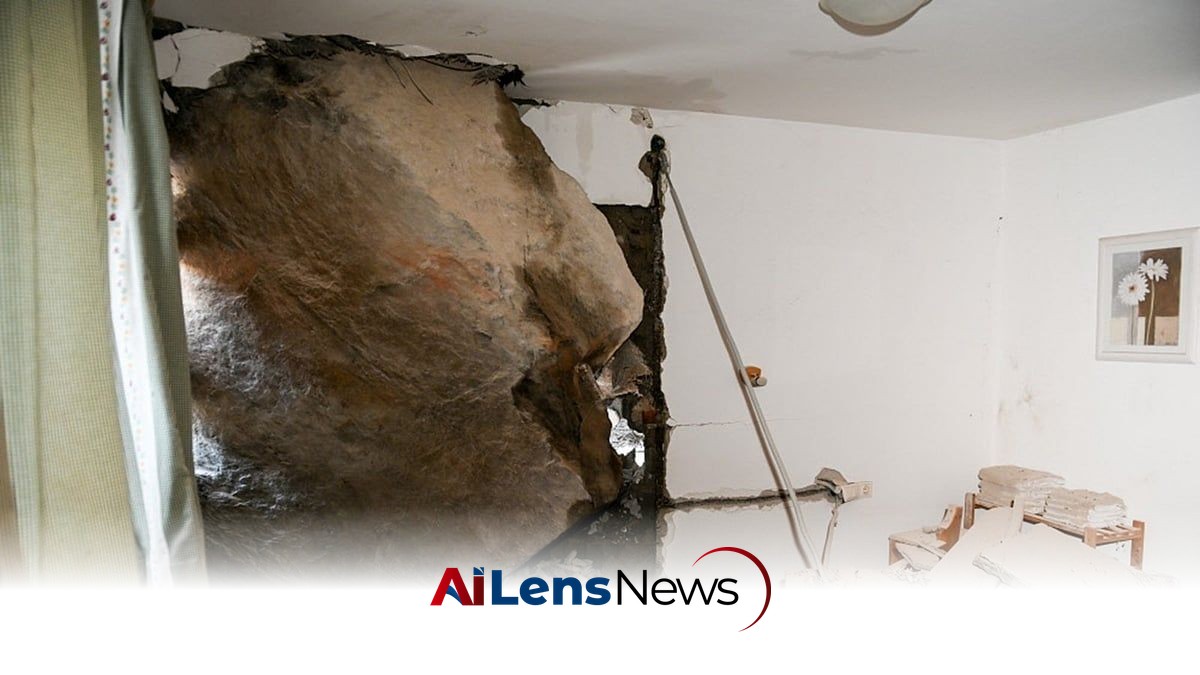


A massive boulder rolled down a hillside and crashed into a residential building in Guwahati's Odalbakra area, causing significant damage but no injuries.
New Delhi, India Jul 16, 2026 ALN: Guwahati: A residential building in Guwahati's Odalbakra area was damaged after a massive boulder rolled down a hillside and crashed into the structure on Wednesday evening. Fortunately, no injuries were reported, as the family living in the house managed to escape unharmed.
The incident occurred at House No. 13A on Bishnu Rabha Path, owned by Ratan Das. The huge boulder is believed to have become dislodged from higher ground after a landslide before crashing into the house, causing extensive structural damage. Landslides are not uncommon in hilly regions, especially during the monsoon season when heavy rainfall can saturate the soil and destabilize slopes. The region's geography, characterized by steep hills and valleys, makes it particularly vulnerable to such natural disasters.
Upon receiving information about the incident, the local Circle Officer and officials from the concerned departments rushed to the site to assess the situation. This rapid response is crucial in such emergencies, as it allows for a quicker evaluation of the damage and the implementation of necessary safety measures to protect surrounding residents. The presence of local authorities is vital not only for immediate damage control but also for reassuring the community that their safety is a priority.
However, rescue and clearance operations were hampered by logistical challenges, as the narrow approach road to the affected property prevented Fire and Emergency Services vehicles from reaching the site. The restricted access temporarily delayed efforts to remove the debris and secure the damaged area. Such challenges highlight the need for improved infrastructure in vulnerable areas, particularly in regions prone to natural disasters. The incident raises questions about the adequacy of existing infrastructure to handle emergency situations effectively, emphasizing the importance of urban planning that considers both current and future risks.
Police then began assessing the extent of the damage as well as the stability of the surrounding hillside. This assessment is vital not only for ensuring the safety of the affected family but also for determining the risk to neighboring properties. The potential for further landslides or rockfalls in the area is a significant concern, especially if the slope remains unstable due to prevailing weather and ground conditions. Local authorities must consider these factors when evaluating the safety of the area and deciding on any necessary evacuations or further safety measures.
The incident brings to light the broader issue of landslides in hilly terrains, which can be exacerbated by human activities such as deforestation, unplanned construction, and poor land management practices. In many parts of India, including Assam, rapid urbanization has led to increased pressure on natural landscapes, making them more susceptible to geological hazards. This has raised questions about the adequacy of building regulations and enforcement in areas that are at risk of such disasters. The intersection of urban development and environmental sustainability is a pressing issue, requiring a more integrated approach to land use planning that prioritizes safety and ecological balance.
In the aftermath of the incident, the Guwahati Municipal Corporation (GMC) and the state government are expected to implement appropriate mitigation measures to reduce the risk of further landslides or rockfalls. These measures may include re-evaluating land use policies, reinforcing unstable slopes, and improving drainage systems to manage water runoff effectively during heavy rains. Additionally, public awareness campaigns about the risks associated with living in landslide-prone areas could help residents make informed decisions regarding their safety and property. Education and community engagement will be essential in fostering a culture of preparedness and resilience among residents.
Local authorities may also consider conducting geological surveys in the region to identify other areas at risk and develop a comprehensive disaster management plan. Such plans would ideally include not only immediate response strategies but also long-term solutions that address the root causes of landslides and promote sustainable development practices. Collaboration with geological experts and environmental scientists could provide valuable insights into the area's geology and help formulate effective risk mitigation strategies.
As residents recover from this incident, it serves as a reminder of the importance of preparedness in the face of natural disasters. Communities in hilly regions should be encouraged to engage in regular safety drills, establish communication plans, and stay informed about weather forecasts and potential hazards. This proactive approach can significantly reduce the risks associated with landslides and enhance community resilience. Additionally, fostering a sense of community solidarity can ensure that residents support one another during emergencies, sharing information and resources effectively.
In conclusion, while the immediate crisis has been managed without loss of life, the incident in Odalbakra underscores the ongoing challenges faced by communities in hilly areas. As climate change continues to impact weather patterns and increase the frequency and intensity of extreme weather events, the need for effective risk management strategies becomes ever more critical. Collaboration among government agencies, local communities, and environmental experts will be essential in creating safer living conditions and minimizing the impact of future geological hazards. The integration of technology, such as early warning systems and real-time monitoring of geological conditions, could further enhance preparedness and response capabilities in vulnerable regions.
To learn more about the latest developments in Local & Regional, stay updated with our exclusive reports and analyses on AiLensNews.

