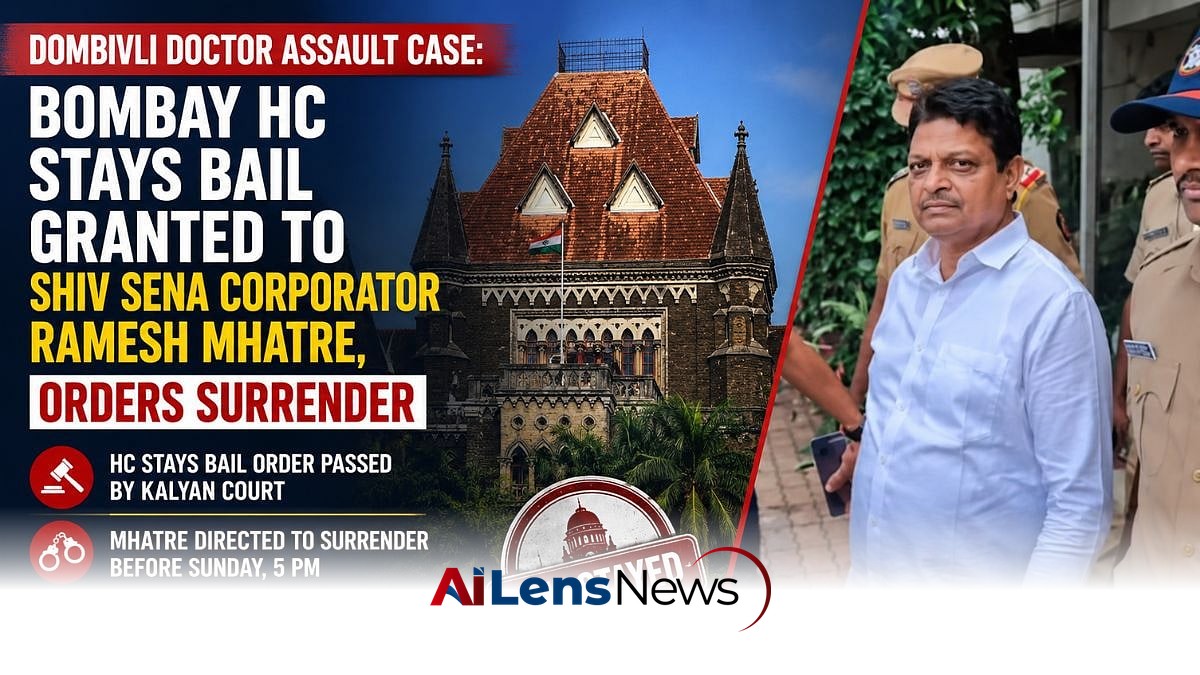


The Bombay High Court has ordered Shiv Sena corporator Ramesh Mhatre to surrender in a case involving the assault of doctors, citing serious concerns over the bail granted to him.
New Delhi, India Jul 18, 2026 ALN: In a special sitting on Saturday, the Bombay High Court stayed the bail granted by the Kalyan court to Shiv Sena Corporator Ramesh Mhatre, who was arrested for assaulting doctors at a municipal hospital. This decision underscores the court's concern regarding the safety of medical professionals and the ongoing issues surrounding violence against healthcare workers in India.
The incident that led to Mhatre's arrest reportedly took place at a municipal hospital where he and his associates allegedly assaulted doctors during a dispute over medical services. Such incidents have become increasingly common in India, raising alarms about the treatment of healthcare professionals who are often on the frontlines of patient care, especially during crises like the COVID-19 pandemic.
HC Stays Bail Order
The bench of Acting Chief Justice Ravindra Ghuge and Justice Gautam Ankhad took suo motu cognizance of news reports regarding an order passed by a Magistrate court in Kalyan granting bail to Mhatre. This proactive measure by the High Court reflects a judicial recognition of the need to protect public servants, particularly those involved in health care, from violence and intimidation.
“Considering the gravity and seriousness of the issue and the perversity noticed in the impugned orders dated 14.07.2026 and 17.07.2026, both the orders stand stayed and shall be kept in abeyance until further hearing and orders,” the bench stated. The court directed Mhatre to surrender to the Vishnunagar Police Station in Dombivli (West) by Sunday at 5 pm, emphasizing the need for him to be kept in magisterial custody until the matter is resolved.
The High Court further specified that in the event Mhatre does not surrender or is not traceable, the authorities would be at liberty to follow due procedures, including initiating steps for attaching his immovable properties. This indicates the court's intent to ensure compliance with its orders and to send a strong message regarding accountability.
Court Notes Criminal Record
In its order, the High Court noted the past 18 crimes registered against Mhatre, including grave offences involving physical assault, despite his acquittal in 17 of them. This history raises significant concerns about his behavior and the potential risk he poses to the community, particularly in light of the current allegations of violence against medical professionals.
The suo motu plea will now be heard on Tuesday, July 21, reflecting the court's commitment to addressing the issue promptly. The implications of this case extend beyond Mhatre himself, as it highlights the broader societal issue of violence against healthcare workers, which has been a growing concern in India.
Doctors Announce Protest
In response to the initial granting of bail to Mhatre, doctors across Maharashtra announced that they would abstain from work on July 22. This planned protest underscores the collective frustration and anger among medical professionals regarding the lack of protection and respect for their work. The move to strike is seen as a necessary step to advocate for their safety and to call for stronger legal protections against violence in healthcare settings.
The decision to strike is significant, as it reflects a unified stance by the medical community in Maharashtra, which has faced increasing threats and violence in recent years. The COVID-19 pandemic exacerbated these issues, with many healthcare workers reporting harassment and violence from patients and their families due to frustrations over treatment and hospital policies.
Healthcare professionals argue that such violence not only impacts their ability to provide care but also deters individuals from pursuing careers in medicine. The protests are expected to draw attention to the urgent need for legislative changes to protect healthcare workers and ensure that those who commit acts of violence against them are held accountable.
In recent years, there have been calls for stricter laws to protect doctors and healthcare professionals from violence, with various states in India considering or implementing measures aimed at curbing such incidents. However, the effectiveness of these laws has often been questioned, and many in the medical community feel that more needs to be done to ensure their safety.
The Bombay High Court's decision to stay Mhatre's bail could serve as a catalyst for further discussions about the safety of healthcare workers and the legal frameworks that govern their protection. As the case progresses, it may prompt lawmakers and the public to reflect on the treatment of medical professionals and the societal attitudes toward violence in healthcare settings.
Healthcare workers have increasingly voiced their concerns regarding the lack of adequate measures to safeguard them while performing their duties. Reports of physical assaults, verbal abuse, and threats have surged, prompting calls for comprehensive reforms in how such incidents are addressed legally and socially. The medical community, through various associations and unions, has been advocating for a zero-tolerance policy towards violence against healthcare professionals.
In response to the alarming trend of violence, some states have enacted specific laws aimed at protecting healthcare workers. For instance, the Maharashtra government had previously passed the Maharashtra Medicare Service Persons and Medicare Service Institutions (Prevention of Violence and Damage to Property) Act, which aims to deter violence against medical professionals by prescribing stringent penalties for offenders. Despite these legislative efforts, the enforcement of such laws remains a challenge, and many healthcare professionals feel that the measures in place are insufficient.
Moreover, the cultural perception of healthcare workers in India plays a significant role in how violence against them is viewed and addressed. In many instances, patients and their families, under stress and anxiety, may lash out at healthcare providers, often viewing them as scapegoats for systemic failures within the healthcare infrastructure. This societal attitude can perpetuate a cycle of violence and intimidation, making it imperative for both legal and educational initiatives to reshape public perceptions of medical professionals.
As the case against Mhatre unfolds, it may also serve as an opportunity for the government and health authorities to engage in dialogue with medical associations to develop more robust strategies for protecting healthcare workers. This could include increased security measures in hospitals, better training for staff on handling aggressive behavior, and public awareness campaigns to educate the community about the invaluable role healthcare workers play in society.
In conclusion, the stay of bail for Ramesh Mhatre by the Bombay High Court is a significant development in a case that highlights the ongoing issue of violence against healthcare professionals in India. The upcoming hearings will be closely watched, not only for their implications for Mhatre but also for the broader message they send about the treatment of those who dedicate their lives to caring for others. The planned protests by doctors across Maharashtra further emphasize the urgent need for action to protect healthcare workers and ensure that they can perform their duties without fear of violence or intimidation. As society grapples with these critical issues, the hope is that this case will catalyze meaningful change and foster a safer environment for those who are essential to public health.
To learn more about the latest developments in Crime & Law, stay updated with our exclusive reports and analyses on AiLensNews.

