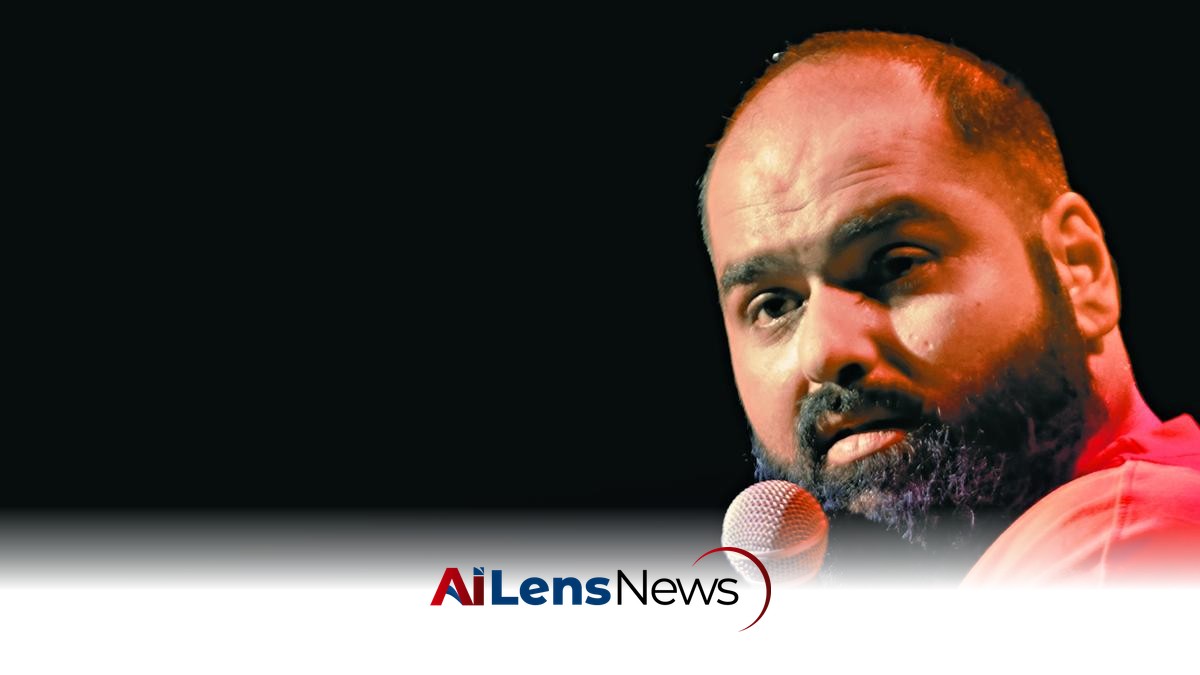


The Bombay High Court has directed the Union government to respond to Kunal Kamra's petition challenging the censorship rules of the Sahyog Portal.
New Delhi, India Jul 16, 2026 ALN: The Bombay High Court has recently taken a significant step in addressing a legal challenge posed by well-known stand-up comedian Kunal Kamra against the Indian government's 'Sahyog Portal'. This directive from the court requires the Union government to file an affidavit in response to Kamra's petition, which questions the constitutional validity of the portal and the associated amendments to the Information Technology (IT) Rules.
Kunal Kamra, who has gained notoriety for his outspoken views and satirical comedy that often critiques political figures and policies, filed this petition earlier in February. His challenge centers on the Sahyog Portal, which was launched in 2024 by the Union Ministry of Electronics and Information Technology. The portal is designed to facilitate the blocking of online content deemed objectionable by the government. Kamra's primary contention is that this system serves as a mechanism for online censorship, undermining the rights to free speech and expression that are guaranteed under Article 19(1)(a) of the Indian Constitution.
The crux of Kamra's argument lies in the amended IT Rules, which mandate that social media platforms and online intermediaries must remove any content identified as objectionable within a stringent 36-hour timeframe. This provision, according to Kamra, enables the government to order the removal of content without providing adequate safeguards or due process. His counsel, Navroz Seervai, emphasized the importance of the matter before the division bench comprising Acting Chief Justice Ravindra Ghuge and Justice Gautam Ankhad. Seervai expressed concern that, despite the court's previous orders for the government to submit its affidavit, there had been no compliance to date, which raises questions about the government's commitment to transparency and accountability in matters of free speech.
In response to the court's directive, Additional Solicitor General Anil Singh, representing the Centre, assured that the affidavit would be submitted by July 29. The court subsequently scheduled the next hearing for August 14, indicating its intent to resolve the matter expediently. This legal confrontation over the Sahyog Portal is not merely a personal issue for Kamra but reflects broader concerns regarding digital rights and freedom of expression in India, especially in the context of increasing government scrutiny over online content.
The Sahyog Portal, as described in Kamra's plea, allows for what he terms "unilateral takedown" of online content, which he argues violates the principles of natural justice. Natural justice encompasses the right to be heard and the right to a fair trial, principles that are foundational to democratic governance. By enabling the government to block content without prior notice or an opportunity for the content creator to respond, the portal effectively sidelines these principles. Furthermore, the lack of a requirement for the government to provide a reasoned order before blocking content raises significant legal and ethical questions.
Kamra's plea also highlights the implications of the amended IT Rules as a potential infringement on fundamental rights. The argument posits that these changes may lead to a chilling effect on free speech, where individuals and creators might self-censor their content out of fear of government retribution or censorship. This is particularly concerning in a democratic society where free expression is essential for the healthy functioning of public discourse.
The Sahyog Portal's operations and the amended IT Rules must be viewed in the context of India's broader digital landscape. In recent years, there has been an increasing trend of government regulation over digital platforms, often justified by the need to combat misinformation, hate speech, and other forms of harmful content. However, critics argue that such measures can be misused to suppress dissent and curtail public debate. The balance between protecting citizens from harmful content and preserving the right to free expression is a delicate one, and it is at the heart of Kamra's legal challenge.
The implications of this case extend beyond Kamra's individual circumstances. A ruling in favor of Kamra could set a precedent that reinforces the protection of free speech in the digital age, ensuring that any government action to restrict online content is subject to rigorous scrutiny and due process. Conversely, a ruling that upholds the government's actions could embolden further regulatory measures that may infringe upon civil liberties.
As the case progresses, it will be essential to monitor not only the legal arguments presented but also the public response and the potential ramifications for online content creators and consumers alike. The outcome could influence how similar cases are handled in the future and may contribute to the ongoing discourse about the role of government in regulating digital spaces.
In conclusion, the Bombay High Court's order for the Union government to respond to Kunal Kamra's plea against the Sahyog Portal marks a critical moment in the intersection of technology, law, and free speech in India. As digital platforms continue to evolve, the legal frameworks governing them must also adapt to ensure that fundamental rights are upheld while also addressing legitimate concerns about harmful online content. The forthcoming hearings will be pivotal in shaping the future of digital rights in India and ensuring that the balance between regulation and freedom is maintained.
To understand the broader implications of this case, it is essential to consider the historical context of free speech in India. The Indian Constitution, adopted in 1950, enshrines the right to freedom of speech and expression as a fundamental right. However, this right is not absolute and is subject to reasonable restrictions under certain circumstances, such as security, public order, and decency. Over the years, the interpretation and application of these restrictions have evolved, often leading to contentious debates about the limits of free speech.
In recent years, the rise of social media and digital platforms has transformed the landscape of communication, making it easier for individuals to express their opinions and share information. However, this democratization of speech has also led to challenges, as governments worldwide grapple with the spread of misinformation and harmful content. In India, the government has implemented various measures to regulate online platforms, citing the need to protect citizens from hate speech, fake news, and other forms of harmful content. Critics argue that these measures often disproportionately target dissenting voices and stifle legitimate criticism of the government.
The Sahyog Portal is emblematic of this ongoing tension between regulation and free expression. By providing a mechanism for the government to block content deemed objectionable, the portal raises concerns about the potential for abuse of power and the erosion of democratic principles. Kamra's challenge is not just about his personal freedom to express himself but also about the broader implications for all citizens who engage with digital platforms.
Moreover, the case reflects a growing awareness among citizens and activists about the importance of safeguarding digital rights. As more individuals rely on online platforms for communication, activism, and business, the need for robust protections for free speech becomes increasingly urgent. The outcome of Kamra's petition could galvanize public opinion and mobilize efforts to advocate for clearer guidelines and protections for online expression.
In light of the evolving digital landscape, it is crucial for lawmakers and regulators to engage in meaningful dialogue with stakeholders, including civil society, technology companies, and content creators. This engagement is essential to strike a balance between protecting individuals from harmful content and ensuring that the fundamental right to free speech is preserved. The legal principles established in this case could serve as a foundation for future legislation and regulatory frameworks, shaping the way digital rights are understood and protected in India.
As the Bombay High Court prepares to hear the case, the eyes of the nation will be on the proceedings. The implications of this legal battle extend far beyond the Sahyog Portal; they touch upon the very fabric of democracy in India and the future of free expression in the digital age. The court's decision will not only impact Kamra but could resonate with countless individuals who rely on digital platforms to voice their opinions and engage in public discourse. In this era of rapid technological advancement, the need for a legal framework that upholds democratic values while addressing the challenges of the digital age has never been more critical.
To learn more about the latest developments in Crime & Law, stay updated with our exclusive reports and analyses on AiLensNews.

