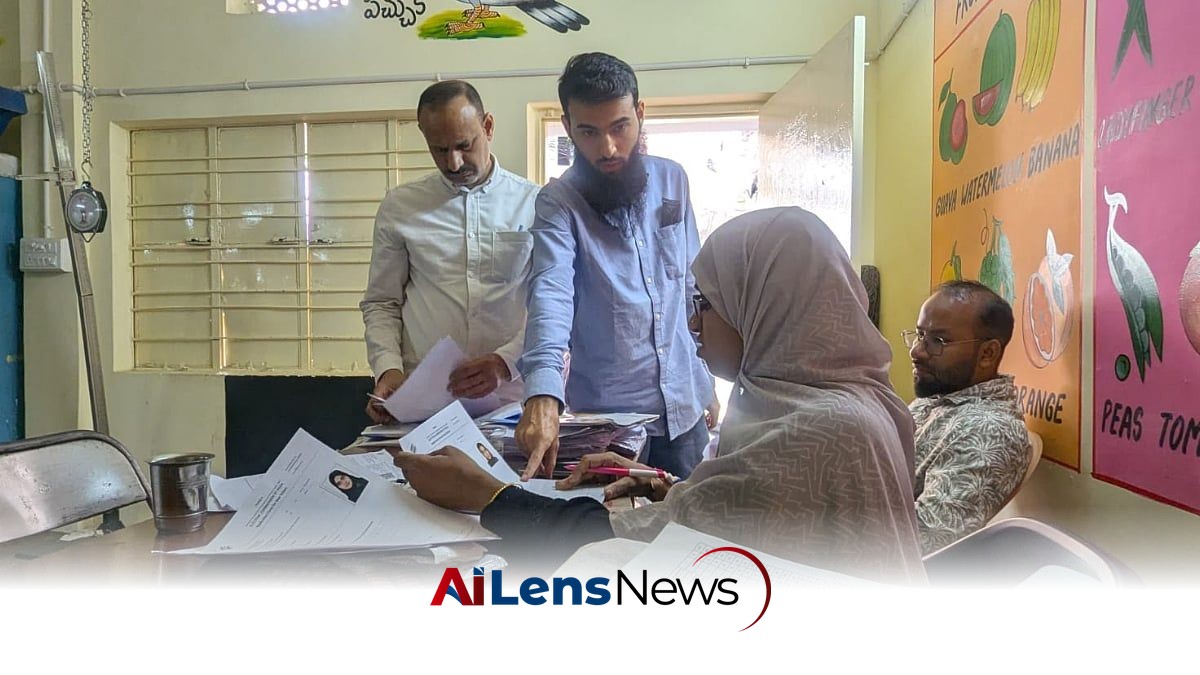


Booth Level Officers in Bengaluru and Hyderabad face intense pressure and exhaustion as they manage the electoral roll revision process, highlighting systemic issues.
New Delhi, India Jul 16, 2026 ALN: Booth Level Officers (BLOs) in Bengaluru and Hyderabad are grappling with an overwhelming workload as they undertake the crucial task of revising electoral rolls. The pressure has led to physical exhaustion and calls for an extension of deadlines to complete their work.
Parveen Begum, an Accredited Social Health Activist (ASHA) and BLO, recounts her daily struggles. "Please give me a couple of minutes, my hand hurts," she tells a couple seated across from her at the Anganwadi centre in Hyderabad's Baggikhana slum. The table is cluttered with enumeration forms, a testament to her relentless efforts. This scenario is not unique to Parveen but reflects the broader challenges faced by BLOs across the two cities, who are tasked with ensuring that electoral rolls are accurate and up-to-date.
"I must have filled around 40 forms today. Yesterday it was 57," she adds, illustrating the demanding nature of her role. For the past three weeks, this has been her routine as she assists in the Election Commission's Special Intensive Revision (SIR) of electoral rolls. This intensive revision is crucial for maintaining the integrity of the electoral process, ensuring that all eligible voters are registered and that the rolls reflect current residency and status.
Before the enumeration began, Parveen spent nearly two months on a pre-SIR mapping exercise in Telangana, verifying records against the 2002 electoral rolls. This mapping exercise is a critical component of the electoral process, as it helps identify discrepancies and ensures that the data being used is accurate. As the SIR enters its final stretch, the workload for BLOs has intensified, with many expressing that the timelines set by the Election Commission are unrealistic. The pressure of these deadlines not only affects their physical health but also their mental well-being, as they juggle multiple tasks under significant stress.
'Distributing forms was only half the work'
Assigned to a polling station in Hyderabad's Khairtabad Assembly constituency, Parveen is responsible for around 1,200 registered voters. She has distributed forms to nearly every household, but the work doesn't stop there. "With SIR ending in 10 days, I have to fill out many forms because people are unable to do it themselves," she explains. The demands of her role keep her working late into the night, often sacrificing personal time and rest to meet the requirements of her job.
Her phone rings incessantly with calls from concerned residents about their voter IDs and the mapping process. This constant communication highlights the vital role that BLOs play as intermediaries between the Election Commission and the public, often fielding questions and concerns that arise from the complexities of the electoral process. Parveen is assisted by local community members, including Poorna Chandra, the slum’s president, who emphasizes the need for government support and an extension for BLOs to manage their workload effectively. This community involvement is crucial, as it helps bridge the gap between the voters and the electoral authorities, ensuring that the needs of the residents are addressed.
In Secunderabad, sanitation assistant Anand Kumar and his team report similar challenges. They often spend 25 minutes helping residents fill out just two forms, highlighting the stress and confusion many face during this process. The time-consuming nature of this work underscores the complexities involved in voter registration and the need for comprehensive public education on the electoral process.
'Finding people is harder than finding forms'
In Bengaluru's Yeshwanthpur Assembly constituency, teacher Shanta* struggles with locating nearly 1,000 registered voters. "It's really hard to find addresses," she says, pointing out that many streets lack proper signage. This lack of infrastructure complicates the task of identifying and reaching out to voters, which is essential for ensuring that everyone has the opportunity to participate in the electoral process. Initially, she promised to return for completed forms, but soon realized that was impractical. The logistical challenges faced by BLOs are compounded by the need for accurate and accessible information about voter locations.
Elizabeth*, another teacher working as a BLO, shares her frustrations about outdated addresses and deceased voters. "We don't have phone numbers or updated addresses. Unless the voters contact us, it is almost impossible to find them," she laments. This issue of outdated information is not merely a logistical hurdle but also raises concerns about the accuracy of the electoral rolls and the representation of the electorate. Shafath Ali, a Booth Level Agent in Secunderabad, echoes these sentiments, noting the difficulties in tracking voters who have moved or passed away, especially in areas with a mix of old houses and new apartments. The demographic shifts in urban areas further complicate the task of maintaining accurate electoral rolls, necessitating ongoing efforts to update and verify voter information.
Physically daunting work
Many BLOs are government school teachers nearing retirement, and the physical demands of balancing teaching with election work are taking a toll. Elizabeth points out that many teachers are in their late 50s, making the constant travel and workload particularly challenging. The physical strain of the job is exacerbated by the mental stress of meeting deadlines and managing community expectations. Despite official guidelines limiting visits to households, BLOs like Grace* find themselves returning multiple times due to residents' ongoing questions about the process. This repeated engagement highlights the need for better training and resources for BLOs, enabling them to address common concerns more efficiently.
Little pay, lot of work
At the start of the SIR process, the Election Commission announced an annual payment of Rs 12,000 for BLOs, along with a special honorarium of Rs 6,000 for SIR-related work. However, many BLOs report that this compensation is insufficient and that payments are often delayed or nonexistent. One BLO in Hyderabad revealed that she earned only Rs 1,500 for three months of work, stating, "The payment isn’t commensurate with the workload. The money doesn’t even cover my travel expenses." Another BLO in Bengaluru echoed this sentiment, noting that she hasn't been paid for her work in the last four years. This situation raises critical questions about the sustainability of the BLO system and the value placed on the work they do. The experiences of BLOs in Bengaluru and Hyderabad highlight systemic issues within the electoral process, emphasizing the need for better support and realistic timelines to ensure effective voter registration and participation.
These challenges faced by BLOs are emblematic of broader issues within the electoral framework in India. The reliance on volunteers and low-paid workers for such a crucial task raises concerns about the integrity and accessibility of the electoral process. As urban populations continue to grow and evolve, it is imperative that electoral authorities reassess the resources allocated to BLOs and consider implementing measures that ensure fair compensation, adequate training, and sufficient time to complete their essential work. Addressing these issues will not only benefit the BLOs but will ultimately contribute to a more robust and inclusive democratic process for all citizens.
To learn more about the latest developments in Local & Regional, stay updated with our exclusive reports and analyses on AiLensNews.

