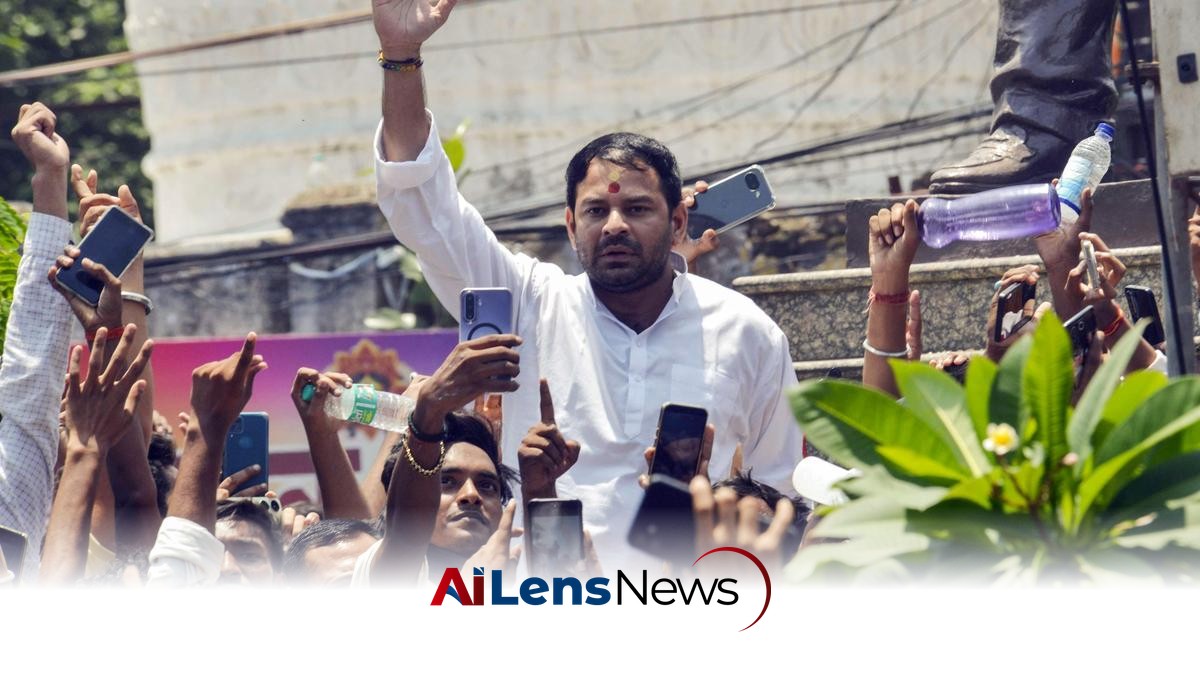


Tej Pratap Yadav's arrest over NEET protests raises allegations of political harassment, according to his lawyer and supporters.
Patna, India Jul 26, 2026 ALN: Former Bihar Minister and chief of the Janshakti Janata Dal, Tej Pratap Yadav, was arrested for allegedly participating in protests regarding the NEET paper leak in Patna, as claimed by his lawyer on July 26, 2026. The NEET ( Eligibility cum Entrance Test) is a highly competitive examination in India for students aspiring to pursue undergraduate medical courses. The integrity of this examination has been under scrutiny in recent years due to several incidents of alleged paper leaks and cheating, which have raised concerns about fairness and transparency in the medical admission process.
The arrest of Mr. Yadav occurred just a day before the police registered a First Information Report (FIR) against him, according to his lawyer, Jagannath Singh. The timing of the arrest in relation to the FIR has sparked discussions about the motivations behind the police action, with some critics suggesting that it may be politically motivated. The police have not commented on these allegations made by Mr. Yadav's legal representative, leaving room for speculation regarding the circumstances surrounding the arrest.
“The FIR against Tej Pratap Yadav was registered on July 26, while the arrest was made around 7:30 p.m. on July 25 from a mall in Patna. He was presented before the judicial magistrate court at approximately 12:15 a.m. on Sunday, July 26, and subsequently sent to judicial custody. My client is currently held at Beur Central Jail,” Mr. Singh stated. The Beur Central Jail is a prominent facility in Patna known for housing various high-profile inmates, and the conditions within the jail have often been a subject of criticism and concern.
| Bihar bandh: Left-wing students hit the streets, security tightened
The police have alleged that Mr. Yadav’s actions contributed to the escalation of protests related to the NEET paper leak in Patna on July 25, which resulted in property damage. The protests were part of a larger movement by students and activists demanding accountability and stricter measures to prevent such incidents in the future. The NEET paper leak controversy has often led to widespread unrest among students, who feel that their futures are jeopardized by corrupt practices within the examination system.
Following his participation in a sit-in protest at Ram Gulam Chowk in Patna, Mr. Yadav was detained and taken away in a police vehicle. Sit-in protests have become a common form of demonstration in India, where activists gather in public spaces to voice their grievances and demand action from the authorities. Such protests often draw significant media attention and can lead to increased public support for the causes being championed.
In response to Mr. Yadav’s arrest, Prashant Kishor, founder of the Jan Suraaj Party and candidate for the Bankipur Assembly bypoll, asserted, “Tej Pratap Yadav supported me, so he was sent to jail. The BJP is harassing leaders of the Jan Suraaj Party and those who support us by misusing the administration.” This statement reflects the ongoing political tensions in Bihar, where various parties are vying for influence and power. The Bharatiya Janata Party (BJP), which currently holds significant power in the state, has been accused by opposition leaders of using state machinery to suppress dissent and target political rivals.
| Bihar bandh: Left-wing students hit the streets, security tightened
Mr. Yadav, who established the Janshakti Janata Dal after being expelled from his father Lalu Prasad’s Rashtriya Janata Dal (RJD), recently declared his support for Mr. Kishor in the Bankipur bypoll. This announcement followed the rejection of the nomination of JJD's candidate, Vina Mandavi, by the returning officer. The political landscape in Bihar has been characterized by shifting alliances and the emergence of new parties, with Yadav's Janshakti Janata Dal representing a faction that seeks to challenge the dominance of established parties like the RJD and BJP.
Mr. Yadav expressed that while Bankipur has traditionally been a BJP stronghold, there is now a prevailing public sentiment favoring political change. This sentiment is indicative of broader trends in Indian politics, where voters are increasingly looking for alternatives to the traditional party structures. The public's frustration with corruption, governance issues, and the perceived failure of established parties to address pressing concerns has led to a rise in support for newer political entities and candidates.
The implications of Mr. Yadav's arrest extend beyond the immediate legal ramifications. It raises questions about the state of democracy and political freedom in Bihar, particularly regarding the treatment of opposition leaders and activists. The use of police action to quell protests can have a chilling effect on civil liberties, discouraging citizens from voicing their dissent or participating in political activities.
Furthermore, the NEET paper leak protests highlight a critical issue in the Indian education system, where allegations of corruption can undermine public trust in standardized testing processes. The demand for transparency and accountability in educational institutions is becoming increasingly urgent, as students and parents seek assurance that their hard work and aspirations are not compromised by unethical practices.
As the situation develops, it remains to be seen how the judiciary will respond to the charges against Mr. Yadav and whether he will be granted bail. The outcome of this case could have significant implications for both the political climate in Bihar and the ongoing discourse surrounding educational integrity in India. The public and political reaction to this incident will likely influence future protests and the strategies employed by various political factions in the state.
In conclusion, the arrest of Tej Pratap Yadav amid the NEET paper leak protests serves as a focal point for broader discussions about governance, accountability, and the role of political dissent in India. As stakeholders from various sectors continue to engage in this discourse, the developments in this case will be closely monitored by both supporters and critics alike, reflecting the complex and often contentious nature of contemporary Indian politics.
To learn more about the latest developments in Crime & Law, stay updated with our exclusive reports and analyses on AiLensNews.

