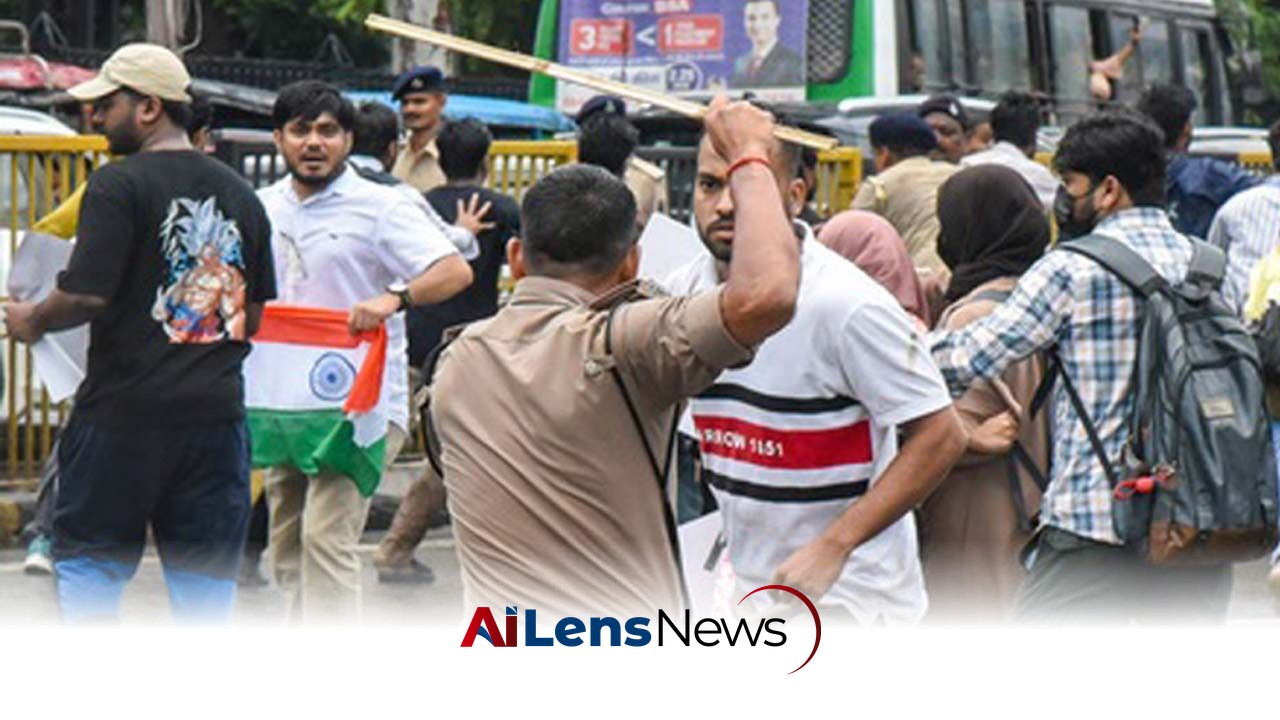


Protests demanding the resignation of Union Education Minister Dharmendra Pradhan over alleged NEET paper leaks escalated into violence in Bihar, resulting in injuries and detentions.
Patna, India Jul 23, 2026 ALN: Patna: Student protests demanding the resignation of Union Education Minister Dharmendra Pradhan over NEET paper leaks turned violent in parts of Bihar on Thursday, leading to clashes with police in Darbhanga and Begusarai. The National Eligibility cum Entrance Test (NEET) is a highly competitive examination in India, serving as a gateway for students aspiring to pursue medical and dental courses in various institutions across the country. The integrity of this examination is crucial, and any allegations of misconduct, such as paper leaks, can have far-reaching implications for students and the education system.
The protests in Bihar were fueled by widespread frustration among students regarding the perceived mishandling of the NEET examination process, particularly allegations of paper leaks that have emerged in recent months. Many students believe that such incidents undermine the fairness of the examination and jeopardize their futures. As the protests gained momentum, demonstrators began to demand not only the resignation of the Union Education Minister but also broader reforms in the education sector to enhance transparency and accountability.
While protesters claimed excessive police action, authorities alleged that force was used only after sections of the crowd turned aggressive and attempted to breach security arrangements. This narrative of escalating tensions between protesters and law enforcement is a recurring theme in protests across India, where students and youth often take to the streets to voice their grievances. The police, tasked with maintaining law and order, frequently find themselves in challenging situations where they must balance the right to protest with the need to ensure public safety.
The most serious confrontation took place at Lohia Chowk under Laheriasarai Police Station in Darbhanga, where a protest escalated into violence after a section of the demonstrators allegedly began pelting stones at police personnel. Such incidents of violence during protests can lead to serious injuries and further escalate tensions between law enforcement and demonstrators. City Superintendent of Police (SP) Ashok Kumar sustained an injury near his foot during the stone-pelting, resulting in bleeding. A police constable was also injured in the incident, highlighting the physical risks involved for both protesters and police during such confrontations.
According to an official, nearly 2,000 students had assembled at Karpoori Chowk without prior permission before marching towards Collectorate Road to demand the resignation of the Union Education Minister Dharmendra Pradhan. The lack of prior permission for the assembly is often cited by authorities as a justification for police intervention. However, many protesters argue that such restrictions infringe upon their democratic right to assemble and voice their concerns. As the demonstration progressed, some individuals within the crowd allegedly started throwing stones at the police, creating panic and disrupting law and order.
To disperse the crowd, police first conducted a lathi-charge, a common crowd control tactic in India where officers use long batons to push back demonstrators. When the protesters continued to resist, riot control personnel fired seven rounds of tear gas shells to restore order. The use of tear gas in crowd control situations is often controversial, as it can lead to panic and exacerbate tensions. Even two hours after the incident, tension continued to prevail in the Laheriasarai area, indicating that the situation had not yet stabilized.
District Magistrate Kaushal Kumar and Senior Superintendent of Police (SSP), Jagunath Reddy Jalareddy, along with other senior officials, rushed to the spot and supervised security operations. Their presence underscores the seriousness with which authorities treat such incidents, especially in light of the potential for violence and unrest. Additional police personnel from multiple police stations and riot control units were deployed to prevent any further escalation, reflecting the authorities' commitment to maintaining order in the face of rising tensions.
Police officials said CCTV footage and videos recorded during the protest are being examined to identify those allegedly involved in the stone-pelting. This approach of using technology to identify individuals involved in criminal activities during protests is becoming increasingly common, raising questions about privacy, civil liberties, and the potential for misuse of surveillance technology. A heavy police presence remains in the area, and authorities said the situation is under close surveillance, indicating that they are prepared for any further developments.
A similar confrontation unfolded in Begusarai, where students organized a protest march demanding, among other issues, the resignation of Union Education Minister Dharmendra Pradhan. The parallel nature of these protests across different regions of Bihar highlights the widespread discontent among students regarding the NEET examination process. As the protesters moved towards the District Collectorate, the administration had already erected barricades and deployed a large contingent of police personnel, special forces, and riot control units to prevent unauthorized entry into the premises.
According to the police, repeated attempts were made to persuade the demonstrators to remain peaceful. However, when a section of the crowd allegedly tried to break through the barricades and advance towards the Collectorate, police used force to disperse them. This scenario reflects the delicate balance that law enforcement must strike between allowing peaceful protests and responding to potential threats to public safety. During the operation, more than half a dozen people were detained for questioning, a common practice during protests that escalate into violence.
Although the protesters briefly retreated after the police action, they regrouped shortly afterward and resumed sloganeering near the protest site, keeping the atmosphere tense. The determination of the protesters to continue their demonstration despite police intervention underscores the deep-seated frustrations many students feel regarding the NEET examination process and the education system as a whole. Superintendent of Police Manish personally reached the spot to oversee security arrangements, following which additional police forces were deployed, and surveillance across the area was intensified.
Amid the tension in Begusarai, a five-member delegation representing the protesters met the District Magistrate and submitted a memorandum outlining their demands. This engagement with local authorities is a critical aspect of the protest process, as it provides an opportunity for dialogue and negotiation. However, the fact that a large number of students remained gathered near the Collectorate indicates that many were dissatisfied with the outcome of the meeting and felt that their voices had not been adequately heard.
Despite the meeting, a large number of students remained gathered near the Collectorate, prompting authorities to continue security deployment. SP Manish said the police had prevented protesters from entering the Collectorate to maintain law and order. According to him, while officers initially attempted to resolve the situation through dialogue, some individuals allegedly tried to disturb public peace, compelling the police to take necessary action. He added that those involved in the disturbance were being identified through video footage and that appropriate legal action would be taken.
The SP also said the Collectorate premises remained fully secure, continuous patrolling was underway, and the administration had appealed to the public to maintain peace and avoid paying attention to rumors. The use of the term "rumors" suggests that misinformation may have played a role in exacerbating tensions during the protests, a common issue in the age of social media where information can spread rapidly and uncontrollably. The situation in Bihar serves as a reminder of the challenges faced by students, the complexities of public protests, and the ongoing debates surrounding education reform in India.
To learn more about the latest developments in Crime & Law, stay updated with our exclusive reports and analyses on AiLensNews.

