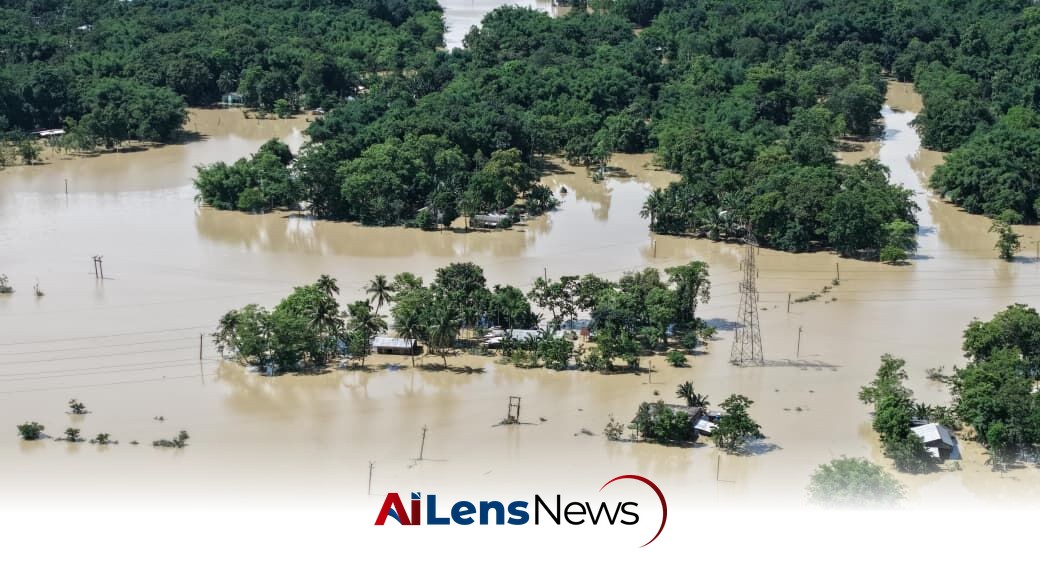


The NDMA emphasizes the need for improved flood management in Assam, acknowledging the state's geographical challenges and advocating for technological advancements.
Dispur, India Jul 25, 2026 ALN: Acknowledging the recurring flood crisis in Assam, the National Disaster Management Authority (NDMA) stated that completely eliminating floods in the state is not feasible due to its unique geographical and hydrological characteristics.
The NDMA emphasized the need for advanced technology and better mitigation measures to minimize the impact of floods. This statement comes at a time when Assam has been grappling with severe flooding, a situation that has not only affected the local populace but has also raised alarms at the national level regarding disaster preparedness and response strategies.
Interacting with the press after the conclusion of the 3rd BRICS Disaster Risk Reduction Group technical-cum-ministerial meeting in New Delhi on Friday, NDMA member and head Dr. Krishna S. Vatsa remarked that Assam’s annual floods remain a major national concern, requiring sustained scientific and technological interventions rather than expectations of complete eradication. The NDMA's acknowledgment of the situation reflects a broader understanding of the challenges posed by natural disasters in a region that is prone to such events.
“Flood problems in Assam are certainly a major issue that gets attention at the national level. Although we are working with the Government of Assam, the government needs to adopt all technological upgrades to mitigate the issue,” Vatsa stated. This highlights the collaborative approach that is necessary between state and national agencies to address the multifaceted challenges of flood management.
He noted that the state’s topography and river system make floods an unavoidable annual phenomenon. According to him, the northeastern region receives extremely heavy monsoon rainfall, while drainage constraints across the Brahmaputra basin further aggravate the situation, resulting in widespread inundation almost every year. The Brahmaputra River, which flows through Assam, is notorious for its unpredictable behavior during the monsoon season, often leading to catastrophic flooding.
“As the northeastern region experiences heavy rains, the drainage constraint poses a major challenge in mitigating the problem,” he said, underlining that disaster management efforts should focus on reducing risks, strengthening preparedness, and protecting lives and livelihoods rather than attempting to eliminate floods altogether. This perspective is crucial, as it shifts the focus from a reactive to a proactive approach in disaster management, emphasizing the importance of preparedness and resilience.
With the death toll climbing to 62, this year's floods in Upper Assam have emerged as one of the region's worst flood disasters since 1988, leaving a trail of widespread destruction, prolonged displacement, and extensive damage to homes, agriculture, and public infrastructure. The impact of such disasters is profound, affecting not only the immediate victims but also the long-term socio-economic fabric of the region.
The floods have led to significant loss of agricultural land, which is the primary source of livelihood for many in the state. The destruction of crops, livestock, and agricultural infrastructure poses a severe threat to food security in the region, which is already vulnerable due to its geographic isolation and economic challenges. Furthermore, the damage to public infrastructure, including roads, bridges, and schools, complicates recovery efforts and hinders access to essential services for the affected populations.
In light of these challenges, the NDMA has called for a multi-faceted approach to disaster management that includes not only technological advancements but also community engagement and education. The involvement of local communities in disaster preparedness and response can significantly enhance resilience, as they often have the best understanding of their environment and the risks they face. Training programs, awareness campaigns, and the establishment of local disaster response teams are essential components of a comprehensive strategy to mitigate the impacts of flooding.
Moreover, the NDMA's emphasis on technological upgrades points to the potential of modern tools such as satellite imagery, predictive modeling, and early warning systems. These technologies can provide critical information that enables timely evacuations and better resource allocation during flood events. The integration of such technologies into existing disaster management frameworks can enhance the overall effectiveness of response efforts.
Another important aspect of flood management is the need for sustainable land-use planning and environmental conservation. Deforestation, urbanization, and poor land management practices have exacerbated the flooding situation in Assam. Implementing policies that promote sustainable development and protect natural ecosystems can play a vital role in reducing the severity of floods. For instance, restoring wetlands and maintaining forest cover can help absorb excess rainwater, thereby mitigating flood risks.
As Assam continues to face the challenges posed by annual floods, the NDMA's call for enhanced mitigation strategies is a timely reminder of the need for a coordinated effort to address the root causes of flooding. This includes not only immediate response measures but also long-term strategies that promote resilience and sustainability. The implications of such an approach extend beyond Assam, as the lessons learned can inform disaster management practices across other flood-prone regions in India and around the world.
In conclusion, while the NDMA acknowledges that complete eradication of floods in Assam may not be possible, it underscores the importance of adopting a comprehensive and integrated approach to disaster management. By focusing on technological upgrades, community engagement, sustainable land-use practices, and enhanced preparedness, it is possible to significantly reduce the impact of floods and protect the lives and livelihoods of those living in vulnerable regions.
To learn more about the latest developments in Health & Public Safety, stay updated with our exclusive reports and analyses on AiLensNews.

