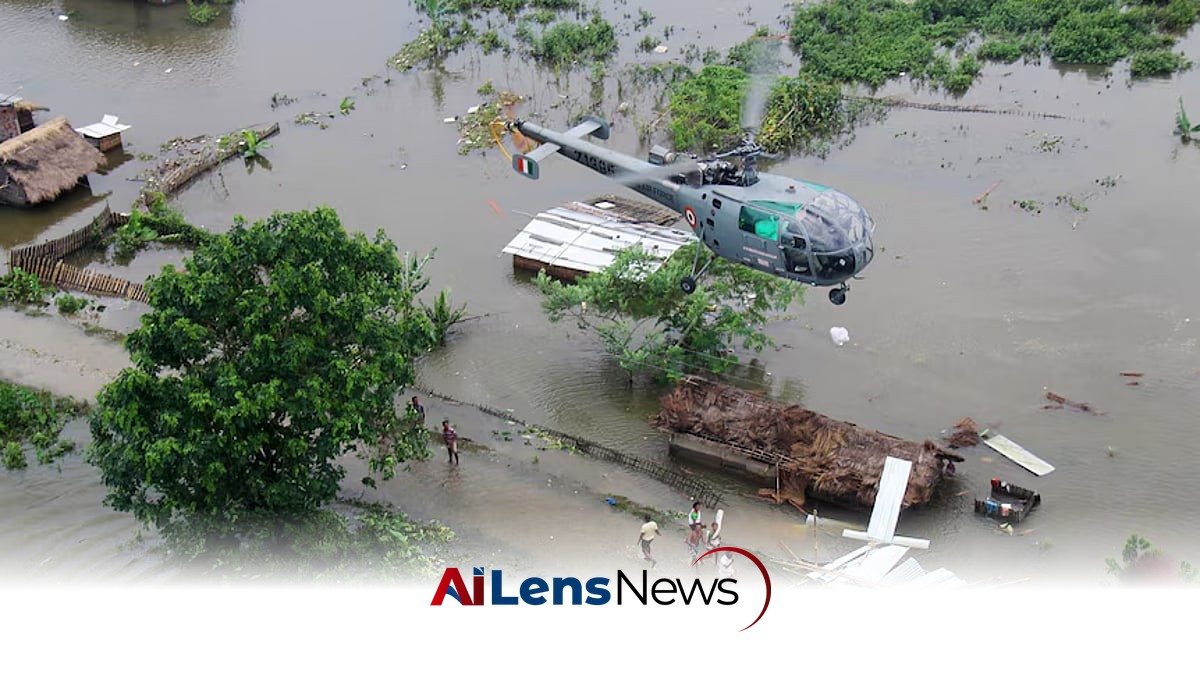


The Indian Air Force has launched a rescue operation in Sivasagar, Assam, to evacuate residents stranded by severe flooding caused by monsoon rains.
Dispur, India Jul 24, 2026 ALN: The Indian Air Force launched a rescue operation on Thursday morning to evacuate residents stranded by floodwaters in Gayan Gaon under Joysagar in Assam's Sivasagar district.
The operation was initiated in response to a severe flooding crisis that has been affecting various parts of Assam, a northeastern state of India, during the monsoon season. The annual monsoon rains typically bring heavy rainfall to the region, but this year, the intensity and duration of the rains have been particularly severe, leading to widespread flooding and disruption of normal life.
In Sivasagar district, rising floodwaters have inundated many villages, including Gayan Gaon, leaving residents isolated and in urgent need of assistance. An Air Force helicopter carrying commandos was deployed to airlift people trapped in the area, as road connectivity had been severely disrupted, making it impossible for ground rescue teams to reach those in need.
The visuals from the rescue operation depicted the helicopter hovering low over the flooded village, with Air Force personnel skillfully preparing to evacuate stranded residents to safer locations. The sight of the helicopter's rotor blades churning the air against the backdrop of the inundated landscape emphasized the urgency and gravity of the situation.
As the Indian Air Force continues its operations, it has been coordinating with local authorities and disaster management teams to ensure a comprehensive response to the flooding crisis. The Air Force has a history of involvement in humanitarian assistance and disaster relief operations, especially during the monsoon season when flooding is a recurrent issue in various parts of India.
In addition to the immediate rescue efforts, the Indian Air Force has also been involved in providing relief supplies, such as food, water, and medical assistance, to affected communities. The logistical capabilities of the Air Force allow for rapid deployment of resources, which is critical during emergencies when traditional supply routes are compromised.
The ongoing flooding in Assam has resulted in significant challenges for local and state authorities. Reports indicate that thousands of people have been displaced, with many families forced to seek shelter in temporary relief camps. The government has been working to establish these camps and provide basic necessities to those affected, but the sheer scale of the disaster has put immense pressure on available resources.
As the situation evolves, authorities are continuing rescue operations in the affected areas, with more evacuations expected depending on the flood situation. The Indian Meteorological Department has been closely monitoring weather patterns and issuing advisories to help guide response efforts. While the monsoon rains are essential for replenishing water resources, excessive rainfall can lead to devastating consequences, as seen in the current scenario.
This year's floods in Assam are not an isolated incident; the state has experienced similar flooding crises in the past. The combination of geographical factors, such as proximity to the Brahmaputra River and its tributaries, along with deforestation and urbanization, has exacerbated the impact of monsoon rains. These factors have led to calls for improved flood management strategies, which include better infrastructure, early warning systems, and community preparedness initiatives.
The government has recognized the need for long-term solutions to mitigate the impact of flooding in the region. Efforts to enhance flood resilience involve collaboration between various stakeholders, including government agencies, non-governmental organizations, and local communities. By fostering a multi-faceted approach, authorities aim to reduce vulnerability and improve the capacity to respond to future flooding events.
In conclusion, the Indian Air Force's swift action in Sivasagar highlights the critical role that military and emergency services play during natural disasters. The ongoing rescue operations serve as a reminder of the challenges faced by communities in flood-prone areas and the importance of preparedness and response mechanisms. As Assam grapples with the ongoing flood crisis, the collective efforts of various agencies will be vital in ensuring the safety and well-being of affected residents.
Understanding the context of Assam's flooding crisis requires a broader examination of the environmental and socio-economic factors at play. The state is characterized by its unique topography, being crisscrossed by numerous rivers and streams, which makes it particularly vulnerable to flooding during the monsoon season. The Brahmaputra River, one of the largest rivers in the world, plays a significant role in the region's hydrology. Its tributaries swell with the monsoon rains, often overflowing their banks and inundating surrounding areas.
In recent years, the frequency and intensity of flooding in Assam have raised concerns among environmentalists and policymakers alike. Deforestation, often driven by agricultural expansion and urban development, has diminished the natural barriers that once helped absorb excess rainfall. Urbanization has also led to the encroachment of floodplains, reducing the land's ability to handle heavy rainfall. These combined factors have made flooding more severe and frequent, prompting calls for immediate action to address the underlying issues.
The government has initiated various measures to address flooding in Assam, including the construction of embankments and the improvement of drainage systems. However, these efforts have often faced challenges such as inadequate funding, bureaucratic delays, and the need for community involvement in flood management strategies. Additionally, the importance of establishing early warning systems cannot be overstated. By providing timely information to residents about impending floods, these systems can significantly reduce the risks to life and property.
Community preparedness is another critical aspect of flood management. Local populations must be educated about the risks of flooding and the necessary steps to take in the event of a flood. This includes understanding evacuation routes, the importance of emergency supplies, and the role of local authorities in coordinating responses. The involvement of local communities in disaster preparedness initiatives can enhance resilience and ensure a more effective response to flooding events.
In the aftermath of such disasters, recovery efforts must also focus on rebuilding communities in a sustainable manner. This involves not just restoring infrastructure but also considering environmental factors and promoting practices that mitigate future flooding risks. For instance, reforestation projects can help restore natural habitats and improve water absorption in the soil, while sustainable land-use planning can prevent further encroachment on floodplains.
As Assam continues to confront the challenges posed by flooding, the role of agencies like the Indian Air Force becomes increasingly vital. Their ability to mobilize quickly and provide life-saving assistance is crucial in times of crisis. However, the long-term solution lies in a comprehensive approach that combines immediate relief efforts with sustainable development practices and community engagement. The lessons learned from the current flooding crisis can serve as a catalyst for change, encouraging a proactive stance on flood management that prioritizes resilience and preparedness.
Ultimately, the situation in Sivasagar and other affected areas of Assam underscores the need for a collective effort to tackle the challenges posed by natural disasters. As the Indian Air Force and local authorities work together to provide immediate relief, the focus must also shift towards developing strategies that will protect communities from future flooding events. Only through a concerted effort can the region hope to build a safer and more resilient future.
To learn more about the latest developments in Crime & Law, stay updated with our exclusive reports and analyses on AiLensNews.

