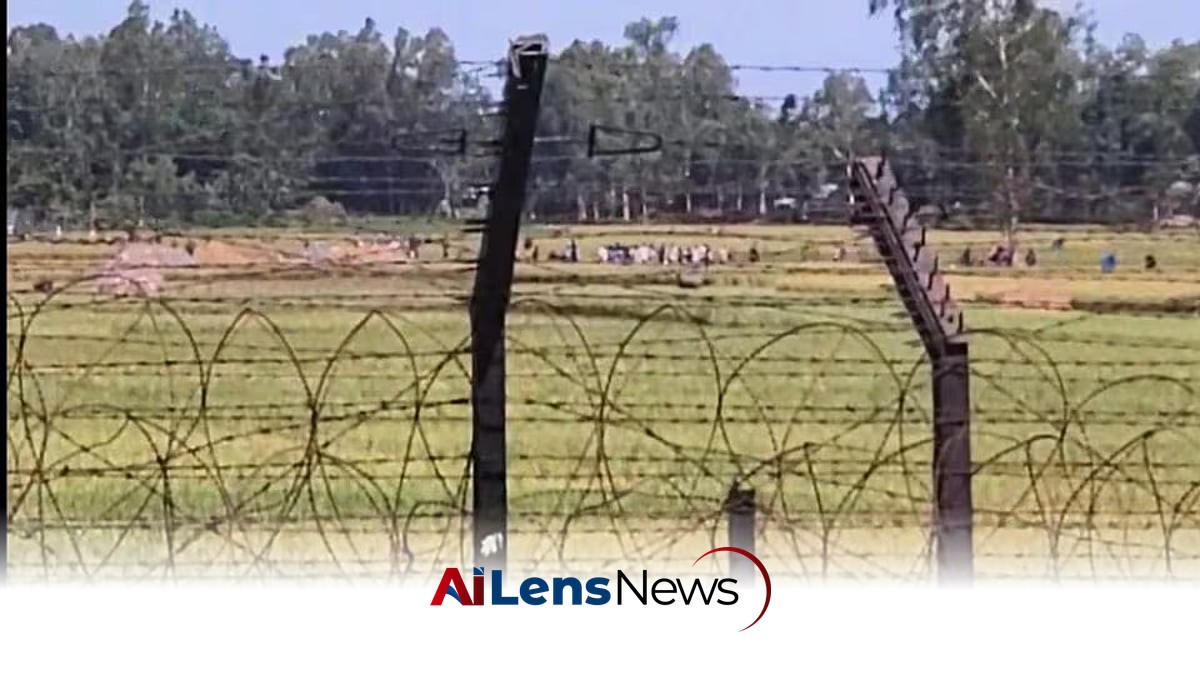


In the Assam Assembly, the government revealed that 39 km of the India-Bangladesh border remains unfenced, primarily due to geographical challenges and objections from Bangladesh's border guards.
Dispur, India Jul 22, 2026 ALN: Guwahati: The Assam Government on Wednesday stated in the State Assembly that 228.541 km of the state's total 267.5-km India-Bangladesh border has been fenced, leaving 38.959 km unfenced due to challenges posed by the riverine terrain and objections from the Border Guard Bangladesh (BGB). This situation highlights the complexities involved in securing international borders, particularly in regions where natural landscapes complicate infrastructure development.
The Border Protection and Development Minister Atul Bora elaborated that 34.609 km of the unfenced stretch is located in the riverine areas of Dhubri and South Salmara-Mankachar districts, where the geographical conditions present significant challenges to the construction of a fence. These areas are characterized by shifting riverbeds and seasonal flooding, making it difficult to establish a permanent barrier. The riverine nature of the border also complicates surveillance and control of illegal crossings and smuggling activities.
In addition, Minister Bora mentioned that the remaining 4.35 km along the Kushiyara River in the Sribhumi district has not been fenced due to objections raised by the Border Guard Bangladesh. The close proximity of Indian habitations to the border in this area has led to sensitivities regarding the fencing efforts, as it could affect the local population's access to resources and livelihoods. The BGB's objections highlight the diplomatic challenges that can arise during border management, where both nations must balance security concerns with the rights and needs of local communities.
Minister Bora emphasized that the responsibility for completing the fencing of the remaining stretches lies with the Ministry of Home Affairs at the national level. This delineation of responsibility is crucial, as it underscores the collaborative nature of border security between state and central governments. The Assam government has been proactive in addressing the challenges posed by the unfenced border, but ultimate authority and resources for completing the fencing rest with the central administration.
In response to the challenges posed by the unfenced areas, the Border Security Force (BSF) has intensified surveillance efforts using the Comprehensive Integrated Border Management System (CIBMS). This system integrates various technologies and resources to enhance border security, including the deployment of CCTV cameras, patrol vehicles, motorboats, and regular patrolling by security personnel. Such measures are intended to mitigate the risks associated with an unfenced border, including illegal immigration, smuggling, and cross-border crime.
The use of advanced technologies like CIBMS reflects a broader trend in border management, where countries are increasingly relying on technological solutions to address security concerns. The implementation of such systems not only aids in surveillance but also helps in data collection and analysis, allowing for more informed decision-making regarding border security strategies.
Furthermore, Minister Bora noted that the proposal for complete fencing of the India-Bangladesh border in Assam is currently under consideration by the central government. This proposal is likely to be influenced by various factors, including security assessments, diplomatic relations with Bangladesh, and the socio-economic implications for communities living near the border. The decision to proceed with fencing will require careful consideration of these factors, as well as potential negotiations with Bangladeshi authorities regarding the management of border areas.
The India-Bangladesh border has historically been a focal point of tension and cooperation between the two countries. While both nations have made efforts to strengthen their border security, they must also navigate the complexities of cross-border trade, migration, and cultural ties that exist in border regions. The Assam government's report on the unfenced stretches of the border is a reminder of the ongoing challenges that remain in ensuring security while fostering positive relations with neighboring countries.
In conclusion, the situation regarding the unfenced border areas in Assam underscores the multifaceted nature of border management. It involves not only physical infrastructure but also diplomatic engagement, community considerations, and technological innovation. As the Assam government works in conjunction with the Ministry of Home Affairs and the BSF to address these challenges, the implications for regional security, local communities, and India-Bangladesh relations will continue to evolve. The outcome of the proposal for complete fencing will likely have lasting effects on how both countries manage their borders and the dynamics of their bilateral relationship in the future.
To further understand the implications of the unfenced border, it is essential to consider the historical context surrounding the India-Bangladesh border and the various factors that have led to the current situation. The India-Bangladesh border, which stretches over 4,096 km, is the fifth-longest border in the world and has been the subject of numerous political, social, and economic discussions since the partition of India in 1947 and the subsequent creation of Bangladesh in 1971. The border is not merely a line on a map; it represents a complex interplay of cultures, languages, and histories.
The regions bordering Bangladesh, particularly in Assam, are characterized by a diverse population that includes various ethnic groups, many of whom have familial ties that cross the international boundary. This has led to unique challenges in border management, as the movement of people between the two countries is often driven by cultural and economic factors. For many residents in border areas, the distinction between Indian and Bangladeshi identities can be fluid, complicating enforcement efforts and community relations.
Moreover, the issue of illegal immigration has been a contentious topic in Indian politics, particularly in Assam, where there have been concerns about the demographic changes attributed to migration from Bangladesh. The Assam Accord, signed in 1985, aimed to address the concerns of indigenous Assamese communities regarding illegal immigration but has left many unresolved issues, particularly regarding the status of long-term residents who may lack documentation. The unfenced stretches of the border exacerbate these challenges, as they provide opportunities for unauthorized crossings and further complicate the already sensitive issue of citizenship and identity.
Additionally, the economic implications of an unfenced border cannot be overlooked. The border regions are often economically deprived, and the livelihoods of many residents depend on cross-border trade and informal exchanges. While illegal trade can lead to economic opportunities for some, it can also foster criminal activities and undermine legitimate businesses. The challenge for both governments lies in finding a balance between enhancing border security and allowing for legitimate trade and movement that can benefit local economies.
Furthermore, the environmental aspects of the border region, particularly in the riverine areas, present additional challenges. The Brahmaputra and its tributaries are prone to seasonal flooding, which not only affects the feasibility of constructing a physical barrier but also impacts the lives of the communities residing along the banks. The ecological sensitivity of these areas necessitates a careful approach to border management that considers both environmental conservation and security needs.
In light of these complexities, the Assam government's report on the unfenced border serves as a crucial reminder of the multifaceted nature of border management. It highlights the need for a comprehensive approach that encompasses not only physical infrastructure but also diplomatic negotiations, community engagement, and technological innovation. As the central government deliberates on the proposal for complete fencing, it must also consider the broader implications for regional stability, economic development, and the socio-cultural fabric of border communities.
Ultimately, the situation at the India-Bangladesh border in Assam exemplifies the challenges faced by many nations grappling with border security in a globalized world. As countries strive to secure their borders while fostering cooperation and understanding, the lessons learned from the Assam experience may provide valuable insights into the complexities of border management in diverse contexts.
To learn more about the latest developments in Crime & Law, stay updated with our exclusive reports and analyses on AiLensNews.

