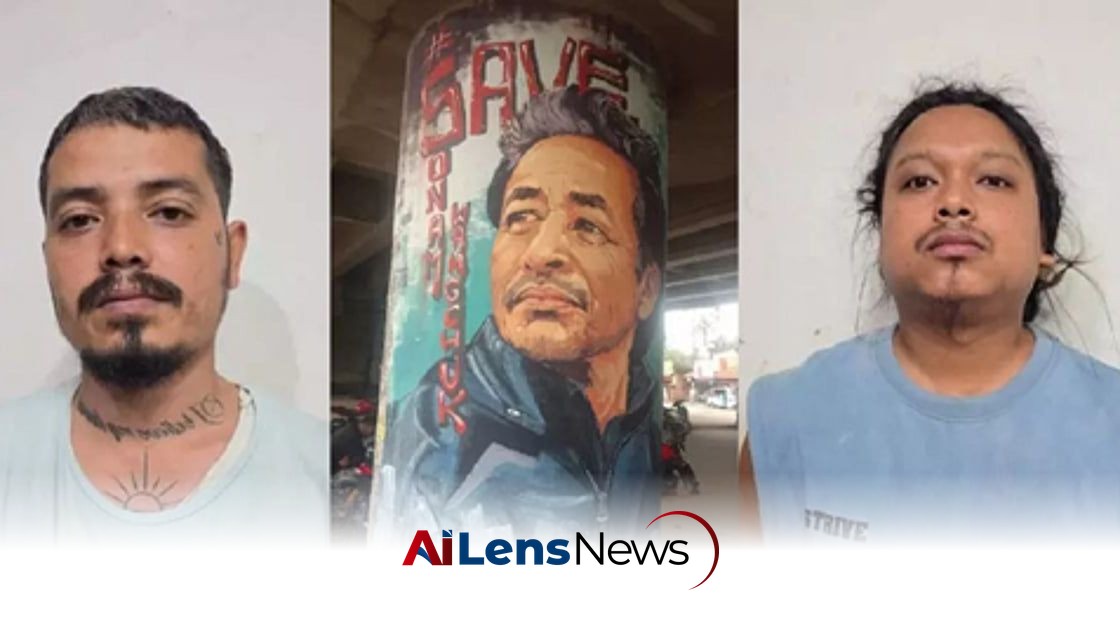


Dispur Police apprehended two individuals for painting a mural of Sonam Wangchuk on a public wall without permission, violating state regulations.
Itanagar, India Jul 19, 2026 ALN: Dispur Police arrested two youths after they painted a portrait of Sonam Wangchuk on a public wall at Tribeni Path near Jyoti Bishnu Auditorium without prior permission. The artwork, painted on a public wall, attracted public attention before police conducted a late-night operation and arrested the two youths, identified as Nukul Mili from Dibrugarh and Gaurav Singh from Dakhingaon, Kahilipara, for allegedly defacing public property.
Police stated that the youths painted the mural without obtaining prior approval from the government or the district administration, thereby violating the state’s directive banning paintings, graffiti, and other artwork on public structures without permission. Speaking to the media, the Deputy Commissioner of Police (East) mentioned that the youths were not associated with any organization. Following the intervention, police took both youths into custody and brought them to Dispur Police Station, where a case was registered against them.
The officer also noted that a similar incident had occurred on Friday, for which a case had been registered at Basistha Police Station. “We have identified the persons, and action will be taken against them. After interrogation, they will be released,” he said.
This incident has sparked a broader discussion about public art, its implications, and the regulations governing it in urban spaces. Public murals can serve as a means of expression, cultural identity, and community engagement. However, they also raise questions about ownership, permission, and the potential for defacement of public property. The act of painting on public walls without authorization can be seen as a violation of the law, yet it also reflects a deep-seated desire among some community members to express their views and promote causes they believe in.
Sonam Wangchuk is a prominent figure known for his contributions to education, environmental sustainability, and social activism in India, particularly in the Ladakh region. His work has garnered national and international attention, making him a symbol of change and innovation. The choice to depict Wangchuk in a mural reflects the youths’ admiration for his efforts and the desire to promote his message. However, the lack of permission highlights the tension between artistic expression and adherence to legal frameworks, raising questions about how society values art and the voices of its youth.
The regulations regarding public art in India vary significantly from state to state and often depend on local government policies. In many urban areas, there are strict guidelines that govern any modifications or artwork on public structures, primarily to maintain the aesthetic integrity of the city and prevent vandalism. These rules are often enforced by local police and municipal authorities, who are tasked with preserving public property. The regulations may stem from concerns about maintaining public safety, preventing graffiti that may be deemed offensive, or ensuring that public spaces remain accessible and welcoming to all citizens.
In this instance, the authorities emphasized their commitment to upholding these regulations, which they believe are necessary for maintaining order and respect for public spaces. The Deputy Commissioner of Police's statement underscores the legal ramifications of unauthorized artwork, which can be seen as a violation of public property laws. The police's swift action in apprehending the youths indicates a zero-tolerance approach to such violations, particularly in light of previous incidents. This strict enforcement may deter future unauthorized murals but could also stifle creative expression and dialogue within the community.
The incident also raises questions about youth activism and the role of art in social movements. The youths involved may have intended to use the mural as a form of protest or commentary on issues they care about, such as environmental conservation, education reform, or social justice—issues that Wangchuk himself has championed. The challenge lies in finding a balance between the desire to express these sentiments through public art and the legal restrictions that govern such expressions. This tension illustrates a broader societal challenge where the aspirations of young people to engage in civic discourse through creative means may clash with established norms and regulations.
Moreover, this event highlights the need for dialogue between artists, local authorities, and the community. Many urban areas have begun to embrace street art as a legitimate form of expression, recognizing its potential to beautify neighborhoods and engage citizens. Some cities have established programs that allow artists to apply for permits to create murals, fostering a collaborative approach to public art that respects both artistic freedom and regulatory frameworks. Such initiatives can serve as a bridge between the authorities and the artistic community, allowing for a more inclusive approach to public expression.
In light of this incident, it may be beneficial for local governments to consider revising their policies to accommodate public art while ensuring that there are clear guidelines for artists to follow. This could involve creating designated spaces for murals or establishing a streamlined application process for artists seeking permission to paint in public areas. Such measures could help prevent unauthorized artwork while still allowing for the vibrant expression of community values and identities. In cities around the world, successful collaborations between local governments and artists have led to the creation of vibrant public art scenes that celebrate cultural diversity and community spirit.
As the case against the two youths unfolds, it will be essential to monitor public reaction and the discourse surrounding public art in Guwahati and beyond. The community's response may reflect broader societal attitudes toward art, activism, and the role of youth in advocating for change. The incident could serve as a catalyst for discussions about how to create more inclusive and supportive environments for artistic expression in public spaces. Engaging in these discussions can lead to a greater understanding of the importance of art in society and how it can be used to foster dialogue on pressing issues.
In conclusion, the arrests of Nukul Mili and Gaurav Singh for painting a mural of Sonam Wangchuk without permission underscore the complexities surrounding public art and the laws governing it. As society grapples with the balance between artistic expression and legal restrictions, this incident may pave the way for more nuanced conversations about the value of public art and the importance of community engagement in shaping the urban landscape. The outcome of this case may influence future policies regarding public art and the extent to which local authorities are willing to embrace creative expressions that reflect the values and aspirations of their communities.
To learn more about the latest developments in Crime & Law, stay updated with our exclusive reports and analyses on AiLensNews.

