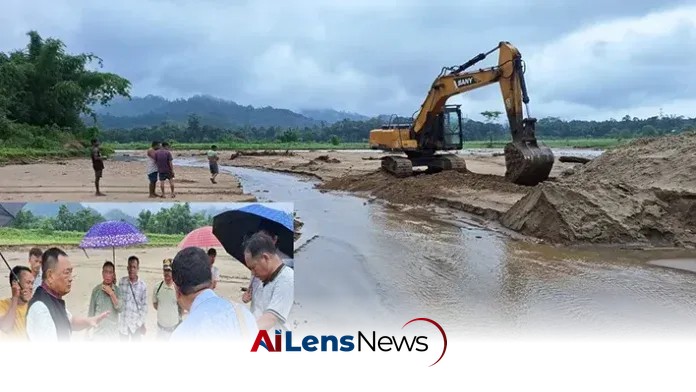


MLA Ninong Ering visited the Depi river diversion site to address severe soil erosion affecting local communities, urging villagers to oversee the project.
Itanagar, India Jul 18, 2026 ALN: RUKSIN, 17 Jul: MLA Ninong Ering on Friday inspected the Depi river course diversion work undertaken to control soil erosion, urging the villagers to monitor the ongoing efforts.
The MLA allocated funds for the project following requests from residents, as the river has been severely eroding its left bank. This erosion has raised concerns not only about property damage but also about the safety of the local community, which relies heavily on the stability of the riverbanks for their livelihoods and infrastructure. The implications of such erosion can be far-reaching, affecting not only individual households but also the broader community structure, which is often intertwined with the health of local ecosystems.
Local villagers from Depi-Moli have engaged an earthmover for the diversion work, a step that reflects the community's proactive approach to addressing the ongoing challenges posed by the river’s unpredictable behavior. The involvement of local labor and resources underscores the importance of community engagement in environmental management and disaster risk reduction. This local involvement is particularly significant as it fosters a sense of ownership and responsibility among the residents, empowering them to take action in protecting their environment.
Ering emphasized that the Water Resource Department is making significant efforts to implement schemes aimed at controlling soil erosion caused by the river, and he encouraged gaon buras (village headmen) and panchayat members to oversee the diversion work closely. This call for local oversight is critical, as it fosters a sense of ownership among community leaders and ensures that the efforts align with the specific needs and realities of the residents. Local governance structures play a crucial role in ensuring that such initiatives are effectively managed and that the community's voice is heard in decisions that affect their immediate environment.
The erosion is threatening human habitations, including the Depi-Moli Lower Primary School, a church, and a community graveyard. The potential loss of such vital community infrastructure highlights the urgent need for effective river management strategies, as schools are essential for education and community cohesion, while places of worship and burial grounds hold significant cultural and emotional value for the residents. The destruction of these sites could lead to a loss of community identity and disrupt social cohesion, which is particularly concerning in rural areas where such institutions often serve as the backbone of community life.
In 2020, the river flow was redirected to the right side by excavating the riverbed, but the course gradually shifted back to the left, leading to renewed erosion issues. This historical context is essential as it illustrates the ongoing battle against natural forces that can undermine human efforts to control them. The reversion of the river’s course serves as a reminder of the dynamic nature of river systems and the complexities involved in managing them. Understanding these historical patterns is vital for developing future strategies that can effectively mitigate similar issues.
Additionally, strong currents have eroded part of the left abutment of the RCC bridge at the Depi-Deren confluence. Bridges are critical infrastructure that facilitates transportation and connectivity for rural communities. The erosion of bridge supports not only poses risks to vehicles and pedestrians but also disrupts economic activities, as residents may rely on these routes for accessing markets, schools, and healthcare services. The potential collapse of such infrastructure could have dire consequences, exacerbating the isolation of affected communities and hindering their access to essential services.
Recently, surging waters from the Depi river triggered flash floods in the last week of June, washing away standing crops in the downstream areas bordering Gali Sikari panchayat in Assam. Such flooding events can have devastating impacts on local agriculture, which is often the backbone of rural economies. The loss of crops not only threatens food security for the affected families but also affects their income and livelihoods, leading to broader economic repercussions for the community. The agricultural sector's vulnerability to flooding underscores the need for comprehensive risk management strategies that can buffer against such climate-related disasters.
In response to these challenges, the local government has been urged to develop a comprehensive river management plan that addresses both immediate needs and long-term sustainability. This plan could include measures such as reforestation along riverbanks to enhance soil stability, the construction of levees or embankments to prevent flooding, and community education programs focused on sustainable land use practices. The integration of these strategies can create a multifaceted approach to river management that not only addresses current erosion issues but also enhances the overall resilience of the ecosystem.
Furthermore, collaboration with environmental scientists and hydrologists could provide valuable insights into the river’s behavior and help in crafting more effective intervention strategies. Engaging with these experts could also facilitate the integration of traditional knowledge with scientific approaches, ensuring that solutions are culturally appropriate and environmentally sound. Such collaborations can lead to innovative solutions that are tailored to the specific ecological and cultural contexts of the community, enhancing the likelihood of successful implementation.
The situation at the Depi river is not an isolated case; many rivers across the region face similar challenges due to climate change, deforestation, and unsustainable land use practices. As weather patterns become increasingly unpredictable, the importance of effective river management becomes even more pronounced. Communities that are proactive in addressing these issues are likely to be more resilient in the face of future challenges. The shared experiences of these communities can serve as valuable lessons for others facing similar environmental pressures, fostering a culture of resilience and adaptability.
In conclusion, the inspection of the river course diversion work by MLA Ninong Ering highlights the urgent need for collective action to combat soil erosion and protect local communities from the threats posed by changing river dynamics. The involvement of local residents, combined with government support and expert guidance, may pave the way for sustainable solutions that not only mitigate current risks but also enhance the resilience of the community against future environmental challenges. The situation at the Depi river serves as a microcosm of the broader environmental issues facing many rural communities, emphasizing the need for comprehensive and collaborative approaches to environmental management that prioritize both human and ecological well-being.
To learn more about the latest developments in Local & Regional, stay updated with our exclusive reports and analyses on AiLensNews.

