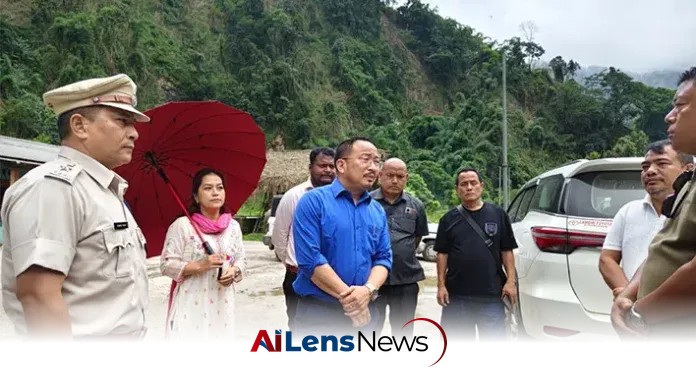


SJETA Minister Kento Jini assessed the condition of landslide-affected stretches of the Akajan-Likabali-Bame road, reviewing restoration efforts and future plans.
Itanagar, India Jul 24, 2026 ALN: LIKABALI, 23 Jul: SJETA Minister Kento Jini inspected the landslide-prone areas and road blockage points along the Akajan-Likabali-Bame road on Thursday to assess the condition of the affected stretches and review the ongoing restoration works.
The Akajan-Likabali-Bame road is a crucial infrastructure link that connects various regions, facilitating not only transportation but also access to essential services and resources. Given its strategic importance, the road plays a vital role in the socio-economic development of the areas it serves. However, it is also located in a region that is prone to natural calamities, particularly landslides, which can severely disrupt connectivity and pose risks to the safety of travelers.
The region's susceptibility to landslides is a significant concern, particularly during the monsoon season when heavy rains can saturate the soil and destabilize slopes. This phenomenon is exacerbated by factors such as climate change, which has led to more intense weather patterns, and deforestation, which reduces the natural stability of the land. The Akajan-Likabali-Bame road, therefore, not only serves as a transport route but also as a lifeline for communities that depend on it for their daily needs.
During the inspection, Minister Jini, accompanied by heads of departments and officials of the National Highways and Infrastructure Development Corporation Limited (NHIDCL), examined the extent of damages caused by landslides and heavy rains. The minister's visit underscores the government's proactive approach to disaster management and infrastructure resilience in the face of such challenges. The presence of key officials during this inspection highlights the collaborative effort required to address infrastructure issues effectively.
Jini expressed his appreciation for the efforts of Henli Riba and his team, who have been working tirelessly to clear road blockages and ensure uninterrupted connectivity over the past several months despite challenging conditions. Their dedication is particularly noteworthy given the difficult terrain and unpredictable weather patterns that characterize the region. The minister's acknowledgment of their work highlights the importance of local knowledge and expertise in managing infrastructure challenges. This local engagement is crucial, as those who are familiar with the terrain are often better equipped to implement timely and effective solutions to road maintenance and repair.
In response to the ongoing challenges, Minister Jini informed that emergency "disaster maintenance packages" would be made available to support the restoration and maintenance of the road. This initiative is part of a broader strategy to enhance the resilience of infrastructure in disaster-prone areas, ensuring that essential routes remain operational during adverse conditions. Such packages typically include funding for immediate repairs, equipment, and manpower to address urgent issues that may arise due to natural disasters. The provision of these packages signifies a shift towards more proactive disaster management, focusing not just on recovery but also on preparedness.
Furthermore, Jini assured that he would take up the matter with Union Minister Kiren Rijiju and Chief Minister Pema Khandu to expedite the implementation of the Bame-Akajan road as a strategic road project, as declared by the central government. The designation of the road as a strategic project underscores its importance not just for local connectivity but also for regional development, trade, and emergency response capabilities. The central government’s involvement indicates a recognition of the road's significance in enhancing infrastructure networks in the northeastern region of India. The strategic designation also opens the door for additional funding and resources, which are critical for long-term infrastructure stability.
The implications of these developments extend beyond immediate road repairs. Improved infrastructure can lead to enhanced economic opportunities for local communities, better access to healthcare and education, and increased tourism potential in the region. Reliable transportation routes are critical in times of emergency, allowing for quicker responses to natural disasters and other crises. The ability to maintain access to essential services during adverse weather conditions can significantly impact the overall well-being of the communities relying on this road.
As the government moves forward with these initiatives, it is essential to consider the long-term sustainability of the road and the surrounding environment. This includes implementing measures that mitigate future landslide risks, such as reforestation, proper drainage systems, and community engagement in disaster preparedness. The involvement of local communities in these efforts can foster a sense of ownership and responsibility, ultimately leading to more resilient infrastructure and safer travel conditions. Engaging local populations in these discussions not only empowers them but also ensures that solutions are tailored to the specific needs and characteristics of the area.
In conclusion, Minister Kento Jini's inspection of the Akajan-Likabali-Bame road highlights the ongoing challenges posed by natural disasters in the region and the government's commitment to addressing these issues. The proposed emergency maintenance packages and the push for the road's strategic project status reflect a comprehensive approach to infrastructure development and disaster management. As the situation evolves, it will be crucial to monitor the effectiveness of these measures and their impact on the local communities that rely on this vital transportation link. Continuous evaluation and adaptation of strategies will be necessary to ensure that the infrastructure not only meets current demands but is also resilient to future challenges posed by climate change and natural disasters.
To learn more about the latest developments in Crime & Law, stay updated with our exclusive reports and analyses on AiLensNews.

