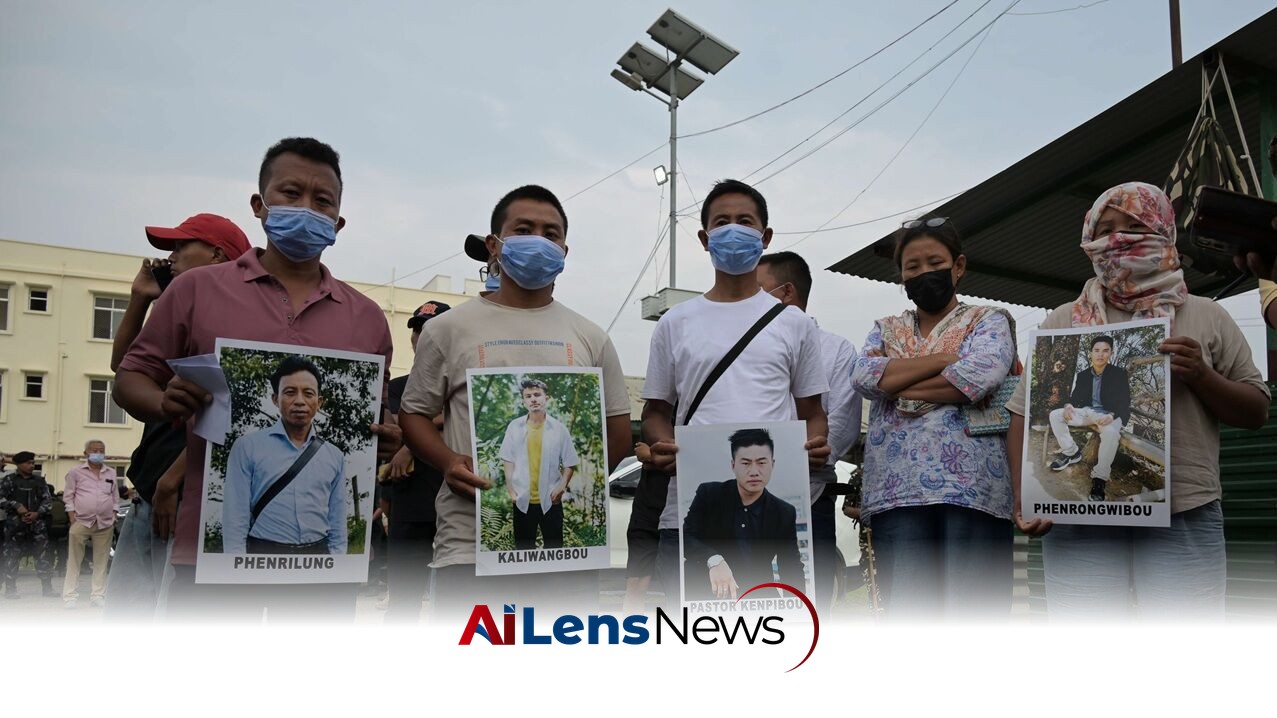


The investigation into the abduction and murder of six Liangmai Naga civilians in Manipur has led to four arrests, while families await justice.
Itanagar, India Jul 18, 2026 ALN: A joint team of the National Investigation Agency (NIA), Manipur Police, and the Central Reserve Police Force (CRPF) has arrested two more individuals in connection with the abduction and killing of six Liangmai Naga civilians in Manipur's Kangpokpi district, raising the total number of arrests in the case to four. The accused have been identified as Lungoulal Vaiphei, a resident of Leilon Vaiphei village, and Lunminthang Sitlhou alias Jack, a resident of Molhoi village. Both villages are located in the Leimakhong area of Kangpokpi district, a region that has been troubled by ethnic tensions and violence in recent years.
"Following investigation into the abduction and killing of six Naga individuals, a joint team of NIA, Manipur Police, and CRPF arrested the following two accused individuals on July 18, 2026," Manipur Police stated in a release on Saturday. The arrests highlight the ongoing efforts of law enforcement agencies to address the rising incidents of violence and criminal activities in the region. Authorities are continuing efforts to trace and apprehend other individuals allegedly involved in the crime, indicating that the investigation is still in its early stages and that more arrests may follow. The latest arrests come just days after the joint investigation team apprehended Pradip and his wife, Ayingbi, both residents of Leilon Vaiphei village, during an early morning operation on July 10.
The case pertains to the alleged abduction of six Liangmai Naga civilians from Konsakhul village on May 13. Investigators revealed that the victims were taken to Leilon Vaiphei village in Kangpokpi district, where they were reportedly murdered. The circumstances surrounding their abduction and subsequent murder have raised serious concerns about the safety and security of civilians in the area. The bodies of the victims were recovered on June 10 during a large-scale search operation in the district. This recovery came after weeks of uncertainty and grief for the families of the victims, who had been anxiously awaiting news of their loved ones. More than a month after the recovery, the bodies remain at the mortuary of the Jawaharlal Nehru Institute of Medical Sciences (JNIMS) in Porompat, Imphal East district, as the victims' families and Naga organisations continue to await action on their demands.
The killings have sparked widespread outrage across Manipur, particularly among the Naga community, drawing strong condemnation from civil society organisations and political leaders. The emotional impact of the incident has been profound, with many in the community feeling a deep sense of loss and injustice. The United Naga Council (UNC) and several other Naga civil society organisations have been vocal in their demands for swift justice for the victims. The UNC has also enforced an economic blockade in Naga-inhabited areas in support of its demands, a move that has further strained relations between different ethnic groups in the region. Economic blockades are often used as a form of protest in Manipur, reflecting the deep-seated grievances and aspirations of various communities.
Speaking to reporters last week, UNC president Ng Lorho stated that the organisation would not claim the bodies until its four-point charter of demands is met. This indicates a strong resolve among the Naga community to seek accountability and justice, emphasizing the importance of the issue to their identity and rights. The council's demands include the abrogation of the Suspension of Operations (SoO) agreement with Kuki militant groups, which has been a contentious issue in the region. The SoO agreement, originally intended to bring peace and stability, has been criticized by various groups who feel it has not effectively addressed the underlying issues of conflict.
Additionally, the UNC is demanding the arrest of all those allegedly involved in the abduction and murder of the six civilians, highlighting the community's call for justice and accountability. The arrest of the chief of Leilon Vaiphei village has also been demanded, suggesting that local leadership is being scrutinized in the wake of this tragic event. Furthermore, the removal of Deputy Chief Minister Nemcha Kipgen from office has been included in the demands, reflecting the political dimensions of the crisis. The situation in Manipur is complex, characterized by a history of ethnic tensions, political strife, and social unrest. The Liangmai Naga killings have become a flashpoint in these ongoing issues, drawing attention to the broader context of violence and instability in the region. The Naga community, which has long sought recognition and autonomy, feels particularly vulnerable in the current climate, where incidents of violence can escalate quickly and have far-reaching consequences.
The implications of these events extend beyond the immediate demands for justice. They raise questions about governance, law enforcement efficacy, and inter-community relations in Manipur. The government's response to the situation will be closely watched, as it could either exacerbate tensions or pave the way for reconciliation and healing. As the investigation continues and more details emerge, the focus will remain on the victims' families and the Naga community's quest for justice. The outcome of this case could have significant repercussions for the political landscape in Manipur, influencing public sentiment and potentially reshaping the dynamics between various ethnic groups in the state.
In conclusion, the arrests made so far in the Liangmai Naga killings are a crucial step in addressing the grievances of the Naga community, but they are just the beginning of a long journey towards justice and healing. The demands of the United Naga Council and other civil society groups reflect deep-seated issues that require careful consideration and action from the authorities to ensure peace and stability in the region. The context of these events is rooted in a long history of ethnic conflict in Manipur, where various groups have struggled for recognition, rights, and autonomy. The Naga people, in particular, have a history of seeking greater political representation and security, often feeling marginalized in the broader socio-political landscape of the state.
In recent years, Manipur has witnessed escalating ethnic tensions, particularly between the Naga and Kuki communities. These tensions have often been exacerbated by political decisions, historical grievances, and the socio-economic dynamics of the region. The Liangmai Naga killings serve as a grim reminder of the fragility of peace in Manipur, where the interplay of local politics, community identities, and historical narratives continues to shape the lives of its residents.
Moreover, the role of law enforcement agencies in addressing these issues has come under scrutiny. There are concerns about their effectiveness, impartiality, and ability to maintain order in a region marked by distrust among different communities. The ongoing investigation into the Liangmai Naga killings is not just about solving a crime; it is also about restoring faith in the justice system and ensuring that all communities feel protected and valued.
As the Naga community mobilizes for justice, it is essential for the government and other stakeholders to engage in meaningful dialogue to address the underlying issues that have led to such violence. This includes addressing grievances related to land, identity, and political representation. The path to healing will require a concerted effort from all sides, recognizing the need for empathy, understanding, and a commitment to coexistence in a diverse society.
In light of the ongoing tensions, it is crucial for the national government to take a proactive approach in mediating between conflicting groups. The involvement of civil society, community leaders, and local organizations will be vital in fostering an environment conducive to dialogue and reconciliation. The situation in Manipur is a complex tapestry of histories, identities, and aspirations, and navigating these challenges will require sensitivity and a genuine commitment to peace.
Ultimately, the Liangmai Naga killings and the subsequent arrests represent a pivotal moment for Manipur, one that could either lead to further division or pave the way for a more inclusive and just society. The eyes of the nation are on Manipur, as the unfolding events will undoubtedly influence the broader discourse on ethnic relations, governance, and the quest for justice in a region that has long been marked by strife.
To learn more about the latest developments in Crime & Law, stay updated with our exclusive reports and analyses on AiLensNews.

