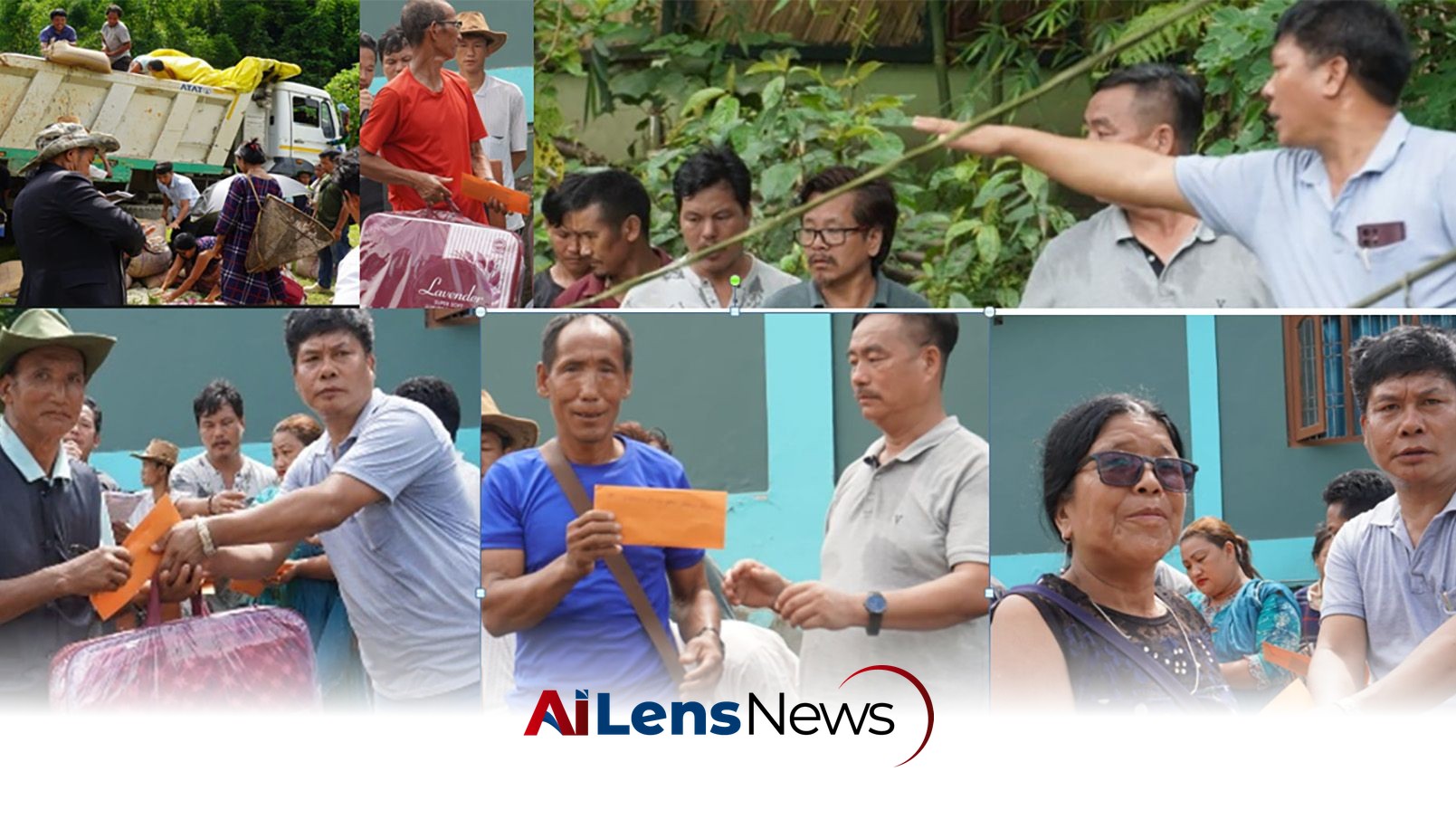


The Koloriang Development-cum-Vigilance Forum (KDVF) has delivered essential relief materials and cash to 15,000 residents affected by severe flooding in Kurung Kumey district.
Itanagar, India Jul 19, 2026 ALN: In response to the devastating flash floods and landslides that struck Kurung Kumey district, approximately 15,000 residents from the Damin, Parsi Parlo, and Panyasang circles have received much-needed relief from the Koloriang Development-cum-Vigilance Forum (KDVF). The relentless rains on the night of July 12 caused significant damage to critical infrastructure, isolating these remote areas from the rest of the state.
The KDVF acted swiftly, providing a truck-load of essential relief materials and cash to the affected communities on Saturday. The chairman of KDVF, Chera Taya, along with general secretary Nongram Ponung, finance secretary Bengia Bado, patron Sanghka Tagik, and chief patron Kahfa Bengia, personally distributed rice, blankets, essential commodities, and cash to each victim to help alleviate their suffering.
According to KDVF officials, the distribution aimed to ensure that the victims receive the necessary support during this challenging time. Chera Taya emphasized the importance of community support, stating, "We are grateful to all the good Samaritans who have contributed relief materials, whether in kind or cash. The KDVF is committed to working for the greater welfare of society."
The affected circles include:
The KDVF's efforts are crucial in providing immediate assistance to those impacted by the floods, which have left many families in dire need of support. The organization continues to call for donations and assistance from the public to further aid the recovery efforts in the region.
As the situation evolves, the KDVF remains dedicated to ensuring that the affected communities receive the necessary resources to rebuild their lives and restore normalcy.
Flash floods are not uncommon in the hilly terrains of northeastern India, where the topography combined with heavy rains can lead to rapid water accumulation and landslides. This particular incident underscores the vulnerability of the region, especially during the monsoon season, which typically spans from June to September. The heavy downpours can lead to severe consequences, including loss of life, displacement, and destruction of property and infrastructure.
The Kurung Kumey district, located in the northeastern part of India, is characterized by its rugged terrain and dense forests, making it both beautiful and challenging for its inhabitants. The district is home to various indigenous communities who rely heavily on agriculture and natural resources for their livelihoods. The sudden loss of crops and damage to homes due to flooding can have devastating long-term effects on these communities, many of whom already face economic challenges.
The response from KDVF highlights the importance of local organizations in disaster relief efforts. When government assistance may be delayed due to logistical challenges or bureaucratic processes, community-based organizations often step in to provide immediate help. The KDVF's quick mobilization of resources demonstrates not only their commitment to humanitarian efforts but also the strength of community solidarity in times of crisis.
Furthermore, the involvement of local leaders and volunteers in the distribution of aid fosters a sense of trust and encourages further community engagement. Chera Taya's acknowledgment of contributions from "good Samaritans" reflects a broader call for collective responsibility, urging both individuals and organizations to contribute to relief efforts. This can create a ripple effect, inspiring others to donate or volunteer, thereby amplifying the impact of the relief efforts.
As the KDVF continues its work, the need for sustainable recovery strategies becomes increasingly apparent. While immediate relief is crucial, long-term recovery plans must also be established to help these communities rebuild and prepare for future disasters. This could include initiatives focused on improving infrastructure, such as building flood-resistant homes and enhancing drainage systems, as well as programs aimed at diversifying livelihoods to reduce dependence on agriculture alone.
Moreover, the role of government agencies cannot be overlooked. Coordination between local organizations like KDVF and government bodies is essential to ensure that recovery efforts are comprehensive and effective. This partnership can help streamline resources and support, ultimately leading to more resilient communities that are better equipped to withstand the impacts of climate change and natural disasters.
In conclusion, the relief efforts provided by KDVF to the flood victims in Kurung Kumey are a testament to the power of community action in times of need. As the region grapples with the aftermath of the floods, it remains crucial for all stakeholders—local organizations, government agencies, and the public—to work together to support recovery and build resilience against future disasters. The strength of the community, coupled with a proactive approach to disaster preparedness and response, can pave the way for a more secure and sustainable future for the residents of Kurung Kumey district.
The recent floods serve as a stark reminder of the need for enhanced disaster preparedness in vulnerable regions. While immediate relief efforts like those of KDVF are vital, they must be complemented by long-term strategies that address the underlying vulnerabilities faced by these communities. This includes improving early warning systems, investing in climate-resilient infrastructure, and promoting sustainable agricultural practices.
Additionally, the psychological impact of such disasters on affected individuals and families cannot be overstated. Many survivors may experience trauma, anxiety, and uncertainty about their future. Mental health support services should be integrated into recovery efforts to help individuals cope with the emotional aftermath of the disaster.
As Kurung Kumey embarks on its recovery journey, it is essential for all stakeholders to remain engaged and committed to building a more resilient community. The lessons learned from this disaster can inform future preparedness initiatives, ensuring that the region is better equipped to handle similar challenges in the years to come. The collaboration between local organizations like KDVF and government bodies will be key in shaping a proactive and effective response to future disasters, ultimately leading to a safer and more sustainable environment for all residents.
To learn more about the latest developments in Local & Regional, stay updated with our exclusive reports and analyses on AiLensNews.

