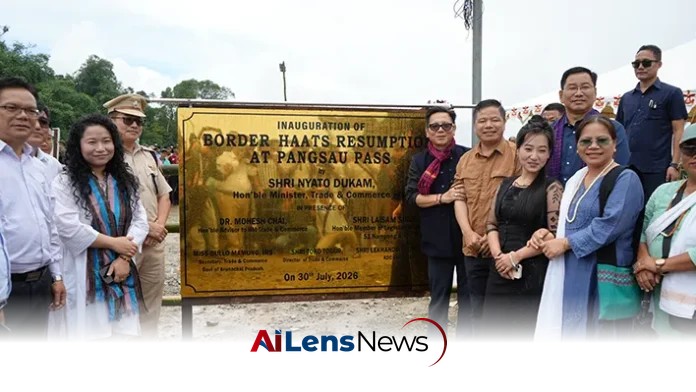


The India-Myanmar border haat at Pangsau Pass has reopened, revitalizing cross-border trade and regional ties after a six-year closure.
Itanagar, India Jul 31, 2026 ALN: NAMPONG, 30 Jul: The India-Myanmar border haat at Pangsau Pass here in Changlang district reopened on Thursday after remaining shut for six years, marking a major step towards revitalising cross-border trade, economic activities, and regional ties.
The reopening of the border haat is significant not only for its immediate economic implications but also for its potential to strengthen bilateral relations between India and Myanmar. Border haats, or markets, are established to facilitate trade between neighbouring countries, particularly in border areas where traditional trade routes may be limited. The Pangsau Pass, located in the northeastern region of India, serves as a crucial juncture for trade and cultural exchanges between the two nations.
Inaugurating the resumption of the border haat, Trade & Commerce Minister Nyato Dukam appealed to all stakeholders, including local communities, traders, and administrative bodies, to actively engage and transform trade into a vibrant, sustainable component of daily life, stating that trade and commerce play a key role in driving the region’s economy. The minister’s remarks underscore the government's recognition of the importance of local participation in fostering economic growth and ensuring that the benefits of trade reach the grassroots level.
Highlighting the historic and strategic importance of Pangsau Pass, the minister reiterated the government’s commitment to strengthening local infrastructure, including a plan for an upcoming “land port” in Nampong to further boost regional trade and connectivity. The proposed land port is expected to serve as a vital logistical hub, facilitating smoother transit of goods and services across the border. This initiative aligns with the broader strategy of enhancing connectivity in the region, which is essential for economic integration and development.
Officials said the resumption of the border haat is expected to significantly augment local livelihoods, foster cultural ties, and lay the groundwork for expanded commercial exchanges across the border. The haat will provide a platform for local farmers, artisans, and traders from both India and Myanmar to sell their products, ranging from agricultural goods to handicrafts. This not only helps in generating income for local communities but also promotes cultural exchange and mutual understanding between the two nations.
The event was attended by key political figures, civil administrators, security officials, and local representatives, including Nampong MLA Laisam Simai, adviser to the minister for trade & commerce Dr Mohesh Chai, Trade & Commerce Secretary Bullo Mamu, Trade & Commerce Director Toko Togur, 21 Assam Rifles Commandant Col Amit Mane, and ZPMs from Nampong, Rima-Putok, Manmao, and Jairampur. The presence of these officials indicates the importance that both the Indian and Myanmar governments place on the reopening of the haat and its potential impact on the region.
The event was attended also by a delegation from Myanmar, which included the Pangsau town chairman, representatives of the Myanmar Army and police, and leaders of the United Tangshang Committee and the local market committee. The participation of Myanmar officials highlights the collaborative spirit between the two countries and the shared interest in promoting cross-border trade and cultural exchange.
The Pangsau Pass has historical significance as a trade route that has facilitated exchanges between the two countries for centuries. Its reopening is a testament to the enduring relationship between India and Myanmar, which has been shaped by shared cultural, historical, and economic ties. The border haat is expected to serve as a catalyst for further collaboration in various sectors, including tourism, agriculture, and small-scale industries.
Moreover, the reopening of the border haat comes at a time when both countries are looking to enhance their economic ties in the wake of global economic shifts. The COVID-19 pandemic had disrupted many aspects of international trade, and the resumption of such initiatives is seen as a step towards recovery and growth. The Indian government has been actively promoting initiatives like the "Act East Policy," which aims to strengthen economic and strategic ties with Southeast Asian countries, including Myanmar.
In addition to economic benefits, the border haat is expected to contribute to social cohesion and stability in the region. By providing a platform for interaction between different communities, it can help in building trust and understanding, which are essential for maintaining peace and harmony in border areas that have historically experienced tensions.
The reopening of the Pangsau Pass border haat is also aligned with broader regional initiatives aimed at enhancing connectivity and trade. The India-Myanmar-Thailand trilateral highway project, for example, seeks to improve road connectivity between the three countries, facilitating trade and movement of people. The successful implementation of such projects can further enhance the economic landscape of the region, making it more attractive for investment and development.
As the border haat resumes operations, it will be crucial for local authorities and stakeholders to ensure that the trade practices are sustainable and equitable. This includes addressing challenges such as smuggling, illegal trade, and ensuring that local communities benefit from the economic activities generated by the haat. Establishing regulations and frameworks that promote fair trade practices will be essential in achieving the long-term goals of the initiative.
In conclusion, the reopening of the India-Myanmar border haat at Pangsau Pass is a significant development that holds promise for enhancing economic ties, fostering cultural exchanges, and improving livelihoods in the region. It reflects the commitment of both nations to strengthen their relationship and work towards mutual growth and prosperity. As stakeholders engage in this renewed trade initiative, the focus will need to be on sustainable practices that ensure the benefits are widely shared among local communities, thereby contributing to a more integrated and prosperous border region.
To learn more about the latest developments in Crime & Law, stay updated with our exclusive reports and analyses on AiLensNews.

