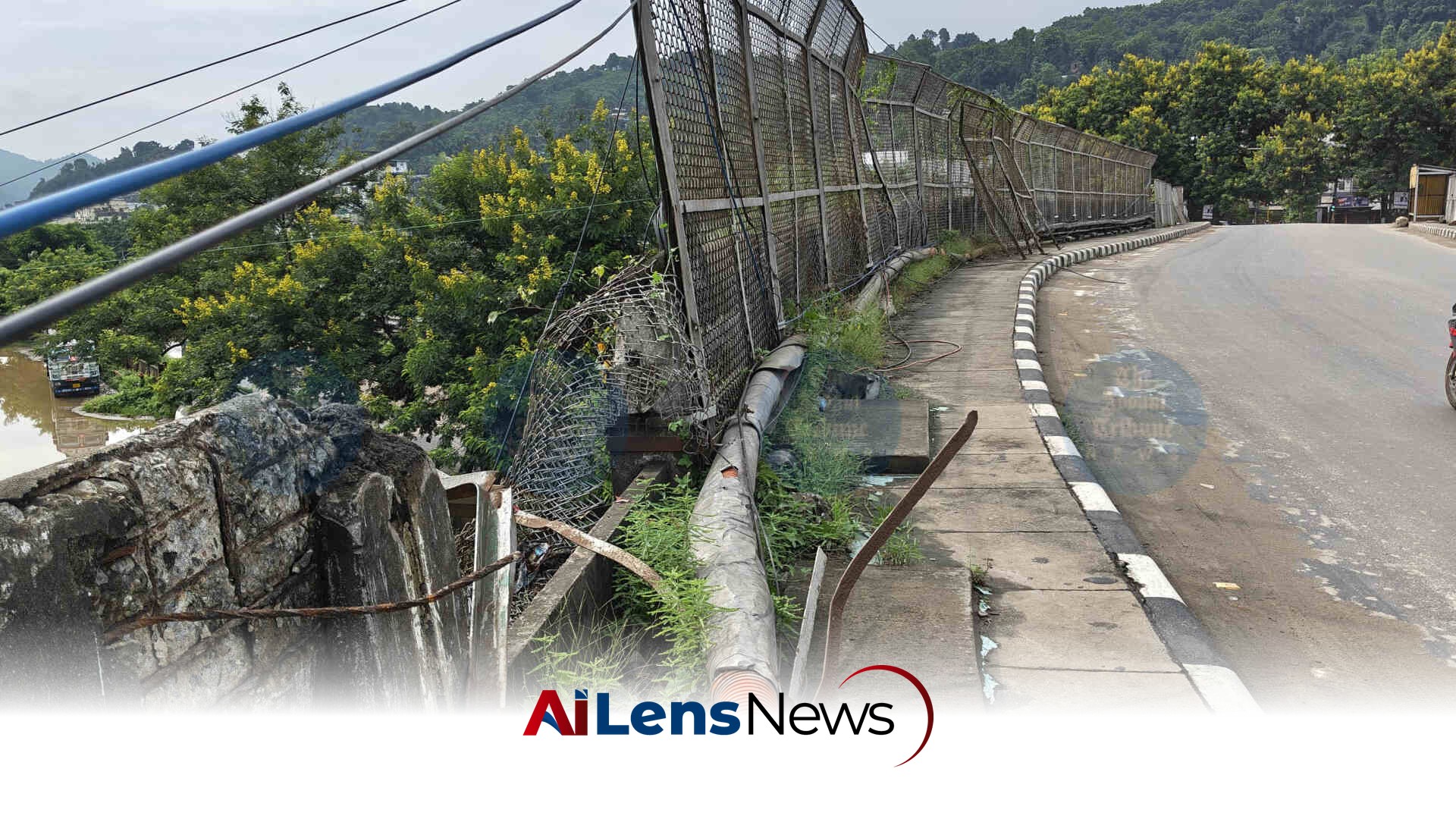


The Mathgharia Flyover in Guwahati shows severe signs of wear, prompting residents to demand urgent repairs to ensure commuter safety.
Itanagar, India Jul 17, 2026 ALN: Nearly 35 years after it was built, Guwahati's Mathgharia Flyover now stands as a reminder of the importance of timely maintenance of public infrastructure. This structure, which was once a symbol of progress and modernization for the city, has gradually fallen into disrepair, raising serious concerns about the safety of its users.
The flyover, constructed in 1991, was the fourth flyover to be built in Guwahati, a city that has seen significant urban growth and infrastructural development in recent decades. However, as newer flyovers and elevated corridors have been constructed, the Mathgharia Flyover has been left behind, neglected and in dire need of maintenance. Cracked and broken footpaths, damaged railings, and sections of the parapet walls showing signs of deterioration are just a few of the visible issues that have emerged over the years. Poor lighting further exacerbates the situation, making the structure a potential hazard for commuters, especially during nighttime.
Residents living in the vicinity of the flyover have reported their growing concerns about its safety. Locals claim that the bridge shakes when multiple vehicles pass simultaneously, creating a sense of unease for drivers and pedestrians alike. Accidents have become routine, with reports of vehicles crashing into the railings and parapet walls, highlighting the urgent need for repairs. Despite repeated appeals for action from the community, little has been done to address these issues.
Local resident Dinanath Patowary expressed his pride in the flyover's historical significance but lamented its current state. He recalled that the project was initiated during the Assam Gana Parishad government's tenure and inaugurated after the Congress party took power, with the late Governor Loknath Mishra performing the unveiling ceremony. "We are proud that this was one of Guwahati's earliest flyovers, but it pains us to see what it has become," Patowary said. His sentiments reflect a broader frustration among residents who feel that their concerns have fallen on deaf ears. "Today, vehicles frequently crash into the railings of the flyover. We have informed the authorities several times, but nothing has changed. Guwahati now has many impressive flyovers. We only ask that the Chief Minister and the local MLA also pay attention to this ageing structure before a bigger tragedy occurs," he added.
Another resident, Mukul Chandra Goswami, echoed similar sentiments, emphasizing that the flyover's age is becoming increasingly apparent. "It has been almost 35 years, yet there has been no major repair. Anyone driving over it can feel the difference. When two or more vehicles cross simultaneously, the bridge vibrates noticeably. There is also no proper divider despite the sharp curve on the flyover, making accidents common. Modern engineering techniques are available today, and the bridge should be strengthened using current technology," he stated. His comments underline the necessity for an updated approach to the maintenance and safety of aging infrastructure.
The issue of inadequate lighting further complicates the situation. Residents have pointed to poor visibility as a significant contributing factor to the frequent accidents, particularly after dark. Bishnu Prasad Kalita, another local resident, noted that the damaged parapet walls and broken footpaths make the flyover dangerous for both motorists and pedestrians. He stressed that maintenance should not wait until something goes wrong, calling for better lighting and structural repairs to be prioritized.
For Ropali Das Gogoi, whose shop is located close to the flyover, the problem is painfully visible every day. "I regularly witness accidents from my shop. Some have even proved fatal. The damaged railings tell the story of repeated crashes. The bridge deserves immediate repairs," she said, highlighting the human cost of neglecting infrastructure maintenance. Another resident, Dipika Das, also expressed concern, stating that heavy traffic combined with the deteriorating condition of the flyover has made commuting increasingly risky.
In addition to the safety concerns regarding the flyover itself, some residents have raised alarms about the area beneath the flyover, which has reportedly become a hub for anti-social activities, including drug-related offenses. This alarming trend has prompted calls for stronger policing in conjunction with the necessary infrastructure repairs, as the community seeks to reclaim their neighborhood from illicit activities.
In response to the residents' concerns, railway officials have pointed out that the flyover passes over railway tracks, and as such, inspections are carried out periodically from the railway's side. A railway official stated that engineers routinely inspect the structure supporting the railway corridor and undertake repairs where necessary. For major works, the Railways coordinate with the State government, and if required, traffic restrictions are imposed to facilitate repairs. "The railway follows a structured inspection and maintenance protocol. If any major intervention becomes necessary, it is undertaken after discussions with the State government. Similar coordination is currently being seen during maintenance work on the Saraighat Flyover," the official explained.
However, residents argue that while inspections may be taking place, visible improvements on the road surface and pedestrian infrastructure remain absent. This disconnect between official inspections and on-the-ground realities has led to frustration among locals who feel that their safety is being compromised. As Guwahati continues to expand with newer and wider flyovers, the Mathgharia Flyover remains a critical artery for thousands of commuters each day, yet it is a structure that locals believe requires urgent attention and comprehensive restoration.
The situation surrounding the Mathgharia Flyover serves as a poignant reminder of the challenges faced by aging infrastructure in rapidly urbanizing areas. It highlights the need for proactive maintenance strategies and the importance of listening to community concerns in order to prevent potential tragedies. As the city moves forward, the fate of the Mathgharia Flyover will likely serve as a case study for urban planners and government officials grappling with similar issues in other regions.
Ultimately, the residents of Guwahati hope that their calls for action will be heard and that the Mathgharia Flyover will receive the attention it so desperately needs. Without timely and effective intervention, there is a genuine risk that this once-celebrated structure could become a site of tragedy rather than a testament to the city's progress.
To learn more about the latest developments in Local & Regional, stay updated with our exclusive reports and analyses on AiLensNews.

