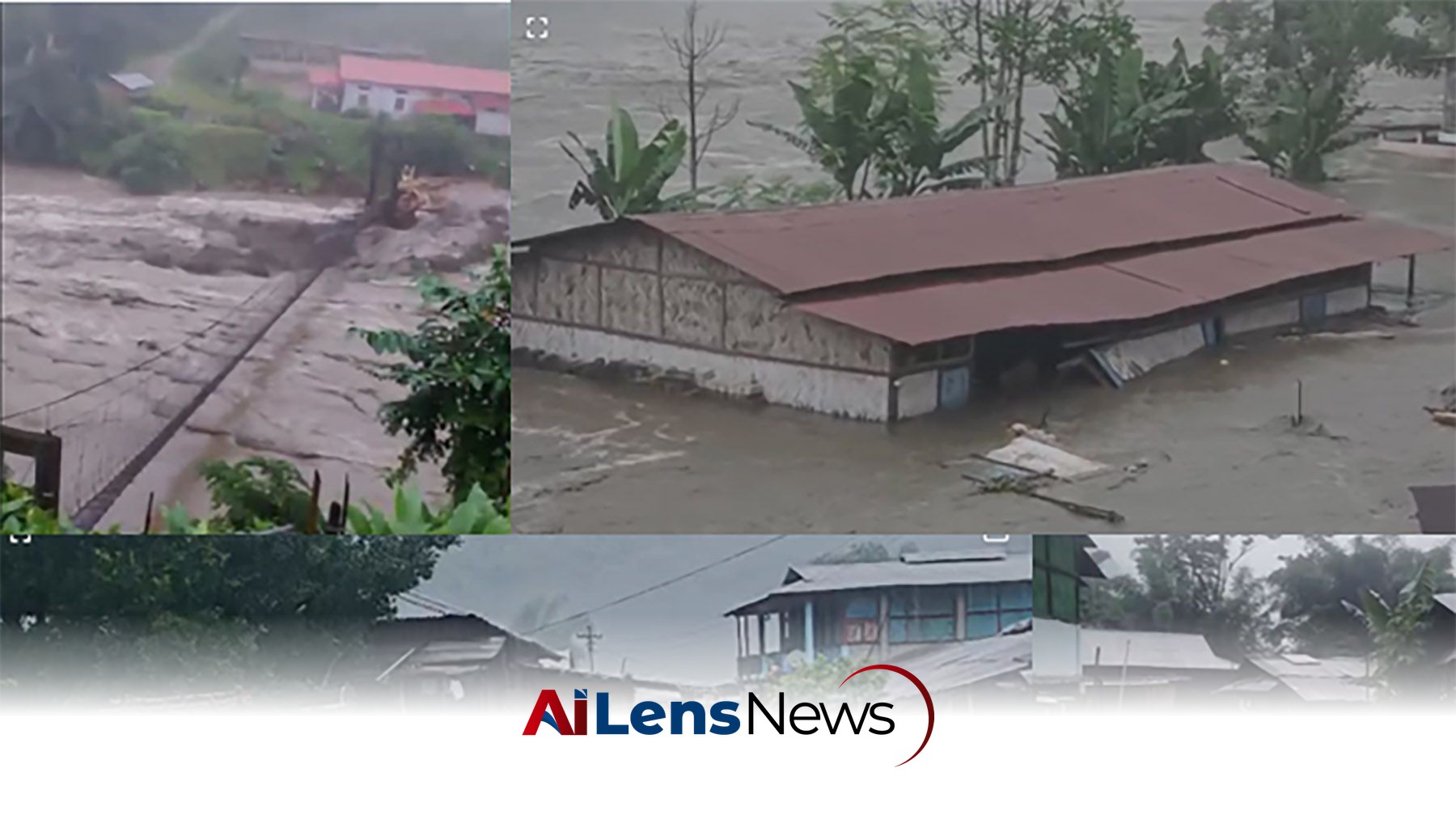


Heavy rains and landslides in Kurung Kumey district have isolated three administrative circles, prompting urgent calls for government assistance.
Itanagar, India Jul 14, 2026 ALN: Following a devastating cloudburst and torrential rain on June 23, incessant rainfall throughout the night of July 12 has triggered flash floods and landslides in Kurung Kumey district. This natural disaster has caused significant damage to critical infrastructure, effectively cutting off the remote administrative circles of Damin, Parsi Parlo, and Panyasang from the rest of the region.
Former Kurung Kumey ZPC Sangha Tagik reported that approximately 16,000 residents are affected, with Damin housing around 5,000 people, Parsi Parlo 7,000, and Panyasang 3,000. Tagik provided videographic evidence of the devastation, which shows multiple blockades and washouts disrupting surface communication, power supply, and access to clean water. Fortunately, all residents managed to escape unharmed, although livestock losses have been reported.
“The wire-rope-suspension bridges (WRSB) connecting various villages, including Mangio, Huri, and Pagam, have been washed away,” Tagik explained. He emphasized the critical state of the infrastructure, which has left many communities isolated. The fully swollen Kurung and Kumey Rivers, known for their violent nature, have exacerbated the situation, inundating houses downstream in Kamley district.
Despite the efforts of Kurung Kumey District Commissioner Ceechung Chukhu, the lack of surface communication has made it nearly impossible to provide immediate relief to the affected populations. Tagik has issued a plea for urgent assistance, stating, “This should be considered an SOS message. The state government must send relief materials by helicopter to support the poor and needy.”
The territory of the present district was part of the North East Frontier Tracts in 1914 and became the Subansiri Frontier Division in 1954. It was later renamed Lower Subansiri district, and Kurung Kumey district was created on April 1, 2001, by bifurcating the Lower Subansiri district. This historical context highlights the region's evolving administrative structure and its ongoing challenges related to geographical isolation and infrastructure development.
As the situation develops, the need for immediate government intervention is critical to prevent further suffering among the affected residents. Local authorities are calling for a coordinated response to address the urgent needs of those cut off from essential services. The flooding has not only disrupted daily life but has also raised concerns about food security, health risks, and long-term recovery efforts.
Flooding in Kurung Kumey is not an isolated incident; the region has a history of natural disasters exacerbated by climate change and deforestation. The monsoon season typically brings heavy rainfall, and the recent patterns indicate an increase in extreme weather events. This has led to calls from environmentalists and local leaders for sustainable development practices that can mitigate the impacts of such disasters in the future.
The response to this disaster will likely involve multiple stakeholders, including local government agencies, non-governmental organizations, and community groups. Coordination among these entities is essential to ensure that resources are allocated effectively and that those in need receive timely assistance. The logistics of delivering aid to remote areas will be a significant challenge, particularly given the damaged infrastructure.
In addition to immediate relief efforts, there is a pressing need for long-term solutions to improve infrastructure resilience in Kurung Kumey. This could involve investing in better drainage systems, reinforcing riverbanks, and constructing more durable bridges that can withstand extreme weather. Furthermore, community education on disaster preparedness and response could empower residents to better cope with future flooding events.
The psychological impact of such disasters on affected communities cannot be overlooked. The trauma of losing homes, livestock, and access to basic necessities can have lasting effects on the mental health of residents. Support services, including counseling and community rebuilding initiatives, will be vital as Kurung Kumey begins to recover from this disaster.
As the rain continues to fall, the situation remains precarious. Local officials are closely monitoring water levels and potential further landslides, while residents are urged to remain vigilant and prepared for any additional emergencies. The government’s response in the coming days will be crucial in determining the extent of recovery and rebuilding efforts in the aftermath of this disaster.
In conclusion, the severe flooding in Kurung Kumey district serves as a stark reminder of the vulnerability of remote communities to natural disasters. The urgent need for government intervention, coupled with a call for sustainable practices and infrastructure development, highlights the complexities of disaster management in the context of climate change. As the affected residents await assistance, their plight underscores the importance of preparedness and resilience in the face of an uncertain future.
To understand the implications of this disaster, it is essential to consider the broader context of environmental changes in the region. Kurung Kumey, located in , is part of the Eastern Himalayan ecosystem, which is known for its rich biodiversity and unique geography. However, this region is also particularly susceptible to the effects of climate change, including altered precipitation patterns and increased frequency of extreme weather events.
The ongoing challenges of deforestation, urbanization, and infrastructural development have compounded these vulnerabilities. As human activities encroach upon natural landscapes, the ability of the environment to absorb heavy rainfall diminishes, leading to increased runoff and flooding. This disaster is a clear indicator of the urgent need for integrated land-use planning and sustainable development practices that prioritize environmental conservation.
Local communities, which often rely on agriculture and livestock for their livelihoods, face the dual threat of immediate loss from flooding and longer-term impacts on food security. The destruction of crops and loss of livestock can lead to food shortages and increased prices, exacerbating poverty and vulnerability in the region. Therefore, it is crucial for the government and humanitarian organizations to not only provide immediate relief but also to implement strategies that support agricultural recovery and food security in the long term.
Furthermore, the role of community engagement in disaster preparedness cannot be overstated. Residents of Kurung Kumey must be included in the planning and implementation of disaster risk reduction strategies. This could involve training local volunteers in emergency response, establishing early warning systems, and creating community-based disaster management plans. By empowering local populations, the resilience of communities can be strengthened, enabling them to respond more effectively to future disasters.
As the recovery efforts unfold, it will be important to monitor the situation closely and assess the effectiveness of the response. Lessons learned from this disaster can inform future policies and practices, ensuring that the region is better prepared for the challenges posed by climate change and natural disasters. The collaboration between government, NGOs, and local communities will be essential in creating a comprehensive approach to disaster risk reduction and sustainable development in Kurung Kumey and beyond.
In summary, the severe flooding in Kurung Kumey district has highlighted the urgent need for a multifaceted approach to disaster management that encompasses immediate relief, long-term infrastructure resilience, community empowerment, and sustainable environmental practices. As the region faces the ongoing challenges posed by climate change, it is imperative that all stakeholders work together to build a more resilient future for the residents of Kurung Kumey.
To learn more about the latest developments in Local & Regional, stay updated with our exclusive reports and analyses on AiLensNews.

