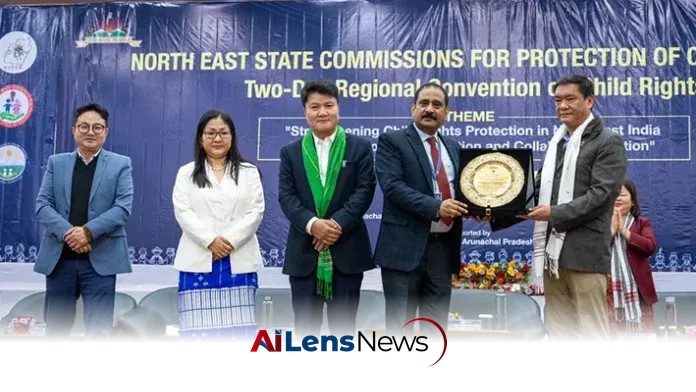


At the Northeast State Commissions for Protection of Child Rights Convention, CM Pema Khandu emphasized the need for collaborative action among Northeastern states to tackle challenges like trafficking and child marriage.
Itanagar, India Aug 1, 2026 ALN: TAWANG, 31 Jul: Chief Minister Pema Khandu on Friday called for stronger regional cooperation and collaborative action among the Northeastern states to address emerging challenges affecting children, including trafficking, online exploitation, substance abuse, child marriage, and cross-border vulnerabilities.
Addressing the inaugural session of the Northeast State Commissions for Protection of Child Rights Convention here, the chief minister described the gathering as a historic milestone, marking the first time that all State Commissions for Protection of Child Rights (SCPCR) from the Northeast have come together on a common platform dedicated exclusively to the protection and promotion of child rights.
Welcoming chairpersons, members and member secretaries of the state commissions, representatives of national institutions, senior officials, development partners and civil society organisations, Khandu said that Tawang, a land synonymous with peace, compassion and harmony, is a fitting venue for deliberations on safeguarding the rights and future of children.
Emphasising that child welfare is the true measure of good governance, Khandu said the success of any government cannot be judged solely by economic growth or infrastructure development but by how effectively it protects its most vulnerable citizens. He reiterated that every child deserves a safe environment, free from violence, exploitation, abuse and discrimination, along with access to education, healthcare, nutrition, and equal opportunities.
Highlighting the state's commitment towards child welfare, Khandu outlined a series of initiatives aimed at empowering children, particularly the girl child. He informed that under the Dulari Kanya Scheme, more than 15,500 girls have benefitted from financial assistance for higher education, with the state investing over Rs 38 crore. This initiative is part of a broader strategy to promote gender equality and ensure that girls have the same opportunities as boys when it comes to education and personal development.
He further noted that over 134 awareness programmes have been conducted under the Beti Bachao, Beti Padhao initiative across the state. This initiative aims to address the declining child sex ratio and promote the importance of educating girls. He also informed that the state government has earmarked Rs 3.3 crore under the Girls Health & Hygiene Scheme in 2026-27 to provide sanitary napkins to more than 25,000 beneficiaries, recognizing the importance of menstrual health management in ensuring girls' continued education and well-being.
Stressing that child welfare begins with maternal care, Khandu highlighted several initiatives launched by the prime minister, specifically aimed at improving maternal and child health outcomes. He informed that more than 38,000 beneficiaries have received support under the Pradhan Mantri Matru Vandana Yojana, which provides financial assistance to pregnant and lactating women to ensure proper nutrition and healthcare during critical stages of motherhood. Additionally, over 34,000 beneficiaries are being directly assisted through nutrition-related interventions, which are crucial for the healthy development of both mothers and children.
Under Saksham Anganwadi and Poshan 2.0, more than 1.8 lakh women and children are covered, with 152 anganwadi centres already upgraded and another 125 being developed under the ‘Adopt an Anganwadi’ initiative, he said. This initiative aims to strengthen the framework for early childhood care and education, ensuring that children receive the foundational support they need for their overall development.
On strengthening the child protection ecosystem, Khandu said that under Mission Vatsalya, more than 2,500 vulnerable children are receiving sponsorship support, while 2,479 children are benefitting from monthly assistance of Rs 4,000 under sponsorship, foster care and aftercare schemes. These measures are designed to provide financial support and stability to children who are at risk of being marginalized or neglected. He also highlighted the functioning of the 24×7 child helpline 1098, one-stop centres in all 25 districts and women helpline 181 as critical support mechanisms for children and women in distress.
Calling child protection a collective responsibility, Khandu stressed that governments alone cannot safeguard children. He urged schools, families, law enforcement agencies, the judiciary, health workers, community leaders, faith-based organisations and civil society groups to work together in creating a safe and nurturing environment for children. This call for collaboration underscores the importance of a multi-faceted approach to child protection, which involves not only government intervention but also community engagement and support.
Highlighting the unique geographical and social realities of the Northeast, the chief minister said issues such as trafficking, online exploitation and substance abuse often transcend state boundaries, making interstate coordination essential. The Northeast region, characterized by its diverse cultures and complex socio-political dynamics, faces unique challenges that require tailored solutions and cooperative frameworks between states to effectively combat these issues.
He expressed hope that the convention would facilitate greater exchange of best practices, stronger implementation of child protection laws, improved coordination in cases involving missing and trafficked children, and more effective responses to emerging online threats. By fostering collaboration among the various state commissions, the convention aims to create a unified front against the challenges that threaten child welfare in the region.
Urging the participants to move beyond discussions and translate ideas into tangible outcomes, the chief minister said that the true success of the convention would be measured not by the number of speeches delivered but by meaningful improvements in the lives of children across the region. This emphasis on actionable results reinforces the need for accountability and follow-through in initiatives aimed at child welfare.
Congratulating the State Commission for Protection of Child Rights under its Chairperson Ratan Anya for organising the convention, Khandu thanked all participating state commissions, national institutions, experts, officials and development partners for contributing to the collective mission of protecting children and advancing their rights across the Northeast. The collaborative effort is seen as a critical step towards establishing a more robust framework for child protection in the region.
A Northeast SCPCR convention souvenir was also released by the chief minister and dignitaries present to mark the occasion. This souvenir serves not only as a memento of the event but also as a reminder of the commitments made and the collective responsibility shared by all stakeholders involved in the protection of children's rights.
The two-day convention is being chaired by Women & Child Development Minister Dasanglu Pul, while the inaugural ceremony was attended by home department adviser Mutchu Mithi, women & child development department adviser Tsering Lhamu, Tawang MLA Namgey Tsering, invitees, and others. The presence of various dignitaries underscores the importance of the convention and the shared commitment to addressing the pressing issues affecting children in the Northeast.
To learn more about the latest developments in Crime & Law, stay updated with our exclusive reports and analyses on AiLensNews.

