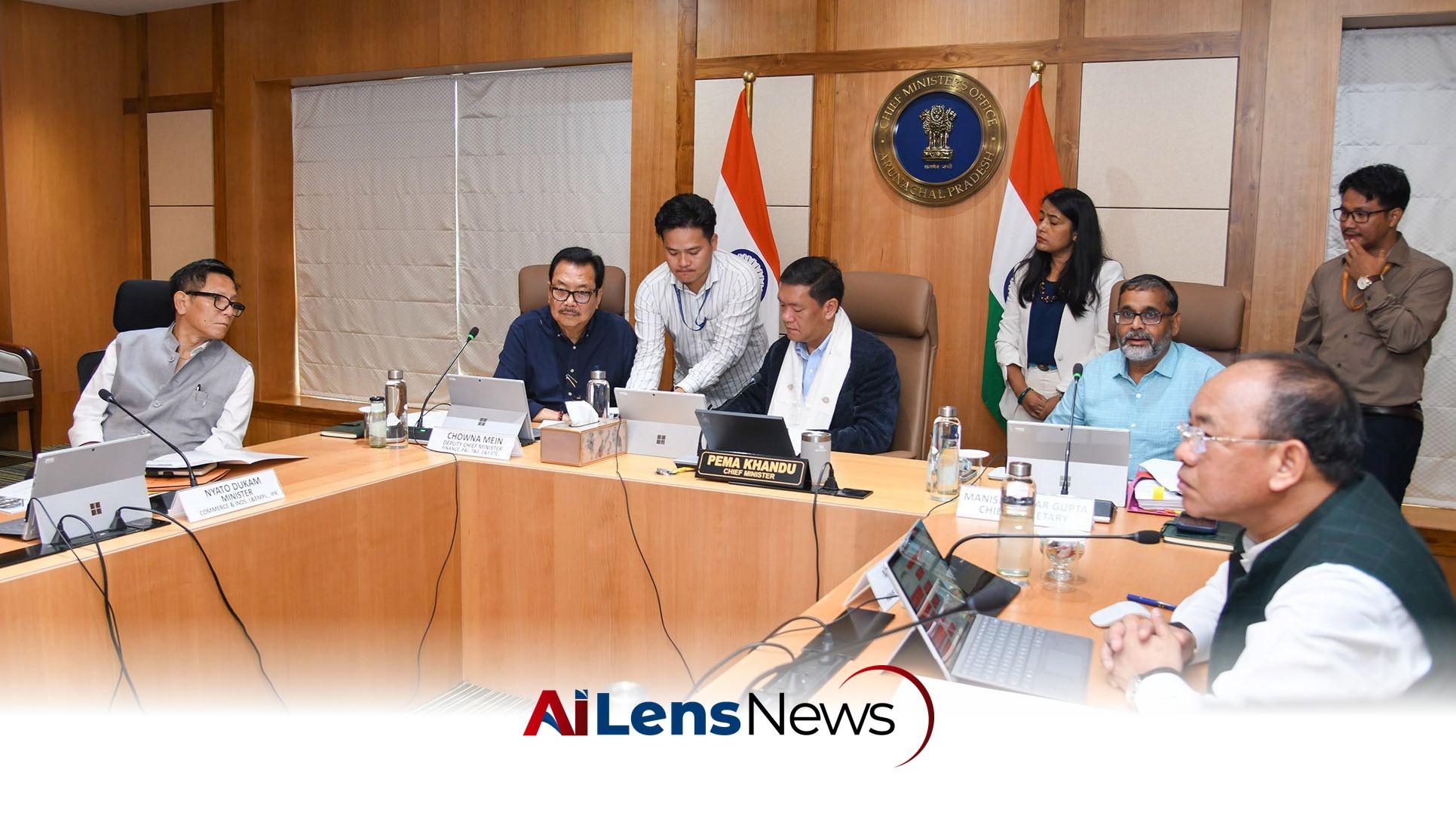


The Cabinet has approved a significant investment of ₹7,834 crore to enhance infrastructure and education, focusing on road development, power supply, and school upgrades.
Itanagar, India Jul 18, 2026 ALN: The State Cabinet, led by Chief Minister Pema Khandu, has unveiled a transformative reform agenda aimed at enhancing the quality of life for citizens and improving the ease of doing business in the state. The Cabinet approved cumulative investments of ₹7,834 crore for the implementation of four Chief Minister Comprehensive Schemes (CMCSs) for the period of 2026-29.
This substantial investment includes an outlay of ₹2,334 crore for Phase-II of the Chief Minister Comprehensive State Road Development Plan (CMCSRDP), which focuses on improving connectivity for district headquarters, as well as roads leading to DC, ADC, and SDO headquarters. The plan also aims to alleviate congestion in the Capital Complex.
The Phase-II of CMCSRDP builds upon the success of Phase-I, which sanctioned 67 roads and bridges with a cumulative outlay of ₹899.58 crore during the 2019-24 period. The Cabinet commended the completion of 62 projects under Phase-I and directed the completion of the remaining projects by March 2027.
Additionally, an outlay of ₹2,000 crore was approved for the CMCSRDP over the next three years to construct roads and bridges that will provide all-weather connectivity to habitations not covered under the Pradhan Mantri Gram Sadak Yojana (PMGSY).
The Cabinet also approved an investment of ₹2,000 crore under the ambitious Chief Minister Comprehensive State Power Development Plan (CMCSPDP) to upgrade and modernize critical power infrastructure. This initiative aims to improve the reliability of household electricity supplies and reduce the state’s Aggregate Technical and Commercial (AT&C) losses to 18% by March 2029.
During the meeting, the Cabinet was briefed on the success of Phase-I of Mission Shikshit (MSA) by 2029, which saw an investment of ₹3,112.50 crore for upgrading school infrastructure from 2023-26. The MSA is designed to achieve 100% saturation of school infrastructure gaps by 2029, maintain a balanced student-teacher ratio, comply with the New Education Policy 2020, and improve learning outcomes to exceed national benchmarks.
The Cabinet approved an additional outlay of ₹1,500 crore for Phase-II of MSA for the years 2026-29, focusing on filling infrastructure gaps in remaining schools, enhancing teacher training, and improving real-time monitoring through the Vidya Nidhi (AVN) platform to boost student learning outcomes.
The cumulative investment of ₹7,834 crore across the four CMCSs aims to converge existing Central and State schemes, addressing critical gaps in infrastructure and education sectors. This represents one of the largest investments by the Khandu government in recent times, aimed at upgrading and enhancing the state's infrastructure.
The rollout of the E-HRMS 2.0 platform (Enterprise Human Resources Management System or Manav Sampada) was also initiated during the meeting. This AI-powered platform automates the entire employee lifecycle, streamlining operations from recruitment to retirement, thereby enhancing efficiency, transparency, and accessibility for government employees. The Cabinet directed all departments in the state to adopt E-HRMS 2.0 expeditiously.
Furthermore, the Chief Ministers Frontier Sainik School Scholarship Scheme was launched to provide financial support to students studying in eight notified Sainik Schools and the Rashtriya Indian Military College, Dehradun.
The Cabinet approved the launch of an Indian Army-led mentorship program, aimed at providing coaching and mentorship for students. This initiative seeks to build on the longstanding civil-military relationship in the state, enabling youth to gain admission to Sainik and Military Schools and ultimately become officers in the Indian Armed Forces, fulfilling an important announcement made during the 2026 State Budget.
In line with another strategic announcement from the 2026 State Budget, the ARUN MSME Mission was launched to provide revival and capacity upgradation support to 500 MSMEs annually. This mission aims to assist in market linkages, capacity enhancement, and export assistance for MSMEs, further promoting local entrepreneurship and economic transformation opportunities for the state's youth.
The Cabinet also approved the transformative Human Capital and Economic Transformation Vision 2036, which aims to create a future-ready workforce, globally competitive entrepreneurs, and an innovation-driven economy aligned with local opportunities and national growth sectors by 2036. The vision includes goals such as skilling 100,000 youths, creating 10,000 entrepreneurs, facilitating 10,000 apprenticeships, enabling 10,000 overseas placements, establishing 100 industry partnerships, and upgrading all 10 ITIs to Modern Skill Hubs and Centres of Excellence.
To recognize the skills and discipline of retired Agniveers, the Cabinet approved a reservation of 20% of posts for them in various police and emergency services recruitment. If there are insufficient qualifying candidates under the ex-Agniveer quota, remaining posts will be filled from the normal APST quota.
The launch of the Apiculture and Honey Policy, 2026, aims to transform the state into a leading hub for beekeeping and honey production, developing a sustainable and commercially viable apiculture sector. This policy seeks to enhance the incomes of farmers and women SHG members, positioning the state as a leading honey producer in the North East region.
Moreover, the Cabinet approved significant measures to enhance the ease of doing business for entrepreneurs and investors in the state. The “Non-applicability of Trade Licence (for Statutory Licence Holders) Notification, 2026” exempts businesses with valid statutory licenses from obtaining a separate trade license for specified activities, while 56 items were approved for exemption from trade license issuance to eliminate regulatory duplication.
The Cabinet recommended the promulgation of the Fire and Emergency Services (Amendment) Ordinance, 2026, which seeks to amend the Fire and Emergency Services Act, 2026, in compliance with the Government of India's initiative to reduce regulatory burdens.
Additionally, the proposed amendment of Staff Selection Board (APSSB) Rules, 2018 was approved to enhance the waitlist for each category of posts to 20% of the total vacancy, thereby creating more job opportunities for youth appearing for the APSSB examination.
To improve emergency relief and disaster preparedness, the Cabinet approved the establishment of six new fire stations equipped with state-of-the-art facilities in various locations.
Lastly, the Cabinet approved the enactment of the Advocates Protection Bill (Act), 2026, which aims to protect the lives and properties of advocates practicing within the state. This will be the first Act of its kind in the state.
These comprehensive measures reflect the government's commitment to enhancing administrative efficiency, improving citizen service delivery, and fostering economic growth in .
To learn more about the latest developments in Local & Regional, stay updated with our exclusive reports and analyses on AiLensNews.

