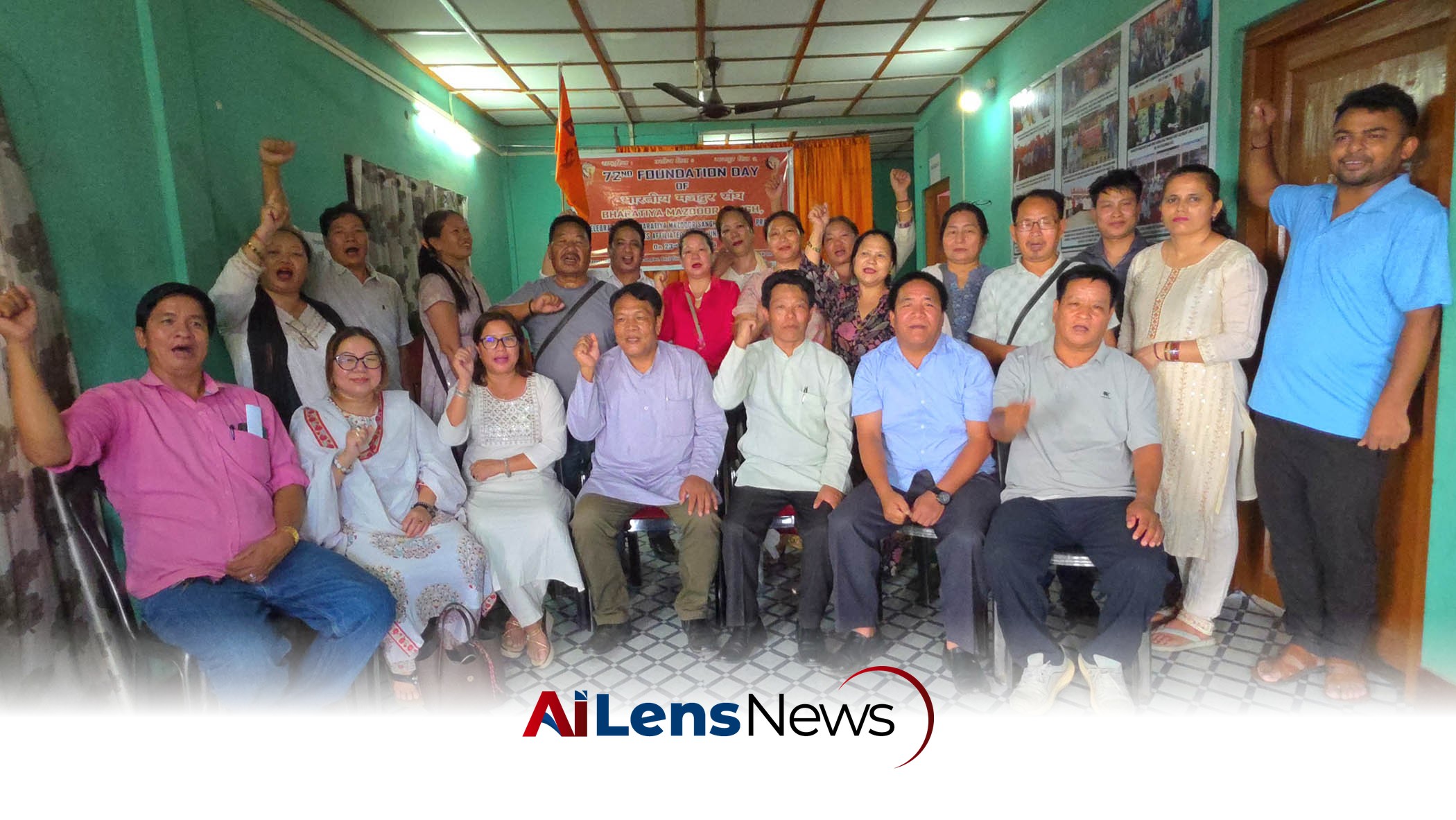


On its 72nd foundation day, the Bharatiya Mazdoor Sangh (BMS) in Itanagar reiterated demands for a minimum wage increase to ₹18,000 for workers and job regularization for long-serving employees.
Itanagar, India Jul 24, 2026 ALN: The Bharatiya Mazdoor Sangh (BMS) has reiterated its commitment to advocate for the rights and welfare of the workers' community in the state. This declaration was made during the 72nd foundation day celebration of the BMS held here on Thursday. The BMS, which is affiliated with the Rashtriya Swayamsevak Sangh , has been an active player in the labor movement in India, focusing on the rights of workers across various sectors.
Addressing the gathering, BMS president Ringu Chapo emphasized, “The BMS is dedicated to the welfare of the workers' community. Memorandums detailing various demands have previously been submitted to the Government of (GoAP). The Chief Minister must address the genuine grievances of the workers.” This statement underscores the ongoing dialogue between labor organizations and government authorities, highlighting the importance of responsive governance in addressing workers' issues.
The pressing demands include raising the minimum wage for casual and contingency workers to ₹18,000 per month. This figure is significant as it represents a push towards a living wage that can adequately support families in the current economic climate. Regularizing jobs for contractual employees and casual workers who have served for over 20 years is another key demand, reflecting the need for job security in a labor market that often relies on temporary and precarious employment arrangements.
In addition to wage increases, the BMS is advocating for ensuring timely wage disbursement, providing a one-time retirement benefit upon superannuation, and increasing the retirement benefit for casual and contingency workers from ₹3 lakh to ₹10 lakh. These demands are crucial as they address not only the immediate financial needs of workers but also their long-term security and well-being.
Chapo also pointed out that the demand for an increase in monthly honorarium and job regularization for anganwadi and ASHA workers based on seniority has been pending for some time. Anganwadi and ASHA workers play a crucial role in the public health and education sectors, particularly in rural and semi-urban areas, and their contributions are often undervalued. This has been a long-standing issue, as these workers often receive low wages despite their significant responsibilities. The BMS's focus on these workers highlights the need for recognition of their essential roles in community health and education.
Additional demands include monthly payments for anganwadi workers and helpers, enhancement of the state share for ASHA workers and anganwadi workers, regularization of 50% of vacant Multi-Tasking Staff (MTS) posts as ASHA workers and helpers based on seniority and qualifications, and the provision of designated vending zones for street vendors in the capital complex along with the issuance of vending licenses. The establishment of vending zones is particularly relevant in urban areas where street vendors are an essential part of the local economy yet often operate in precarious conditions without legal recognition. By advocating for designated vending zones, the BMS is addressing the need for urban planning that supports informal workers and acknowledges their contributions to the economy.
“The workers' community has been working with sincerity and dedication, and their welfare is our responsibility,” Chapo added. This statement reflects a broader sentiment among labor organizations that workers deserve recognition and support from both the government and society at large. The BMS has long been a proponent of labor rights in India, advocating for fair wages, job security, and improved working conditions. The organization's commitment to these principles is evident in its ongoing efforts to engage with government authorities and push for meaningful reforms.
General Secretary Donik Tallang stated, “We will submit a memorandum to the GoAP again, seeking immediate attention to our demands.” This commitment to follow up with the government underscores the BMS's proactive approach in seeking redress for workers' grievances. The BMS's history of submitting memorandums highlights a systematic effort to engage with government authorities, though the effectiveness of these efforts often depends on the political climate and the responsiveness of the government. This dynamic is crucial in understanding the relationship between labor organizations and state authorities in India.
As the BMS continues to advocate for these issues, the organization remains focused on ensuring that the rights and welfare of workers are prioritized by the government. The demands put forth by the BMS are not only about immediate financial relief but also about long-term structural changes that can improve the livelihoods of workers in the state. The context of these demands is significant, given the ongoing economic challenges faced by many workers in India. The COVID-19 pandemic has exacerbated existing inequalities in the labor market, with many workers losing their jobs or facing pay cuts. In this environment, the call for a minimum wage of ₹18,000 reflects a broader movement across India advocating for a living wage that can support the basic needs of families.
Moreover, job regularization for long-serving contractual and casual workers is a critical issue that speaks to the need for job security in a rapidly changing economic landscape. Many workers in India are employed in informal sectors with little to no job security, making the push for regularization a vital aspect of labor rights advocacy. This push is particularly relevant in the context of the Indian economy, which has seen a significant rise in informal employment over the past few decades, often leaving workers vulnerable to exploitation and economic instability.
The implications of the BMS's demands extend beyond immediate wage increases. By advocating for the regularization of jobs and better retirement benefits, the organization is pushing for a more equitable labor market that recognizes the contributions of all workers, regardless of their employment status. This could lead to a significant shift in how labor is viewed in the state and potentially inspire similar movements in other regions of India. The BMS's efforts may also contribute to a growing national discourse on labor rights, particularly as the country grapples with issues related to economic inequality and social justice.
Furthermore, the demand for designated vending zones for street vendors highlights the need for urban planning that accommodates informal workers. Street vendors often face harassment and eviction from public spaces, and providing them with legal recognition and designated areas to operate can help improve their economic stability and dignity. This recognition is critical as street vendors contribute significantly to urban economies, providing affordable goods and services to local communities while often lacking the protections afforded to formal workers.
In conclusion, the Bharatiya Mazdoor Sangh's demands for a wage hike to ₹18,000 and job regularization are part of a larger struggle for workers' rights in India. The organization's efforts reflect a growing recognition of the need to address the challenges faced by workers in both formal and informal sectors. As the BMS prepares to submit its memorandum to the government, the response from authorities will be crucial in determining the future of labor rights in the state. The outcome of this advocacy could set important precedents for labor policies not only in but across India, as the country continues to grapple with issues of economic inequality and workers' rights.
To learn more about the latest developments in Labour & Employment, stay updated with our exclusive reports and analyses on AiLensNews.

