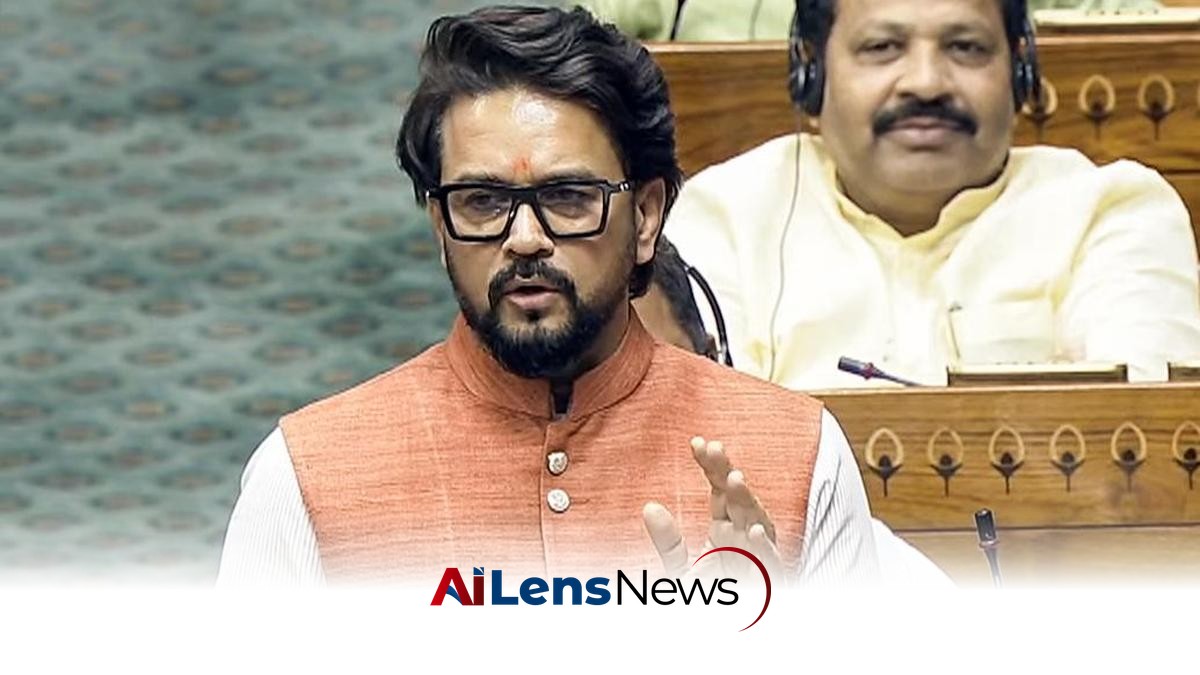


BJP MP Anurag Thakur has filed a privilege notice against Rahul Gandhi for alleged derogatory comments about Amit Shah during a parliamentary debate.
New Delhi, India Jul 31, 2026 ALN: BJP MP and former Union Minister Anurag Thakur on Thursday submitted a notice of breach of privilege and contempt of the House against Leader of Opposition (LoP) Rahul Gandhi in the Lok Sabha. This action highlights ongoing tensions between the ruling party and the opposition, particularly in the context of heated debates surrounding critical legislation and political accountability.
Mr. Thakur submitted the notice to Speaker Om Birla, citing Mr. Gandhi's use of unparliamentary and derogatory language, along with grave and unsubstantiated allegations against Home Minister Amit Shah. The invocation of privilege proceedings is not uncommon in Indian parliamentary practice, especially when members feel that decorum has been violated or that falsehoods have been propagated within the House. Such notices are typically seen as a means to uphold the dignity of the legislature and maintain a standard of conduct among its members.
Parliament Monsoon Session Day 9 LIVE
In the three-page notice, Mr. Thakur requested the Speaker to refer the matter to the Privilege Committee for a detailed inquiry and appropriate action, including a direction for Mr. Gandhi to tender an unconditional apology to the House and to Mr. Shah. This request for an apology underscores the serious nature of the allegations made by Mr. Gandhi and reflects the BJP's stance on maintaining a united front in the face of opposition criticism.
Referring to the proceedings of the House on Wednesday, when the debate on the anti-paper leak Bill was taking place, Mr. Thakur stated that Mr. Gandhi violated Rule 352 while narrating a purported conversation with protesting students. Rule 352 pertains to the conduct of members during debates, emphasizing the importance of decorum and relevance in discussions. Violations of such rules can lead to significant repercussions, including censure or further disciplinary actions.
During the debate on The Public Examination (Prevention of Unfair Means) Amendment Bill-2026, Mr. Gandhi launched a scathing attack on the Government over the students’ protest in the capital last week, which drew sharp rebuttals from the ruling NDA. The bill itself is a response to concerns regarding academic integrity and the prevalence of cheating in public examinations, a topic that resonates deeply with students and their families across India. The protests that preceded this debate were indicative of broader discontent among youth regarding educational policies and government transparency.
Mr. Gandhi was unable to complete his speech due to protests and objections from the treasury benches, with a substantial part of his address being removed from the records. This interruption is a reflection of the increasingly contentious atmosphere in the Lok Sabha, where political disagreements often escalate into shouting matches, making it difficult for any meaningful dialogue to take place.
Mr. Gandhi began by indirectly criticizing the BJP and its core supporters, referring to three categories: students, those who think they know everything and pretend to be God, and the “andhbhakt” (blind believers) who believe the second category is God. This rhetorical strategy is typical of political discourse in India, where leaders often use metaphorical language to frame their arguments and criticize opponents. However, such language can also be seen as inflammatory and can contribute to further polarization among party lines.
As protests continued from the ruling side, Mr. Gandhi directed his comments toward Union Home Minister Amit Shah, claiming he was absent from the Lok Sabha because he was “scared.” The Congress leader made certain allegations against the Home Minister, which were vehemently denied by the ruling side. This exchange exemplifies the high stakes involved in parliamentary debates, where accusations can quickly escalate into broader political battles, often overshadowing the legislative agenda.
The BJP accused Mr. Gandhi of telling a “bundle of lies” and demanded that he apologize for “misusing” the House by making “baseless” allegations. Speaker Om Birla also asked him to provide proof to substantiate his claims. This demand for evidence is a critical aspect of parliamentary procedure, as it reinforces the need for accountability among members. The requirement for proof not only serves to maintain order but also to ensure that discussions are grounded in factual integrity.
According to Lok Sabha rules, a notice for breach of privilege (Rule 222) is submitted to Speaker Om Birla. The Speaker will examine the notice to determine whether a prima facie case of breach of privilege or contempt of the House exists. This procedural step is essential in maintaining the integrity of parliamentary proceedings and ensuring that all members adhere to established norms of conduct.
If allowed by the Speaker, the matter may either be discussed directly on the floor of the House or referred to the Lok Sabha Privileges Committee for a detailed examination and report. The Privileges Committee plays a crucial role in investigating such matters and can recommend various actions, including reprimands or further disciplinary measures against members found to be in violation of parliamentary rules. The implications of such proceedings can be significant, as they not only affect the individuals involved but can also influence public perception of the parties and their leaders.
This incident occurs against the backdrop of a politically charged environment in India, where the opposition frequently challenges the ruling party's policies and governance strategies. The ability of the opposition to effectively communicate their grievances and criticisms is vital for a functioning democracy, yet it is equally important for such discussions to occur within the bounds of parliamentary decorum. The interplay between the ruling party and the opposition is a fundamental aspect of India's political landscape, often leading to intense confrontations that reflect broader societal divisions.
As the Monsoon Session of Parliament continues, it remains to be seen how this particular incident will unfold and what impact it may have on the ongoing legislative agenda. The ability of both sides to navigate these contentious discussions will be crucial in shaping the future political discourse in India, particularly as the nation approaches crucial electoral milestones. The dynamics of parliamentary privilege and the responsibilities of lawmakers are central to this ongoing narrative, with implications that extend beyond the walls of the Lok Sabha and into the broader public sphere.
To learn more about the latest developments in Politics, stay updated with our exclusive reports and analyses on AiLensNews.

