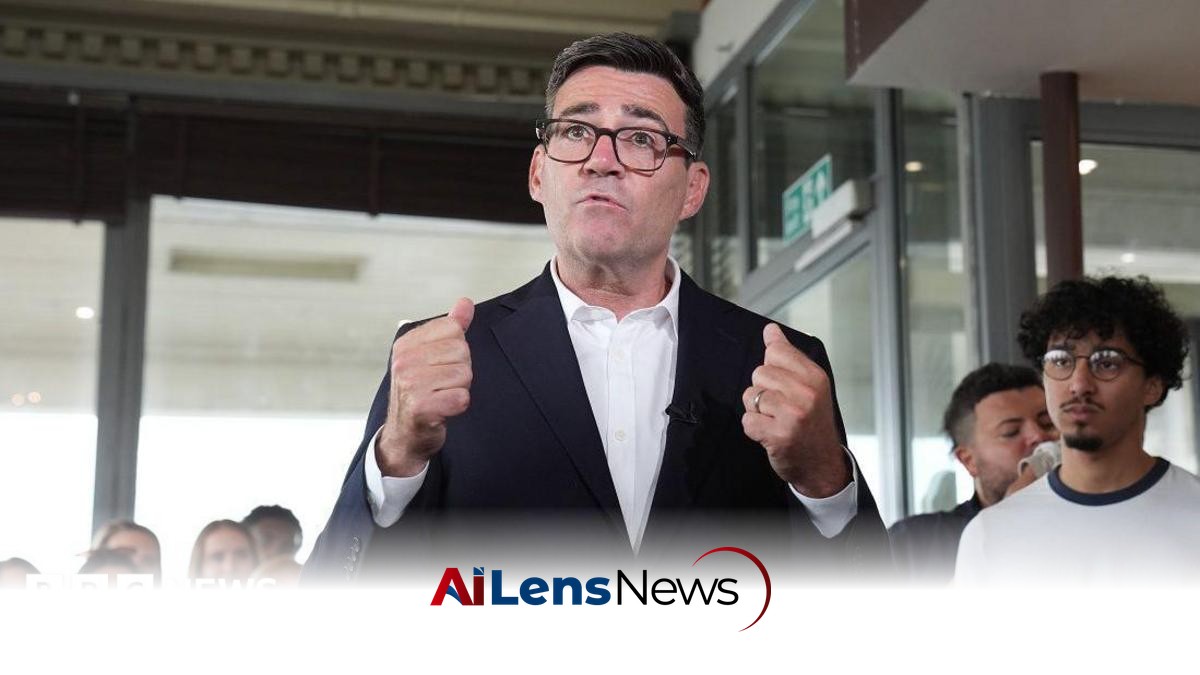


As Andy Burnham prepares to take the helm of the Labour Party, hopes rise for a revitalized political strategy amid significant leadership changes.
New Delhi, India Jul 18, 2026 ALN: It must feel like one of the biggest weekends of Andy Burnham's life. Downing Street beckons for a man who has long dreamed of leading his party and his country.
"16 years we've been thinking about this, and it's still felt like a rush in the last few weeks," admitted one supporter. This sentiment reflects the long journey that Burnham has taken to reach this pivotal moment in his political career. His ascent has not been a straight trajectory; rather, it has involved numerous challenges and setbacks that have shaped his political persona and aspirations.
A key thing to remember with Burnham's rise to this moment is that it happened slowly for a long time, and then happened quickly in next to no time at all. His political career began in earnest when he was elected as the Member of Parliament for Leigh in 2001, a position he has held ever since. His early years in Parliament were marked by a commitment to social issues, particularly in health and education, which would later define his political brand.
It was way back in 2010 that Burnham's designs on Downing Street first became explicit and public. In the aftermath of Labour's defeat in that year's general election, he contested the vacancy left by Gordon Brown. This initial foray into leadership was a formative experience for Burnham, as he grappled with the party's identity in the wake of a significant electoral loss. He was to do the same in 2015, in the wake of his party losing again. On both occasions he lost – and, as some have pointed out in a rather barbed way, on both occasions he lost to those who themselves were losers at general elections – Ed Miliband in 2015 and Jeremy Corbyn in 2017 and 2019. These defeats were not just personal setbacks for Burnham; they also represented broader challenges for the Labour Party as it struggled to regain its footing in a rapidly changing political landscape.
2026, then, is third time lucky for Burnham. His victory marks a significant shift within the party, as he represents a new generation of leadership that is eager to redefine Labour's approach to governance and public policy. His ascent comes at a time when the party is seeking to reconnect with its base and regain the trust of the electorate.
And yet as recently as January he was barred from standing as Labour's candidate for a parliamentary seat. This decision was indicative of the internal power struggles within the party, as leadership dynamics shifted and factions within Labour vied for influence. Now, the man who barred him, Sir Keir Starmer, is packing his bags in Downing Street – a removal van has already been spotted. Sir Keir and his family will leave on Monday morning, marking the end of his leadership and the beginning of a new chapter for the party.
In the end, no one formally challenged Sir Keir for the leadership, and once he had resigned, no one took on Burnham to replace him. This lack of opposition is noteworthy, as it suggests a level of consensus within the party regarding Burnham's leadership. In other words, a process that could have been drawn out, wasn't. This smooth transition has allowed Burnham to focus on his plans for the future without the distraction of a protracted leadership contest.
So little wonder some in Team Burnham had expected to have quite a bit more time to complete their preparations – hence that feeling of being rushed. The urgency of the situation has led to a flurry of activity as Burnham and his team engage in what are known as access talks with the civil service about their plans for government and the early events they want to hold next week and beyond. The indications are they want to hit the ground running – in something of a blitz of appearances and announcements in his opening days and weeks in office. This proactive approach is designed to signal to both the party and the public that Burnham is ready to lead and has a clear vision for the future.
The next prime minister has also begun to receive national security briefings. The handover of power, which has been underway for some time, has stepped up a gear. This aspect of the transition is critical, as it underscores the responsibilities that come with leadership, particularly in a time of global uncertainty and domestic challenges. Burnham claimed, as he became Labour leader, in an ear-catchingly absolute phrase, that "I haven't made any decisions yet about who will be in that top team." Later, when asked if this really was the case, or whether in some instances he did know but would wait until next week to make announcements, he said he was "finalising those decisions." The composition of his cabinet will be crucial in determining the direction of his government.
This weekend is pivotal for that finalising. Yes, there is the headline-generating question of who will be chancellor, but there are plenty more jobs to sort too. According to the Institute for Government, external, there are 149 ministerial posts, held by 122 people. The selection process involves not only political considerations but also the need for representation across gender, geography, and experience. Some seek to dismiss the journalistic intrigue as soap opera – but it matters because the people selected shape the outlook, style, and tone of a government.
And it is not remotely easy – it amounts to organisational jenga in which a prime minister and their team have to take account of politics, gender, geography, and experience. And plenty, including serving cabinet ministers, have been kept in the dark. Those hoping to stay on have, unsurprisingly, been privately making the case for stability and continuity. Others have accepted they are on their way out, reflecting the inevitable shifts that accompany a leadership change.
As for the Labour Party itself, the standout human observation is it appears to have remembered how to smile again. This change in demeanor is significant, as it reflects a renewed sense of optimism and purpose within the party. There is a hope from many among their tribe that, with this leadership reboot, they might, just might, be back in the political match. This sentiment is palpable among party members and supporters, who are eager to see how Burnham's leadership will translate into tangible political outcomes.
Clutching a water bottle and wearing a huge grin, one Labour MP said "think of this as a hydration break!" in a nod to the footballing novelty many of us have been trying to adjust to at the World Cup. This lighthearted comment encapsulates the mix of seriousness and levity that often characterizes political discourse, especially during transitional periods. And yes, the Labour Party has decided – before the half-time point of this parliament – to go for a change of tactics and a key substitution. Their new captain, Andy Burnham, is of towering ambition, claiming he will personify "the most significant change" in our politics in 40 years. This bold assertion sets high expectations for his leadership and the direction he intends to take the party.
Let's see. Burnham's enthusiasm for taking on the tough stuff appears genuine, for now at least: social care in England being the most striking example. The challenges facing the country are multifaceted, and Burnham's capacity to address them will be closely scrutinized by both supporters and critics alike. But the tough stuff will be visible wherever he looks come Monday, at home and abroad. The implications of his leadership extend beyond domestic policy; they touch on international relations, economic stability, and social justice.
Which poses the big picture question: to what extent does Brand Burnham survive contact with the facts of governing life? This inquiry is central to understanding the future of his leadership. Does his blokeish easy charm have the resilience for what lies ahead? The political landscape is unpredictable, and Burnham's ability to navigate this terrain will be a defining aspect of his tenure.
And – within the scope of Labour's manifesto from two years ago, the pamphlet of promises which carries the party's mandate to govern – can he deliver enough, and quickly, to justify those smiles I was talking about? The expectations are high, and the pressure to deliver is immense. Our fifth prime minister in four years takes office shortly, a role with vanishing little job security of late. The historical context of recent leadership changes underscores the volatility of British politics, and Burnham will need to be acutely aware of this reality.
And yet again, an impatient, expectant electorate looks on. The public's appetite for change is palpable, and Burnham's leadership will be tested against the backdrop of pressing social issues, economic challenges, and the ongoing political discourse surrounding Brexit and its implications. As he steps into this new role, the eyes of the nation are upon him, eager to see how he will address the complexities of governance and whether he can indeed fulfill the promise of a revitalized Labour Party.
To learn more about the latest developments in Politics, stay updated with our exclusive reports and analyses on AiLensNews.

