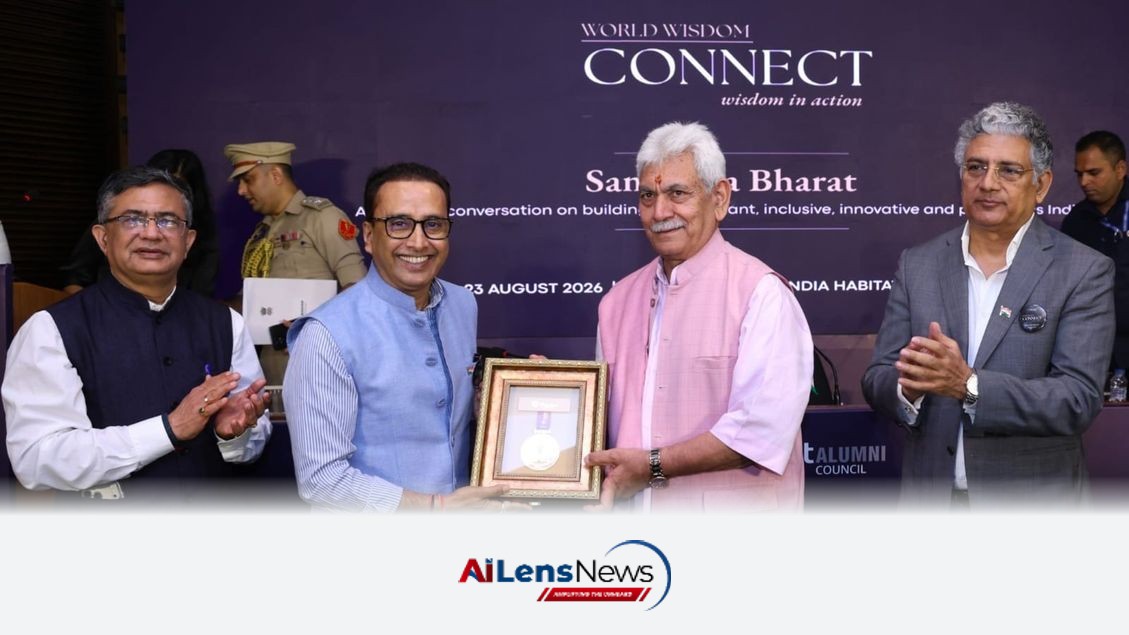



During a valedictory address at IIM Rohtak, Lieutenant Governor Manoj Sinha emphasized that while AI can enhance business processes, it cannot replace human decision-making.
New Delhi, India Aug 24, 2026 ALN: In a significant address that resonates with the ongoing discourse on the role of technology in leadership and decision-making, Lieutenant Governor Manoj Sinha emphasized the irreplaceable nature of human judgment in these spheres. Speaking at the valedictory function of the Induction & Orientation Programme for the 8th batch of the Integrated Programme in Management (IPM) and the 6th batch of the Integrated Programme in Law (IPL) at IIM Rohtak, Sinha articulated a perspective that challenges the notion of technology as a substitute for human intellect and intuition.
"AI tools can accelerate the speed of business-management processes, but they cannot change the fundamental nature of decision-making. Leadership, trust, and decision-making remain fundamentally human responsibilities," he asserted. This statement underscores a growing concern among educators and industry leaders regarding the reliance on artificial intelligence and automation in critical decision-making roles. While AI has proven its capability in processing vast amounts of data and generating insights, Sinha's remarks highlight the limitations of AI when it comes to the nuances of human relationships and ethical considerations.
The Lieutenant Governor's address was not only a commentary on AI but also a broader reflection on the evolving landscape of education and employment in a rapidly changing world. He pointed out that the induction process for students today transcends traditional metrics of career opportunities or the prestige associated with institutional brand value. "In a rapidly transforming world, students must understand that the environment they prepare for will change dramatically by the time they graduate," he noted, emphasizing the need for adaptability and continuous learning.
This perspective is particularly relevant in the context of the current educational climate, where many institutions are integrating technology into their curricula. The rapid advancement of technology necessitates a shift in how students approach their education, as they must prepare for careers that may not yet exist. Sinha's call for lifelong learning serves as a reminder that the skills required for future success will likely involve not only technical proficiency but also critical thinking and emotional intelligence.
"I want the spirit of adapting to change and working constructively to take deep root in your minds," he encouraged the students, urging them to ponder the essential question of their professional identity. He posed the thought-provoking inquiry: "What do I know so well that, despite all challenges and changing circumstances, I can re-establish myself fully in the market?" This reflection encourages students to develop a robust understanding of their strengths and areas of expertise, which will be crucial in navigating the uncertainties of the future job market.
In his remarks, Sinha also addressed the integration of AI in business management, predicting that it will soon become as ubiquitous as tools like Excel. However, he reiterated that leadership and decision-making are inherently human functions that cannot be outsourced to machines. "No technology can answer what should be created, what should be trusted, or how people should be led," he stated. This sentiment echoes a broader debate within the business community about the ethical implications of AI in decision-making processes, particularly in areas that require a nuanced understanding of human behavior and societal values.
For students of law, Sinha's insights were particularly poignant. He acknowledged that while AI can assist in drafting contracts and managing legal documentation, it lacks the capacity to interpret human intent or deliver justice with empathy. The legal profession, with its emphasis on accountability and fairness, relies heavily on human judgment and ethical considerations—qualities that remain beyond the reach of artificial intelligence. This distinction is crucial as the legal field increasingly grapples with the implications of AI technologies in legal practice.
Sinha commended the IPM students for their foresight in choosing to study management and leadership at a young age. He urged them to view their time at IIM Rohtak not just as a means to obtain a degree but as a transformative journey of self-discovery. The students of the Integrated Programme in Law, he noted, are entering a profession that has historically played a vital role in upholding justice and societal values.
Encouraging a culture of inquiry and respectful debate, Sinha advised students to engage deeply with their education. He remarked, "New ideas develop through meaningful dialogue and healthy differences of opinion. Do not limit yourselves to the curriculum, because studying diverse fields will broaden your vision." This advice reflects a growing recognition of the importance of interdisciplinary learning in fostering innovation and critical thought in an increasingly complex world.
As he concluded his address, Sinha reflected on the unpredictability of the future. He stated that while no one can predict the world of tomorrow, the enduring qualities of wisdom, moral courage, and strong values will serve students well in their endeavors. He called upon them to sharpen their curiosity, strengthen their character, and commit to making positive contributions to society and the nation.
In summary, Lieutenant Governor Manoj Sinha's address at IIM Rohtak serves as a powerful reminder of the enduring importance of human qualities in leadership and decision-making, even as technology continues to evolve and reshape various industries. His insights encourage students to cultivate a mindset of adaptability, continuous learning, and ethical responsibility, equipping them to navigate the challenges and opportunities that lie ahead in their professional journeys.
To learn more about the latest developments in Technology in News, stay updated with our exclusive reports and analyses on AILensNews.

