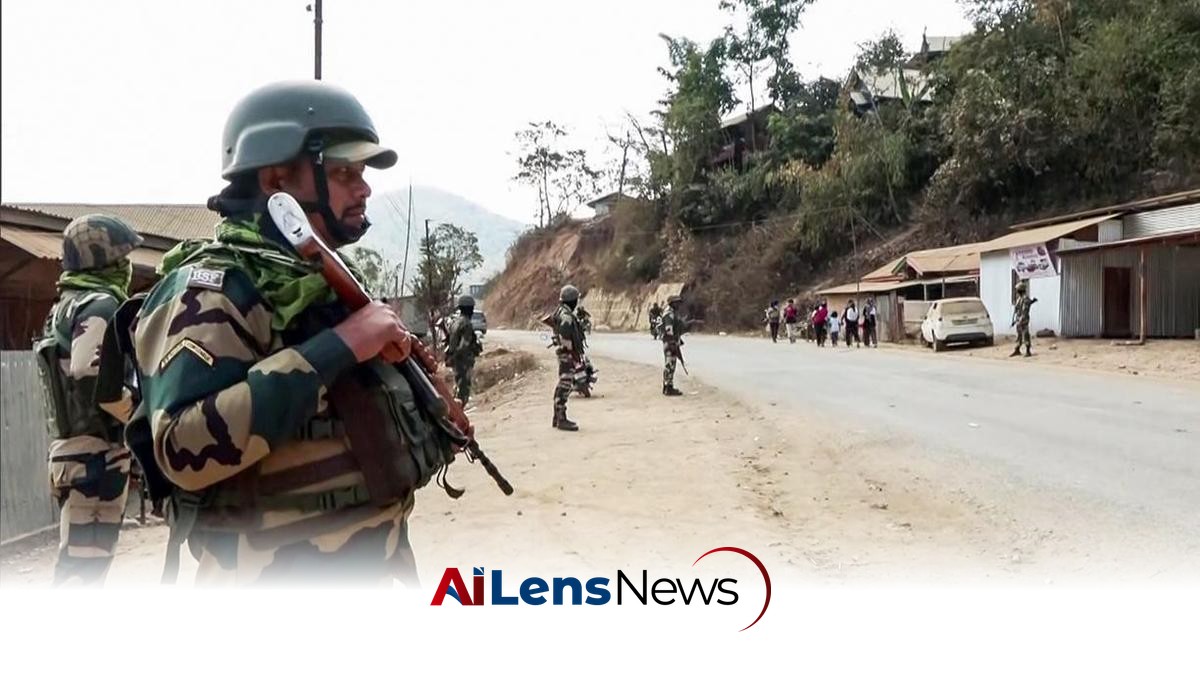


Unidentified gunmen ambushed an Assam Rifles patrol in Manipur, resulting in the deaths of two personnel. The Chief Minister condemned the violence.
New Delhi, India Jul 7, 2026 ALN: Unidentified gunmen ambushed an Assam Rifles patrol in Manipur’s Ukhrul district on Monday afternoon, killing two personnel and injuring others. This tragic incident underscores the ongoing violence and instability in the region, which has been marked by various insurgent activities and ethnic tensions. The ambush is not an isolated event but part of a broader pattern of conflict that has plagued Manipur and its neighboring states for decades, involving multiple insurgent groups, ethnic strife, and a complex interplay of local and politics.
District officials reported that the incident occurred near Nungshangkhong, about 16 km east of Ukhrul town, at around 1:30 p.m. Eyewitness accounts and local reports indicate that there were intermittent exchanges of fire until approximately 4:30 p.m. in the area, suggesting a prolonged and intense confrontation between the security forces and the assailants. Such prolonged engagements are indicative of the tactical approaches often employed by insurgent groups in the region, which frequently involve ambushes and hit-and-run tactics to counter the superior firepower of security forces.
The ambushed personnel belonged to the 40 Assam Rifles detachment stationed at Sangshak in the district. They have been identified as Warrant Officer Balwant Singh and Havildar Chandra Mohan Singh. Both soldiers were part of the Indian Army's efforts to maintain peace and security in the northeastern state, which has seen a resurgence of violence in recent months. The Assam Rifles, tasked with counter-insurgency operations, have a long history of deployment in the region, often operating in challenging and hostile environments where local support can be limited.
Lt Gen Vikas Lakhera, Director General of the Assam Rifles, paid tribute to the fallen soldiers and offered his deep condolences to their families. This sentiment of mourning is shared widely across the armed forces, as such losses are felt deeply within the military community, reflecting the sacrifices made by personnel stationed in volatile regions. The emotional toll of such incidents extends beyond the immediate military community, impacting local populations who may view security forces as both protectors and aggressors, depending on their experiences and perspectives.
Manipur Chief Minister Yumnam Khemchand Singh condemned the killings and expressed his deepest condolences to the bereaved families. “The government will not tolerate such brutal violence and will not remain a mute spectator to these atrocities,” he stated. His remarks highlight the government's commitment to addressing violence in the state, which has been plagued by insurgencies and ethnic conflicts for decades. The Chief Minister's response is part of a broader political narrative that seeks to project strength and resolve in the face of ongoing violence, but it also raises questions about the effectiveness of state policies in addressing the root causes of conflict.
In the wake of the ambush, the Chief Minister assured that those responsible would be arrested and punished, indicating a strong stance against insurgent groups operating in the region. This promise reflects the ongoing struggle of the state government to assert control and ensure the safety of its citizens amidst a backdrop of insurgent activities. However, the challenge lies in the fact that many of these groups have deep-rooted local support, and aggressive military responses can sometimes exacerbate tensions rather than alleviate them.
Some reports indicated that members of the Eastern Flank faction of the Socialist Council of Nagalim (NSCN) carried out the attack. The NSCN is also known as the Isak-Muivah faction of the Socialist Council of Nagaland, which has been part of a ceasefire agreement since July 1997. This ceasefire has been a critical component in the ongoing peace process between the Indian government and various Naga groups, aimed at resolving long-standing issues related to autonomy, identity, and governance. The NSCN has historically sought greater autonomy for Naga people and has engaged in various negotiations with the Indian government to address these aspirations.
However, the recent ambush raises questions about the stability of this ceasefire and the effectiveness of peace negotiations. The NSCN, which has been engaged in discussions with the Indian government, is a significant player in the region's political landscape. In a statement, the NSCN’s “information ministry” denied the existence of such a faction and claimed it was “neither involved in nor had any knowledge” of the ambush. “The organisation remains firmly committed to the ceasefire agreement with the government of India and continues to uphold its responsibilities under the agreed ground rules,” the group stated. This denial is crucial, as it seeks to distance the organization from the violence that occurred, potentially to maintain its standing in the peace process and reassure its supporters of its commitment to a non-violent resolution.
The NSCN further emphasized that it would never resort to any actions that could undermine, derail, or sabotage the ongoing “Indo-Naga” political negotiations. This assertion is critical not only for the NSCN's reputation but also for the broader peace efforts in the region. The organization has historically been involved in various forms of armed struggle, but in recent years, it has sought to engage in political dialogue as a means to achieve its goals. The ambush, therefore, poses a significant risk to these negotiations, as it may lead to increased military operations and a hardening of positions on both sides.
The ambush highlights the complex dynamics in Manipur, where various ethnic groups and insurgent factions vie for power and recognition. The state has a history of conflict, with multiple groups seeking autonomy or independence, often leading to violent confrontations with security forces. The Assam Rifles have been deployed in the region for many years, tasked with counter-insurgency operations and maintaining law and order. Their presence is often met with ambivalence from local populations, who may view them as protectors against insurgent violence but also as enforcers of a state that has historically marginalized certain ethnic groups.
The implications of this ambush are significant, not only for the immediate security situation but also for the broader peace process in the region. The incident could lead to increased military operations in the area, further exacerbating tensions between security forces and local populations. Additionally, it may affect ongoing negotiations between the Indian government and various Naga groups, as violence often complicates dialogue and trust-building efforts. The cycle of violence can create a situation where both sides become entrenched in their positions, making compromise increasingly difficult.
Moreover, the ambush serves as a reminder of the challenges faced by the Indian government in addressing the aspirations of various ethnic groups in the northeastern states. The region is characterized by diverse cultures, languages, and historical grievances, making it a complex landscape for governance and peace-building. The government’s response to such incidents will be closely monitored by both local communities and observers, as it reflects its commitment to maintaining stability and addressing the root causes of insurgency. Failure to address these underlying issues may lead to further violence and instability, undermining efforts for lasting peace.
As the situation unfolds, it is crucial for the government to engage with local leaders and communities to foster dialogue and understanding. Effective communication and trust-building measures may help to mitigate the cycle of violence and pave the way for a more peaceful coexistence among the various ethnic groups in Manipur. Initiatives that promote economic development, education, and cultural exchange can play a vital role in bridging divides and fostering a sense of shared identity among the diverse populations in the region.
In conclusion, the ambush that resulted in the deaths of two Assam Rifles personnel is a stark reminder of the ongoing instability in Manipur and the challenges faced by security forces in the region. The responses from government officials and the NSCN indicate the complexity of the situation, with implications for both security and political negotiations. As the state grapples with these issues, the need for a comprehensive approach that addresses the underlying causes of conflict remains paramount. Only through sustained dialogue, genuine engagement with local communities, and a commitment to addressing historical grievances can the region hope to achieve lasting peace and stability.
To learn more about the latest developments in Crime & Law, stay updated with our exclusive reports and analyses on AiLensNews.

