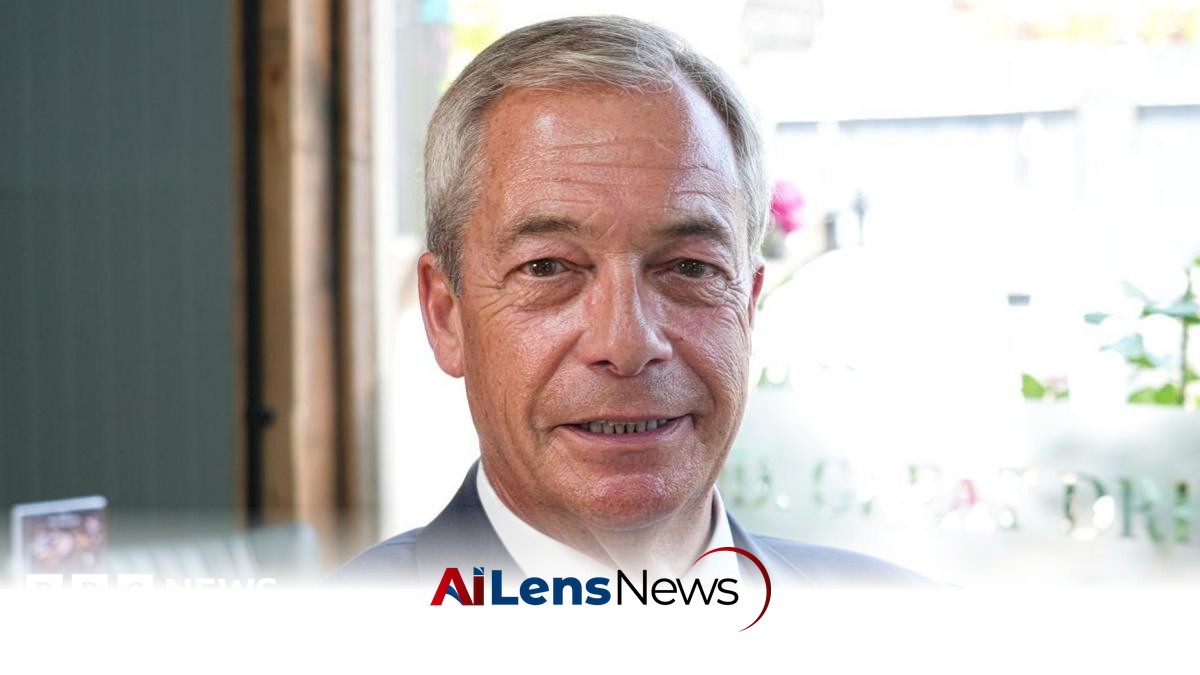


Nigel Farage insists his resignation and bid for re-election is not a publicity stunt, as major parties opt out of the contest.
New Delhi, India Jul 8, 2026 ALN: Nigel Farage has told the BBC that his resignation as Clacton MP and decision to stand again in a by-election is not a publicity stunt, despite claims from his opponents that they will boycott the contest.
The leader of Reform UK resigned on Tuesday amid increasing scrutiny over his finances and a parliamentary investigation. Farage's resignation and subsequent decision to contest the by-election have sparked significant debate within the political landscape of the UK, particularly given his controversial history and the current state of the political parties involved.
In his first interview since resigning, Farage stated, "The media are judging me to be a dishonest person, so it is only fair to say to the voters, 'you judge.'" This statement reflects a broader narrative that has surrounded Farage throughout his political career, where he has often positioned himself as an outsider fighting against the political establishment. This narrative has resonated with a segment of the electorate who feel disenfranchised by traditional political parties.
Major political parties, including Labour, the Conservatives, the Liberal Democrats, and the Green Party, have all declined to participate in the contest for the Essex seat. The refusal of these parties to engage in the by-election raises questions about the legitimacy of the electoral process and the role of smaller parties like Reform UK in a system that is often dominated by larger entities. The absence of these parties could also lead to a scenario where Farage faces a lack of serious competition, potentially skewing the democratic process in Clacton.
Reform UK has proposed holding the by-election on 6 August. This date is significant as it falls during the summer months when voter turnout can be unpredictable, often lower than during other times of the year. The timing of the by-election could be seen as strategic, as it may benefit Farage's campaign if opposition parties are less mobilized during this period.
Farage has faced mounting pressure regarding his financial support, leading opposition parties to call for an investigation by Parliament's standards watchdog, alongside renewed media scrutiny of his financial affairs. The investigation into Farage's finances is particularly pertinent given the recent public discourse surrounding political accountability and transparency. This scrutiny is not only focused on Farage's financial dealings but also reflects a broader concern about the influence of money in politics, especially regarding donations from wealthy individuals.
Earlier, Foreign Secretary Yvette Cooper accused Farage of orchestrating a "political stunt," suggesting he aims to evade accountability, while Tory leader Kemi Badenoch labeled the move a "gimmick." These accusations underscore the contentious atmosphere surrounding Farage's political maneuvers, as critics argue that his actions are designed to distract from the serious allegations he faces. Farage, who denies any wrongdoing, claimed that the parties are "scared" to face him and insisted that their lack of participation does not render the contest "fake." This defiance is characteristic of Farage, who has frequently positioned himself against perceived elitism in politics.
"They call it a stunt. It's not a stunt, because real voters will have a vote for an MP," he asserted. This statement emphasizes Farage's belief in the legitimacy of the electoral process and his commitment to engaging with the electorate, despite the surrounding controversies. A spokesperson for Reform UK confirmed, "Reform UK will move the writ tomorrow morning, and we are proposing a by-election on 6 August." To trigger the by-election process, Reform must request a writ, which requires approval from MPs. The by-election would occur between 21 and 27 working days after that request.
It remains uncertain whether Tendring District Council, responsible for formal arrangements, will be able to hold the contest on the proposed date. The logistical challenges of organizing a by-election, particularly during the summer months, could complicate the process and impact voter turnout. An investigation by the Parliamentary watchdog into a £5 million gift Farage received from a billionaire donor prior to his tenure as an MP will be suspended during the by-election but could be resumed if he is re-elected. This suspension raises questions about the implications of such investigations on the electoral process and the potential for political consequences that may arise from the findings.
Parliamentary rules dictate that newly elected MPs must declare gifts or benefits received in the 12 months prior to their election that relate to their "parliamentary or political activities," although those that are "purely personal" are exempt. This distinction is crucial as it highlights the complexities involved in political finance and the potential for misinterpretation or misrepresentation of a candidate's financial dealings.
When questioned about his failure to declare benefits from convicted criminal George Cottrell, Farage responded, "This is utterly spurious. Utterly spurious. I wasn't in politics. I was a broadcaster and an influencer, and he helped me go out into the English Channel when the boats started to come, film that and make it into a public issue." He characterized Cottrell as a volunteer and supporter of Reform. This defense reflects Farage's strategy of framing his actions in a manner that seeks to diminish the weight of the allegations against him, emphasizing his previous role outside of politics.
Farage expressed that he has been portrayed as a "thoroughly dishonourable and dishonest person," adding, "I'd much rather be judged in the court of public opinion." This statement underscores the importance of public perception in Farage's political strategy, as he seeks to engage voters directly and rely on their judgment rather than that of political opponents or the media. When asked if he aspires to become Britain's next prime minister, Farage affirmed his ambition but emphasized the need to respect his family's privacy. This ambition is indicative of his long-standing political aspirations, which have included leading the UK Independence Party (UKIP) and advocating for Brexit.
He referred to his daughter being "hounded" at one of his properties by Sky, which has defended its actions as appropriate. This incident highlights the often intense scrutiny faced by politicians and their families, raising ethical questions about media practices and the balance between public interest and personal privacy. In his interview, Farage was uncertain about his status as an MP, but shortly after, Chancellor Rachel Reeves confirmed she had accepted his resignation. "If he wants to spend the summer arguing with a bin, I won't stop him," she remarked on X, referring to by-election rival Count Binface. This comment reflects the dismissive attitude some politicians have towards Farage's political maneuvers, viewing them as trivial or lacking seriousness.
Following this, the formal notice was published, confirming that Farage is no longer an MP. Actor-turned-politician Laurence Fox, from nearby Peldon, announced on Tuesday evening that he would run against Farage, Count Binface, and Adham Alkhatip, who leads the Forward Party. Fox's entry into the race adds another layer of complexity to the by-election, as it introduces a candidate with a different background and perspective, potentially appealing to voters who are looking for alternatives to Farage.
Reflecting on his tenure as Clacton's MP, Farage stated, "I've done my absolute best to put it on the map in terms of tourism and visits. I know the road getting here is a pain, but actually, when you get here, you've got great beaches." This statement highlights Farage's focus on local issues and his commitment to representing the interests of his constituents, which he hopes will resonate with voters during the by-election campaign. He pledged to prioritize addressing potholes and halting housing developments opposed by locals if re-elected. This focus on local concerns may serve to strengthen his appeal among voters who prioritize community issues over broader national debates.
"You give me a big vote and we'll continue our political revolution," Farage continued. "If you don't do it, then I think the establishment will just go on and go on working together in an attempt to crush a genuine chance at political change." This statement encapsulates Farage's populist rhetoric, positioning himself as a champion of the people against a perceived political elite. As the by-election approaches, the dynamics surrounding Farage's candidacy, the responses from opposition parties, and the overall political climate in the UK will continue to evolve, shaping the narrative leading up to the vote and potentially influencing the future of Reform UK and its role in British politics.
To learn more about the latest developments in Politics, stay updated with our exclusive reports and analyses on AiLensNews.

