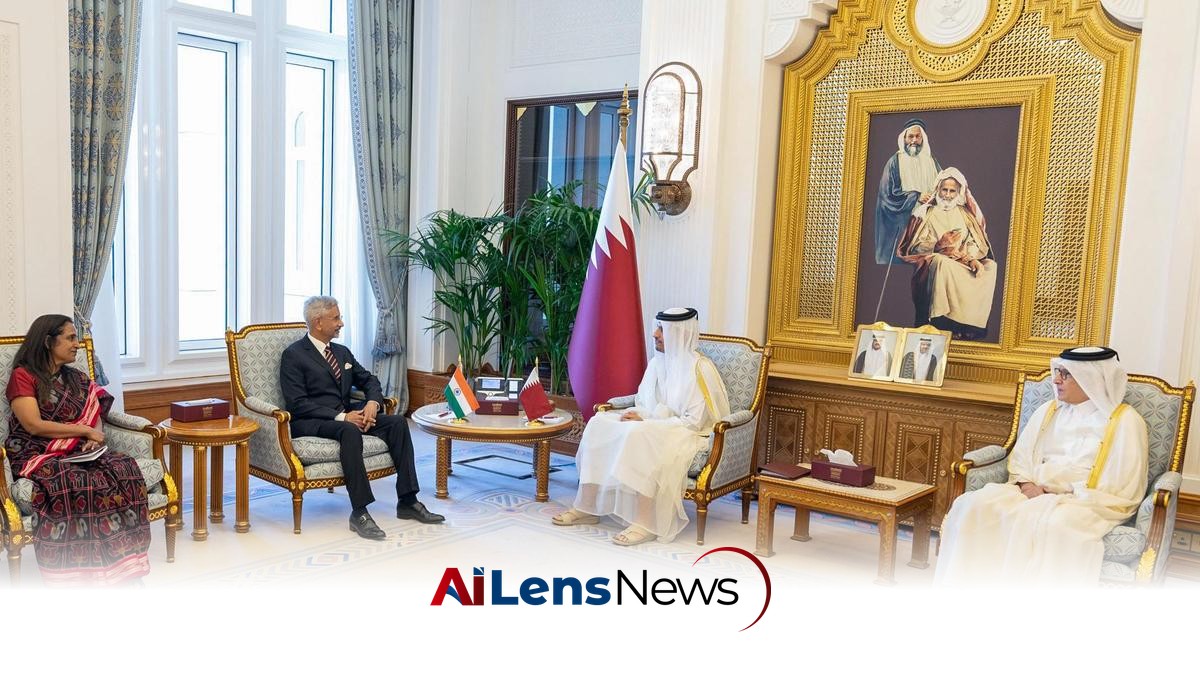


EAM Jaishankar meets Qatar's PM to enhance bilateral ties and discuss regional developments during a visit to Gulf countries.
Doha, Qatar Jul 6, 2026 ALN: External Affairs Minister S. Jaishankar met Qatar’s Prime Minister Mohammed bin Abdulrahman Al-Thani on Sunday (July 5, 2026) to review several areas of bilateral cooperation, including energy, trade, investments, connectivity, and security. This meeting underscores the importance of Qatar as a strategic partner for India in the Gulf region, particularly in light of the evolving geopolitical landscape in West Asia.
Mr. Jaishankar is on a visit covering Qatar, Bahrain, Kuwait, and Oman from July 5 to 10. This tour is significant as it reflects India's proactive approach to strengthening ties with the Gulf Cooperation Council (GCC) countries, which are crucial for India's energy security and economic interests. The Gulf region is home to a large Indian diaspora, which plays a vital role in the economies of these countries and contributes significantly to India’s remittances.
The Indian community in Qatar, which numbers around 700,000, is one of the largest expatriate groups in the country. Their presence not only bolsters the Qatari economy through labor and expertise but also fosters cultural exchanges and mutual understanding. The remittances sent back to India by this diaspora are a significant source of income for many families, contributing to India's economy. The welfare of this community is a priority for the Indian government, which seeks to ensure their safety and well-being abroad.
The Gulf visit comes against the backdrop of fast-evolving political dynamics in West Asia following the signing of an agreement aimed at ending the U.S.-Iran conflict. These developments have implications for regional stability, and India's engagement with Gulf nations is crucial in navigating these complexities. The U.S.-Iran tensions have historically affected the security and economic landscape of the region, and the potential for a ceasefire and diplomatic resolution could reshape alliances and partnerships.
During the meeting, Mr. Jaishankar expressed gratitude to the Qatari PM for ensuring the safety and well-being of the Indian community in the country. This acknowledgment reflects the strong diplomatic ties between India and Qatar, which have been built over years of mutual cooperation and respect. The discussions also highlighted the multifaceted nature of India-Qatar relations, which encompass various sectors including energy, a critical area given Qatar's status as one of the world's largest producers of liquefied natural gas (LNG).
India's energy needs are vast, and its reliance on imports makes partnerships with Gulf nations like Qatar essential. Qatar's LNG exports to India have grown significantly over the years, and the two countries have explored further collaboration in energy security, renewable energy, and technology transfer. The discussions between Mr. Jaishankar and PM Al-Thani likely included ways to enhance this cooperation, especially in light of global shifts towards sustainable energy sources.
In addition to bilateral cooperation, Mr. Jaishankar discussed assessments on the West Asia conflict and its impact with PM Al-Thani, who also serves as Qatar’s foreign minister. Qatar has positioned itself as a mediator in regional conflicts and has been involved in facilitating dialogue between various factions in the Middle East. The discussions between the two leaders reflect a shared interest in maintaining stability in the region, which is vital for both countries. Qatar’s role as a mediator is particularly significant given its historical ties with various groups in the region, allowing it to act as a neutral party in negotiations.
During the ongoing visit, Mr. Jaishankar will meet his counterparts and top leaders of the four Gulf countries to enhance bilateral relations and exchange views on regional developments and issues of mutual interest. This dialogue is essential for understanding the nuances of each country's foreign policy and aligning them with India's strategic objectives in the region. The meetings will likely cover a range of topics, including security cooperation to combat terrorism and extremism, economic collaborations, and cultural exchanges.
Qatar and Oman have emerged as mediators, along with Pakistan, in facilitating the Iran ceasefire following weeks of escalating tensions. The indirect talks between the U.S. and Iran in Doha are set to continue after the week-long funeral rites of Iran’s slain supreme leader, Ayatollah Ali Khamenei, which began on Friday (July 3, 2026). The involvement of Qatar and Oman in these negotiations highlights their diplomatic influence and the trust placed in them by regional and inter players. For India, supporting these mediation efforts aligns with its broader foreign policy goals of promoting peace and stability in the region.
India's foreign policy has historically emphasized non-alignment and strategic autonomy, allowing it to engage with various nations across different political alignments. The current geopolitical climate, marked by the U.S.-China rivalry and shifting alliances, necessitates a nuanced approach. India's ability to engage constructively with Gulf nations, while also navigating relationships with powers like Iran and the U.S., is critical for its strategic interests.
After visiting the four Gulf countries, Mr. Jaishankar will travel to New York on July 13 to launch India’s official campaign for the UN Security Council tenure 2028-29. Securing a non-permanent seat on the UN Security Council is a significant goal for India, as it seeks to enhance its role in global governance and reflect the changing dynamics of inter relations. India's candidacy is supported by its growing economic stature and its contributions to inter peacekeeping and security. India's active participation in the UN is seen as a way to amplify its voice on global issues, including climate change, terrorism, and sustainable development.
Following his UN engagements, Mr. Jaishankar will attend the 3rd India-EU Trade and Technology Council meeting in Brussels on July 14-15 and interact with EU and Belgian counterparts. This meeting is part of India's efforts to strengthen ties with the European Union, which is a key trading partner and a significant player in global technology and innovation. The discussions will likely focus on enhancing trade relations, addressing technological challenges, and fostering cooperation in areas such as climate change, digital transformation, and sustainable development.
In conclusion, Mr. Jaishankar's visit to the Gulf states and subsequent engagements in New York and Brussels reflect India's strategic approach to inter relations, emphasizing the importance of diplomacy in addressing regional challenges and enhancing bilateral ties. The outcomes of these meetings may have lasting implications for India's foreign policy and its role in global governance, particularly in the context of the shifting geopolitical landscape in West Asia and beyond. As India continues to assert itself on the global stage, its relationships in the Gulf region will be pivotal in shaping its economic and security interests in the years to come.
To learn more about the latest developments in World News & International Affairs, stay updated with our exclusive reports and analyses on AiLensNews.

