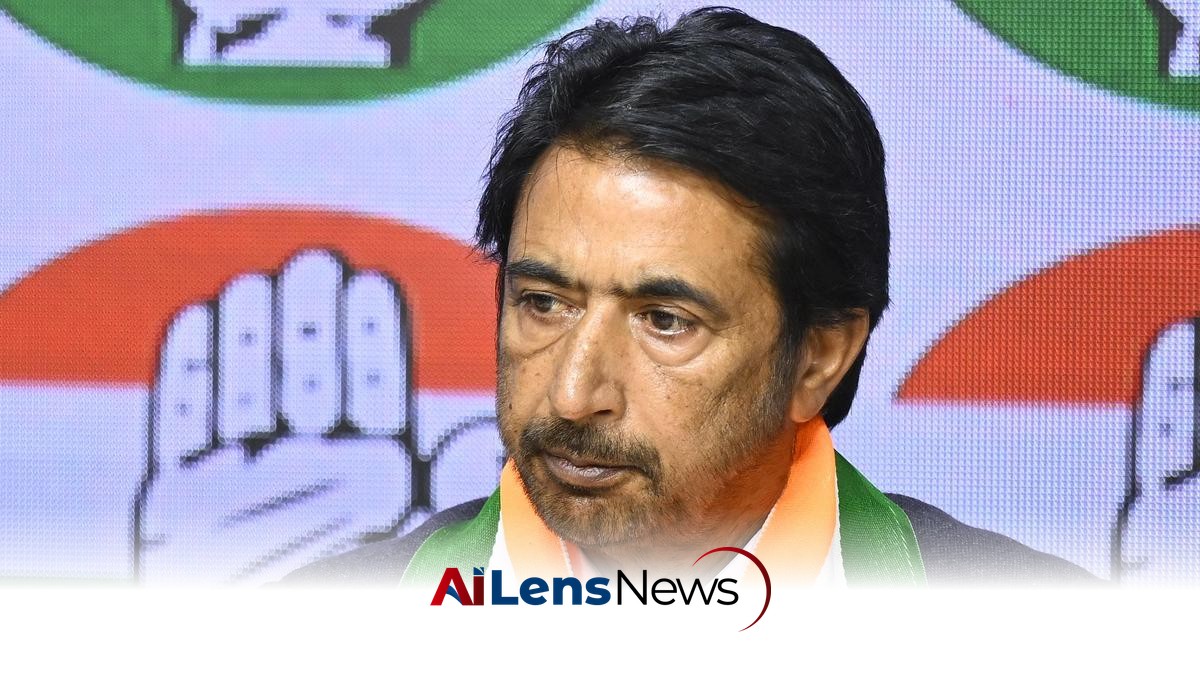


In a significant organizational reshuffle, Congress president Mallikarjun Kharge has appointed Ghulam Ahmed Mir and Prakash Joshi as new in-charges for Tamil Nadu and West Bengal, respectively.
New Delhi, India Jul 9, 2026 ALN: The recent appointment of new All India Congress Committee (AICC) in-charges for Tamil Nadu and West Bengal reflects the Congress party's strategic efforts to reorganize its leadership structure in key states. This move, announced by Congress president Mallikarjun Kharge on July 8, 2026, is part of a broader initiative aimed at revitalizing the party's presence and effectiveness in regions where it has historically faced challenges. The Congress party, which has been a major player in Indian politics since independence, has seen its influence wane in several states, necessitating a rethink of its approach to governance and electoral strategy.
In the reshuffle, Ghulam Ahmed Mir has been appointed as the new AICC general secretary in-charge of Tamil Nadu, taking over from Girish Chodankar. Mir's previous role as the in-charge of West Bengal has now been filled by Prakash Joshi. These changes come at a critical time for the Congress party, which has been working to strengthen its organizational framework and improve its electoral performance in various states. The party's leadership is acutely aware of the need to adapt to the evolving political landscape, particularly in states where regional parties dominate.
The Congress party's decision to appoint new leaders in these two states is particularly significant given the political dynamics at play. Tamil Nadu and West Bengal are both states with unique political landscapes, where regional parties have historically held considerable sway. In Tamil Nadu, the Dravida Munnetra Kazhagam (DMK) and the All India Anna Dravida Munnetra Kazhagam (AIADMK) have dominated the political scene, while in West Bengal, the Trinamool Congress (TMC) has been the ruling party for several years under the leadership of Chief Minister Mamata Banerjee. These regional parties have established strong connections with the electorate, making it challenging for parties like Congress to regain lost ground.
Ghulam Ahmed Mir, who has taken on the role in Tamil Nadu, brings with him experience from his previous position in West Bengal, where he was involved in navigating the complexities of a state dominated by TMC. His appointment suggests a strategic choice by the Congress leadership to leverage his experience in engaging with regional issues and fostering alliances that could bolster the party's standing in Tamil Nadu. The state has a rich political history and a diverse electorate, with various caste and community dynamics that influence voting behavior. Mir's understanding of these factors could be crucial as he works to re-establish Congress's relevance in Tamil Nadu.
Prakash Joshi, stepping into the role in West Bengal, faces the daunting task of revitalizing the Congress's fortunes in a state where it has struggled to gain traction against the TMC. The Congress party has historically been a significant player in West Bengal but has seen its influence wane in recent years. Joshi's appointment indicates the party's commitment to reassessing its strategies and potentially re-engaging with the electorate through grassroots initiatives and community outreach programs. The TMC's strong hold on the state, bolstered by its welfare schemes and populist policies, presents a formidable challenge for Joshi as he seeks to reconnect with voters and rebuild the party's base.
This reshuffle follows earlier appointments made on June 26, where new AICC in-charges were designated for other important states, including Uttar Pradesh, Odisha, and Haryana. The Congress's decision to refresh its leadership in these regions underscores an urgent need to address electoral setbacks and re-establish its relevance in the political landscape. In Haryana, Sanjay Dutt has replaced B. K. Hariprasad as the new in-charge, while Hariprasad transitions to lead the Karnataka Congress. This change signals an acknowledgment of the need for new leadership in Haryana, where the Congress has faced stiff competition from the ruling Bharatiya Janata Party (BJP) and regional parties. Dutt's appointment may reflect a strategy to connect more effectively with local issues and voter sentiments in the state.
Lalji Desai's new role as the AICC in-charge for Odisha, succeeding Ajay Kumar Lallu, also indicates a shift in focus for the Congress party in a state where it has historically had a strong presence but has faced challenges in recent elections. The Congress party's efforts to strengthen its leadership in Odisha may be aimed at revitalizing its grassroots support and re-engaging with the electorate ahead of upcoming elections. Odisha's political landscape is characterized by a mix of local and issues, and Desai's ability to navigate these complexities will be crucial for the party's success in the state.
Rajendra Pal Gautam, who heads the Scheduled Caste department of the party, has been appointed as the new in-charge for Uttar Pradesh. This appointment is particularly noteworthy given the state's significance in Indian politics, where electoral outcomes can heavily influence trends. Uttar Pradesh is the most populous state in India and holds a substantial number of seats in the Lok Sabha, making it a focal point for any political party aiming for success in elections. Gautam's background in social justice issues may be leveraged to strengthen the Congress's outreach to marginalized communities, which could be crucial in galvanizing support in the state. The Congress's ability to resonate with these communities, particularly in the context of ongoing social and economic challenges, will be a determining factor in its electoral prospects in Uttar Pradesh.
The implications of these appointments extend beyond mere organizational changes. The Congress party is currently at a crossroads, grappling with the need to redefine its identity and strategy in a rapidly changing political environment. The recent electoral performances of the party across various states have raised questions about its ability to connect with younger voters and address contemporary issues such as economic inequality, climate change, and social justice. The party's leadership recognizes that to regain its footing, it must not only adapt its strategies but also cultivate a narrative that resonates with the aspirations and concerns of a diverse electorate.
As the Congress party embarks on this organizational reshuffle, it faces the challenge of not only revitalizing its leadership but also reinvigorating its message to resonate with a diverse electorate. The success of these new appointments will ultimately depend on how effectively the party can mobilize its resources, engage with local communities, and present a cohesive vision that appeals to voters across different demographics. The party's ability to foster alliances with regional players and address local issues will be paramount in its efforts to regain lost ground in states like Tamil Nadu and West Bengal.
In conclusion, the appointment of new in-charges for Tamil Nadu and West Bengal, along with other key states, represents a significant step for the Congress party as it seeks to navigate the complexities of Indian politics. As the party prepares for upcoming electoral battles, the effectiveness of these new leaders in fostering alliances, addressing local issues, and connecting with voters will be critical in determining the Congress's future trajectory in these politically vital regions. The success of this reshuffle could have far-reaching implications for the party's relevance and competitiveness in the broader political landscape of India, particularly as it seeks to reclaim its position amidst the growing influence of regional parties and the dominant presence of the BJP.
To learn more about the latest developments in Politics, stay updated with our exclusive reports and analyses on AiLensNews.

