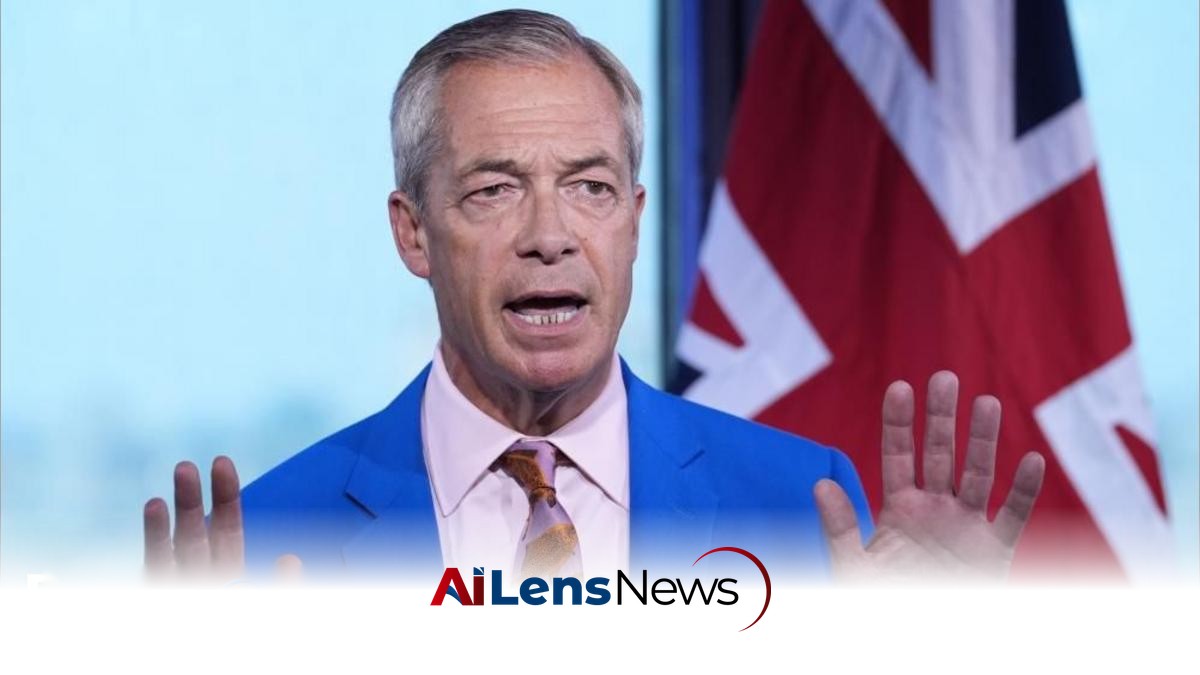


Nigel Farage's by-election in Clacton faces an unusual challenge from Count Binface, as major parties opt out of the race, raising questions about its implications.
New Delhi, India Jul 8, 2026 ALN: Nigel Farage's decision to trigger a by-election in his seat of Clacton in Essex took a bizarre twist this morning, when a man who dresses up as a bin and tells the world he lives on the planet Sigma IX began his interview with the BBC.
Count Binface's conversation with Justin Webb and Nick Robinson on the BBC's Today programme came about because he is one of vanishingly few people saying he will run against Farage in the contest expected this summer. This unusual candidate has gained some notoriety for his humorous and satirical approach to politics, often using comedy to critique the traditional political landscape in the UK. His presence in the race illustrates how by-elections can sometimes attract unconventional candidates who seek to engage the electorate in non-traditional ways, potentially drawing attention away from more serious contenders.
The context of this by-election is significant, particularly given the political landscape in the UK. By-elections are often seen as a barometer of public sentiment, offering insight into how parties are faring in the eyes of the electorate. They can also serve as a platform for smaller parties and independent candidates to gain visibility. In this case, Farage's Reform UK party is hoping to capitalize on the absence of major party candidates, as Labour, the Conservatives, the Liberal Democrats, and the Green Party have all opted not to field candidates in this race. This decision by the major parties not to contest the seat may reflect a strategic calculation based on their assessment of the local political dynamics and the potential challenges posed by Farage's established presence in the constituency.
Reform UK, a party founded by Farage after his departure from UKIP, has positioned itself as a right-wing alternative to the traditional political parties. The party has insisted that they anticipated the major parties' decision not to participate, which they believe will allow them to present themselves as the only viable option for voters in Clacton. This strategy could potentially resonate with constituents who feel neglected by the larger parties, especially in a constituency like Clacton, which has its own unique challenges and concerns. The town has faced economic difficulties, including issues related to unemployment and public services, making it a focal point for discussions about governmental support and local representation.
Senior figures in Reform have indicated they were prepared for various scenarios regarding this by-election, including the possibility of other parties choosing not to stand and the potential for delays related to the ongoing inquiry into Farage by the Parliamentary Commissioner for Standards. This inquiry has raised questions about Farage's financial dealings and transparency, which have been under scrutiny for some time. The implications of this inquiry could be significant for Farage's political future, as any findings could affect his credibility and the public's perception of him. In an era where political accountability is increasingly demanded by the electorate, the outcome of this inquiry could serve as a critical factor influencing voter sentiment in Clacton and beyond.
The Liberal Democrats have suggested that the government should delay appointing Farage to one of the Crown roles a departing MP must occupy to leave the Commons. This recommendation highlights the complexities surrounding the by-election and the potential political maneuvering involved. However, delaying the appointment could backfire, as it may reinforce Reform UK's narrative that the establishment is attempting to undermine their democratic right to contest the election. The interplay between party strategies and public perception is crucial in this context, as any misstep could lead to unintended consequences for the major parties.
As the political landscape evolves, it is essential to consider the pros and cons of Farage's decision to trigger the by-election. On one hand, some observers may view it as a desperate move, especially given that the main parties have chosen to abstain from the contest. This could lead to the perception that Farage is engaging in a futile exercise, competing against novelty candidates like Count Binface and the Monster Raving Loony Party, which may not inspire confidence among voters looking for serious representation. The presence of such candidates might dilute the seriousness of the electoral process and lead to questions about the legitimacy of the contest itself.
On the other hand, there is an argument to be made that this by-election could serve as a strategic opportunity for Farage and Reform UK. With mounting questions about his financial transparency and the ongoing inquiry, Farage has been under considerable pressure, limiting his ability to engage with the media and the public in the way he prefers. By initiating this by-election, he may be attempting to regain control of the narrative and redirect public attention away from the inquiry and towards the issues facing the constituents of Clacton. This could be seen as a tactical maneuver to shift the focus from personal controversies to broader political discussions that align with the interests of the local electorate.
Farage's team has suggested that this by-election could be framed as a referendum on the engagement of the major parties with local issues. They could argue that the refusal of Labour, the Conservatives, and others to contest the seat demonstrates a lack of commitment to the people of Clacton. This narrative could resonate with voters who feel overlooked or marginalized, potentially bolstering Reform UK's standing in the area. The framing of the election in this manner could help galvanize support from constituents who are frustrated with the status quo and are looking for alternatives that promise to address their concerns.
Moreover, the by-election could serve as a data collection exercise for Reform UK, especially if further by-elections occur in the future. Should the Parliamentary Standards Commissioner find Farage in violation of regulations, having a recent electoral contest could provide valuable insights into voter sentiment and preferences, allowing the party to adjust its strategies accordingly. The ability to gauge public opinion through this electoral process could prove beneficial for the party as they navigate the complexities of their political positioning and messaging in the coming months.
As the campaign heats up, residents of Clacton should prepare for increased media attention, campaigning, and the presence of ballot boxes. The political scene in the area is likely to become lively, with Reform UK aiming to capitalize on the absence of major party candidates and the unique circumstances surrounding Farage's political career. The engagement of the electorate will be crucial, as the outcome of this by-election could have far-reaching implications for the future of Reform UK and its role in the broader political landscape.
Ultimately, the coming weeks and months will reveal whether this by-election will empower Farage and Reform UK or further highlight the challenges they face. The outcome will not only impact Farage's political future but could also have broader implications for the landscape of UK politics, particularly regarding the role of smaller parties and the public's response to traditional political establishments. The dynamics of this contest will be closely monitored by political analysts and party strategists as they seek to understand the shifting allegiances and voter priorities in a rapidly changing political environment.
As the political landscape continues to shift, observers will be keenly watching how this by-election unfolds, the strategies employed by candidates, and the reactions of the electorate. Whether Farage emerges strengthened or further embattled will depend on a multitude of factors, including the effectiveness of his campaign, the public's perception of the ongoing inquiry, and the overall sentiment towards the major parties that have chosen to abstain from this electoral contest. The implications of this by-election will extend beyond Clacton, potentially influencing the strategies of political parties across the UK as they respond to the evolving demands and expectations of the electorate.
To learn more about the latest developments in Politics, stay updated with our exclusive reports and analyses on AiLensNews.

