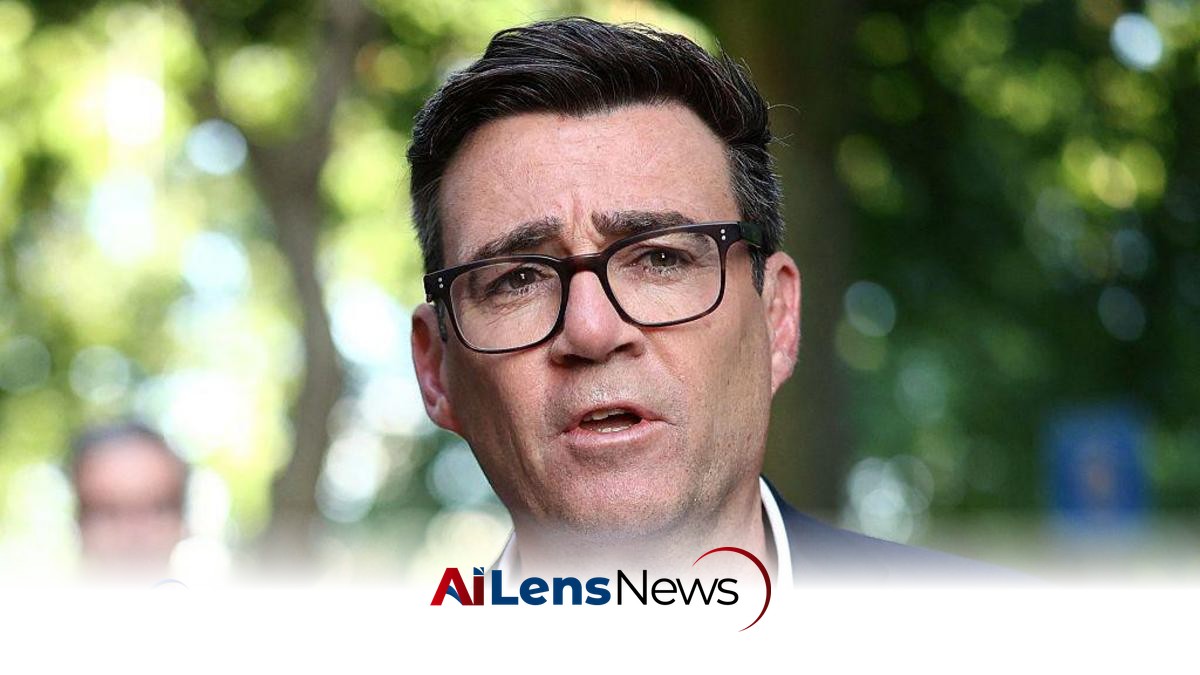


Andy Burnham, the newly elected MP for Makerfield, has confirmed he will not call an early general election if he becomes Prime Minister later this month.
New Delhi, India Jul 3, 2026 ALN: Andy Burnham has ruled out calling an early general election if he becomes prime minister later this month.
Taking part in an online Ask Me Anything (AMA) session on Reddit, one user asked whether he would call an election. Burnham replied: "No. As I said in my speech on Monday, I'm going to work to the 2024 manifesto." This statement indicates Burnham's intention to focus on the policies and commitments laid out in the Labour Party's upcoming manifesto rather than seeking immediate electoral validation through an early election.
The newly elected MP for Makerfield is currently the only candidate in the running to replace Sir Keir Starmer as the leader of the Labour Party, positioning him as a likely contender for the prime ministerial role as soon as July 20. This potential transition in leadership comes at a critical time for the Labour Party, which recently achieved a significant electoral victory in the last general election held on July 4, 2024, where they secured a landslide majority. Given the electoral cycle, the next general election must be called by August 2029, although a prime minister has the discretion to call one earlier if deemed necessary.
In the lead-up to his potential premiership, Burnham has engaged with the public through various platforms, including Reddit, where thousands of users have submitted questions since he announced the AMA session. This approach reflects a modern strategy of political engagement, leveraging social media to connect with constituents and party members alike.
During the AMA, Conservative leader Kemi Badenoch challenged Burnham's engagement strategy, accusing him of only answering "softball questions." Badenoch's comments underscore the competitive nature of political discourse, particularly as Burnham prepares for a leadership role. She stated, "You're going to be prime minister soon so it's time to start acting like one. Come out from hiding, face a proper press conference and submit yourself to scrutiny and some tough questions. Are you up for it?" Burnham's response acknowledged the validity of her challenge but also highlighted his recent interactions with a large number of constituents in Makerfield, suggesting that he is not avoiding public engagement.
Burnham's media presence has been notably limited, having given only one interview since announcing his candidacy for Labour leader. This strategic choice may reflect a desire to control the narrative and focus on direct public engagement rather than traditional media scrutiny. Badenoch's calls for Burnham to address funding shortfalls in the recently published defence investment plan further illustrate the political pressure he faces as he steps into a potentially leadership role.
Meanwhile, Reform UK leader Nigel Farage has echoed calls for a general election "as soon as possible" following Sir Keir Starmer's resignation last month. Farage's comments reflect a broader sentiment among some political factions that a change in leadership should be met with an immediate electoral challenge to assess public support.
During the Reddit session, Burnham addressed a range of policy positions, indicating his approach to governance should he assume the role of prime minister. He stated his intention to negotiate a returns agreement for failed refugees, including with the Taliban-run government of Afghanistan, a position that aligns with a more stringent immigration policy. This reflects ongoing debates within the UK regarding immigration and refugee policies, particularly in the context of international relations and humanitarian obligations.
Burnham also confirmed his commitment to maintaining the triple lock on pensions, a policy that ensures state pensions increase annually in line with inflation, wage growth, or a minimum of 2.5%. His statement, "I appreciate there's a lot of debate about this but it is important that the commitment in the manifesto stands," signals his intention to uphold established social safety nets despite potential fiscal pressures.
In terms of foreign policy, Burnham expressed a desire for a closer relationship with the European Union. His previous comments about potentially rejoining the EU within his lifetime suggest a long-term vision for UK-EU relations. However, he also recognized the need to avoid rehashing Brexit debates, particularly in light of the divisions it has caused within the UK. His current stance includes a commitment to negotiate a more ambitious trade deal with the EU, which could have significant implications for the UK economy and its post-Brexit trade landscape.
Furthermore, Burnham indicated his support for reforming the UK's electoral system, advocating for a shift from the first-past-the-post system to a form of proportional representation. His intention to persuade his party to include this in the next manifesto highlights a commitment to electoral reform, which has been a topic of discussion among various political factions in the UK.
Burnham has also pledged to adhere to key elements of Labour's election-winning manifesto, including Chancellor Rachel Reeves' fiscal rules regarding borrowing. In an interview with LBC's Andrew Marr, he reiterated his commitment not to raise VAT, income tax, or national insurance, emphasizing fiscal discipline in managing public finances. However, he suggested there could be "some room" for adjustments in tax policies, such as increasing business rates on warehouses to fund tax cuts for pubs and high-street businesses. This proposal reflects ongoing discussions about supporting local economies while balancing the need for government revenue.
One of the most pressing issues awaiting Burnham if he assumes the role of prime minister will be the challenge of funding an increase in defence spending. Following Sir Keir Starmer's announcement of plans for a £15 billion increase in defence spending, the specifics of funding this increase remain unclear. Consequently, whoever Burnham appoints as chancellor will face the immediate task of identifying at least £4.7 billion in savings from other departments to support this budgetary requirement. This situation underscores the complexities of fiscal management in government, particularly in balancing national security needs with other public service commitments.
In summary, as Andy Burnham prepares for the possibility of becoming prime minister, his statements and engagements reflect a strategic approach to leadership that emphasizes public engagement, policy continuity, and fiscal responsibility. The political landscape remains dynamic, with ongoing debates about electoral timing, governance strategies, and the future direction of the Labour Party under his potential leadership.
To learn more about the latest developments in Politics, stay updated with our exclusive reports and analyses on AiLensNews.

