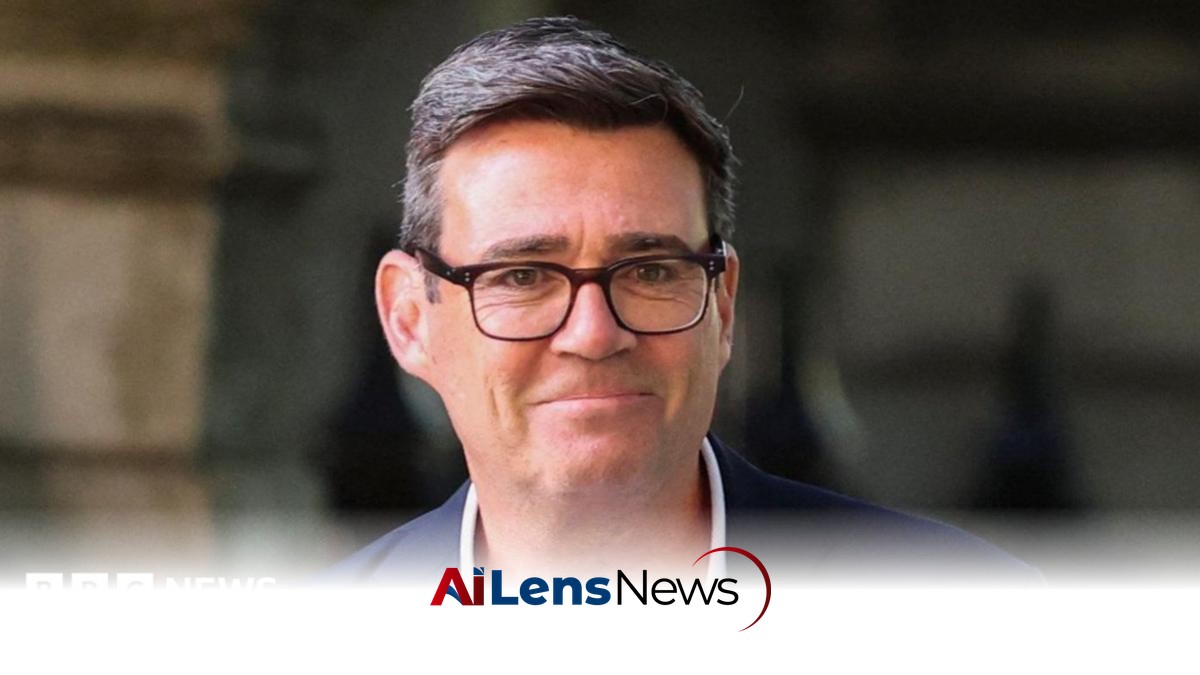


Andy Burnham is set to become Labour's new leader, unopposed in the race to replace Sir Keir Starmer as nominations open.
New Delhi, India Jul 9, 2026 ALN: Andy Burnham is on course to become Labour's new leader, with no other candidate running against him as nominations in the contest open.
Labour MPs can now formally endorse contenders to replace Sir Keir Starmer, with an initial total to be published by the party at around 19.00 BST on Thursday. This marks a significant moment in Labour politics, as the party transitions from the leadership of Starmer, who has faced various challenges during his tenure, including navigating the party through a pandemic and dealing with internal divisions.
Without other candidates joining the former Greater Manchester mayor in the race, Burnham will be declared leader at a party event at the end of next week. His ascension to leadership is noteworthy as it reflects a shift in the party's dynamics, particularly after a period of instability and electoral challenges. He would then become prime minister on 20 July, just weeks after returning to Parliament after a decade's absence in a by-election in Makerfield. Burnham's return to Parliament is significant not only for his personal political journey but also for the party's strategy moving forward.
Former defence minister Al Carns, who had suggested he could throw his hat into the ring, ruled himself out on Wednesday evening. This decision has further solidified Burnham's position as the uncontested candidate, clearing the path for him to run unopposed. A series of possible rivals, including Wes Streeting, have already thrown their weight behind him, indicating a consolidation of support within the party.
Labour's rulebook requires candidates to be nominated by 81 Labour MPs, as well as either 32 of Labour's 634 local branches or three of the 31 socialist societies and trade unions affiliated to the party, including at least two unions. This nomination process is crucial as it not only determines who can stand for leadership but also reflects the broader support base within the party.
Candidates have until Wednesday next week to gather the nominations from Labour MPs required to take part. However, an initial running total later, expected around 19.00 BST, will reveal the current state of support among Labour MPs for Burnham's bid for power. His path to the leadership could effectively be confirmed later if he manages to secure 323 nominations, as this would make it mathematically impossible for a rival to reach the 81-MP threshold needed to run against him. This scenario underscores the importance of early support in political contests, particularly in a party that has faced recent electoral setbacks.
It means Burnham could be propelled into Downing Street without Labour members and affiliated trade union supporters getting a vote, a situation that raises questions about democratic representation within the party. In a social media post, Burnham confirmed he had submitted his own nomination for his candidacy, adding "it's all starting to feel very real." He joked that it would be "hopefully third time lucky" for him, referring to his two previous failed bids for the leadership in 2010 and 2015. This light-hearted comment reflects Burnham's resilience and determination to lead the party.
The possibility of a curtailed contest has already led to some calls within Labour for the ex-mayor to set out further details of his blueprint for office. As he prepares to step into a leadership role, many within the party are eager to understand his vision and policies that will guide Labour in the coming years. Burnham left Westminster in 2017, limiting his opportunities to forge strong relationships with Labour MPs elected since then, who now make up the bulk of the party's contingent in the House of Commons. This gap in experience may pose challenges as he seeks to unify the party and address its internal divisions.
As things stand, he would be the only participant in an official parliamentary hustings scheduled for Monday next week, at which he would field questions from fellow Labour MPs about his plans for power. This event will be critical for Burnham as he articulates his vision for the party and the country while also addressing concerns from his colleagues.
So-called "access talks" with civil servants about his policy proposals are ongoing, run by Cabinet Secretary Antonia Romeo, the UK's most senior official. These discussions are essential as they will help shape the practicalities of Burnham's policy proposals and ensure that he is well-prepared for the responsibilities of leadership.
Burnham offered some details of his blueprint for office in a speech in Manchester last week, including proposals to establish a new No 10 unit in the city. This initiative reflects his commitment to decentralizing power and enhancing local governance, a theme that resonates with many voters who feel disconnected from central decision-making processes.
He has suggested the unit will be tasked with handing local government more control in areas including housing and transport. This approach aligns with growing calls for localism in governance, where decisions are made closer to the communities they impact. A central part of his policy offering is a pledge to give all parts of the UK "greater public control" of the water and energy sectors, although he is yet to spell out what this would mean in practice. This promise indicates a shift towards more public ownership and accountability in essential services, which could be a significant electoral issue moving forward.
In a Times article on Thursday, he also confirmed he wants to keep Sir Keir's national security adviser Jonathan Powell, a former Blair aide, in post. This decision may signal continuity in certain policy areas, particularly regarding national security, which has been a contentious topic in recent years. He also said he wanted to see a "sustained increase" in defence investment, without committing to a specific target, whilst being "more open with the public" about cost overruns or delays to military procurement. This approach to transparency may resonate with voters who have expressed concerns over military spending and its implications for domestic priorities.
In one of his final decisions as prime minister, Sir Keir announced a plan to increase military spending by £15bn over the next four years by cutting spending in other parts of government, whilst leaving the details to his successor. This decision reflects the ongoing debate within the Labour Party about balancing defence spending with social investment, a conversation that will likely continue to shape the party's platform under Burnham's leadership.
As Burnham prepares to potentially take the reins of the Labour Party, his leadership will be closely scrutinized not only by party members but also by the wider public. The implications of his policies and leadership style will be significant as the UK approaches the next general election, where Labour will need to present a united front and a compelling vision for the future. The political landscape is ever-changing, and Burnham's ability to navigate these challenges will be pivotal in determining the Labour Party's success in the coming years.
To learn more about the latest developments in Politics, stay updated with our exclusive reports and analyses on AiLensNews.

