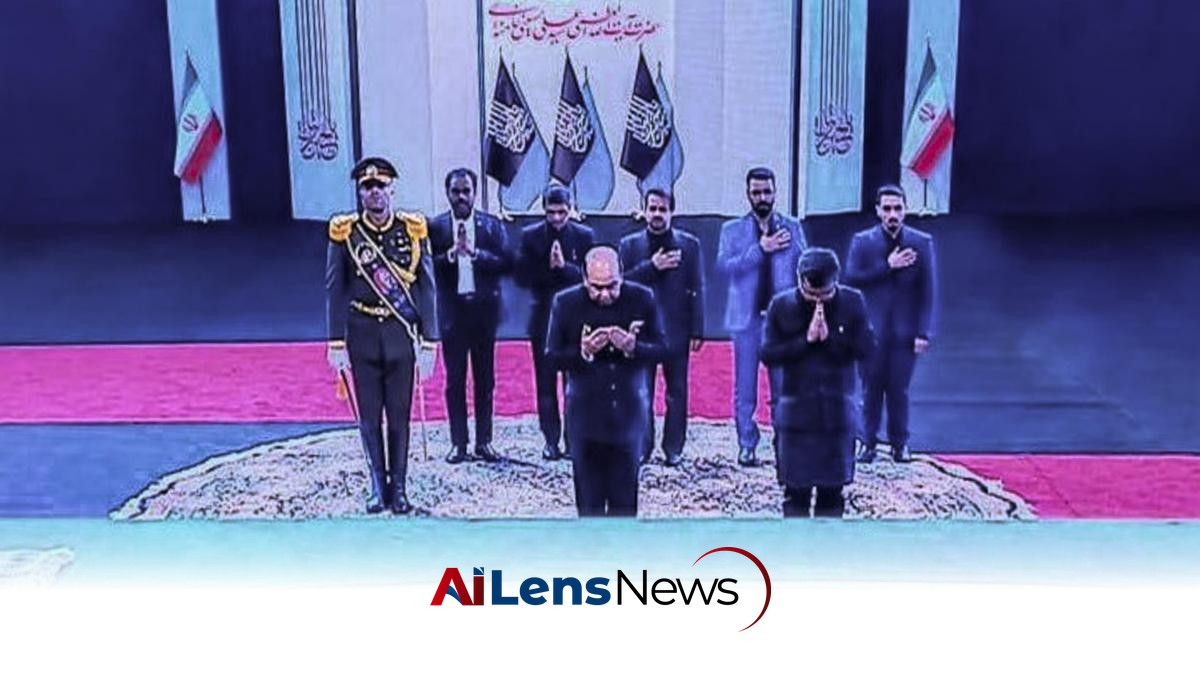


Bihar Governor Hasnain and MoS Margherita represent India at Ayatollah Khamenei's funeral in Tehran, honoring diplomatic ties.
Tehran, Iran Jul 4, 2026 ALN: Union Minister of State Pabitra Margherita and Bihar Governor Syed Ata Hasnain attended the funeral ceremony of Iran's late Supreme Leader Ayatollah Ali Khamenei on Friday, July 3, 2026, and paid their respects on behalf of the government and the people of India. This event marks a significant moment in Indo-Iranian relations, reflecting the deep-rooted historical and cultural ties between the two nations.
Ayatollah Ali Khamenei, who ruled Iran for the last three decades, was a pivotal figure in the Islamic Republic, influencing both domestic and foreign policy. His leadership spanned a period marked by significant geopolitical tensions, particularly with Western nations. Khamenei's death on February 28, 2026, resulted from massive U.S. and Israeli air strikes on Tehran, an event that has heightened tensions in the region and raised questions about the future of Iran's political landscape.
In a post on X, Minister of State for External Affairs Margherita expressed the importance of their visit, stating, "Hon'ble and I represented India at the funeral ceremony for Grand Ayatollah Seyyed Ali Khamenei, former Supreme Leader of Iran, in Tehran. Conveyed our respects on behalf of the Government and the people of India." His statement underscores the diplomatic significance of the event, as India seeks to maintain a balanced relationship with Iran amid changing geopolitical dynamics.
#WATCH | Representing India's official delegation, MoS Pabitra Margherita and Bihar Governor Lt Gen (Retd) Syed Ata Hasnain paid tribute to Ayatollah Ali Khamenei during the funeral ceremony in Tehran. The event was attended by leaders and dignitaries from across the world.…
The presence of high-ranking Indian officials at Khamenei's funeral reflects the longstanding civilizational ties between India and Iran, which date back to ancient times. These ties have been characterized by cultural exchanges, trade, and shared philosophical and religious ideas, particularly in the context of the Persian Empire and the Indian subcontinent. The two nations share a mutual interest in regional stability and economic cooperation, particularly in areas such as energy, trade, and security.
The Bihar Lok Bhawan, in a statement on X, highlighted that Governor Hasnain also extended deepest condolences to the families of those who have lost their lives in the recent conflict in West Asia. This acknowledgment of the broader humanitarian impact of the recent violence in the region indicates India's sensitivity to the plight of civilians affected by geopolitical conflicts.
"Represented India at the funeral ceremony of His Eminence Grand Ayatollah Seyyed Ali Khamenei in Tehran today, along with MoS External Affairs. Also extended deepest condolences to the families of those who lost their lives in the recent conflict," the Governor's office posted. This statement not only conveys respect for Khamenei but also reflects India's commitment to peace and stability in the region.
The Embassy of Iran in India shared visuals of Mr. Hasnain and Mr. Margherita offering their respects in a hall where the ceremony to mourn Khamenei's death was held. The embassy's communication emphasized the significance of the visit, stating, "The Special Representatives of the Government of the Republic of India, Bihar Governor Lieutenant General (Retd.) Syed Ata Hasnain and Mr. Pabitra Margherita, Minister of State for External Affairs, paid tribute to the martyred Leader of the Islamic Republic of Iran." This sentiment resonates with the Iranian public, who view Khamenei as a key figure in their identity and political ideology.
In a separate post, the Iranian embassy stated, "A delegation of Indian religious leaders paid tribute to the martyred Leader of the Islamic Republic of Iran, Ayatollah Ali Khamenei," indicating that the Indian delegation was part of a larger inter gathering of representatives from various countries who came to pay their respects. The presence of various religious leaders highlights the significant role that Khamenei played not only in Iran but also in the broader Islamic world, where he was seen as a leader of the Shia community.
The Iranian President Masoud Pezeshkian had invited Prime Minister Narendra Modi to the funeral, reflecting the importance of India's role in regional politics and its potential influence in future dialogue between Iran and other nations. The invitation to the Prime Minister indicates Iran's recognition of India's strategic importance, especially in light of the complex geopolitical landscape shaped by U.S.-Iran tensions and regional conflicts.
Former External Affairs Minister Salman Khurshid also represented the Congress party at the funeral ceremony, indicating a bipartisan approach in India’s foreign policy towards Iran. This unity among Indian political leaders underscores the significance of the event and the importance of maintaining strong ties with Iran, particularly in the context of shared interests in combating terrorism and promoting stability in the region.
External Affairs Ministry spokesperson Randhir Jaiswal, during a weekly media briefing, confirmed the representation of India at the ceremony, stating, "As far as the government of India is concerned, we issued a press statement confirming that Bihar Governor Lt Gen Syed Ata Hasnain (retd) and Minister of State for External Affairs Pabitra Margherita are in Tehran today to represent India at the burial ceremonies for Iran's late Supreme Leader." This official acknowledgment highlights the significance of the event in terms of diplomatic relations and the ongoing dialogue between India and Iran.
The high-level representation in the ceremony underscores the importance of civilizational ties, including people-to-people connections, between the two countries, providing a robust foundation for political and economic engagements. The Ministry of External Affairs stated in its July 2 announcement that such engagements are crucial for fostering mutual understanding and cooperation in various fields, including trade, culture, and security.
The main funeral procession in the Iranian capital is scheduled for July 6, according to Iran's state-run media. This procession is expected to draw thousands of mourners, reflecting the deep respect and reverence that many Iranians hold for Khamenei. His death has left a significant void in Iranian leadership, and the future direction of the country may be shaped by the successor chosen to fill his role.
On July 7, ceremonies will be held in the holy city of Qom, a center of Shia scholarship and religious authority, further emphasizing Khamenei's importance within the Shia community. The burial in Khamenei's hometown of Mashhad is scheduled for July 9, symbolizing the culmination of a mourning period and the transition to a new phase in Iran's political landscape.
As the world watches the developments in Iran following Khamenei's death, the implications for regional politics, inter relations, and the stability of the Middle East remain profound. India's participation in the funeral ceremony not only signifies respect for a key global leader but also reinforces India's commitment to engaging with Iran as a vital partner in addressing common challenges and fostering peace in a tumultuous region.
To learn more about the latest developments in World News & International Affairs, stay updated with our exclusive reports and analyses on AiLensNews.

