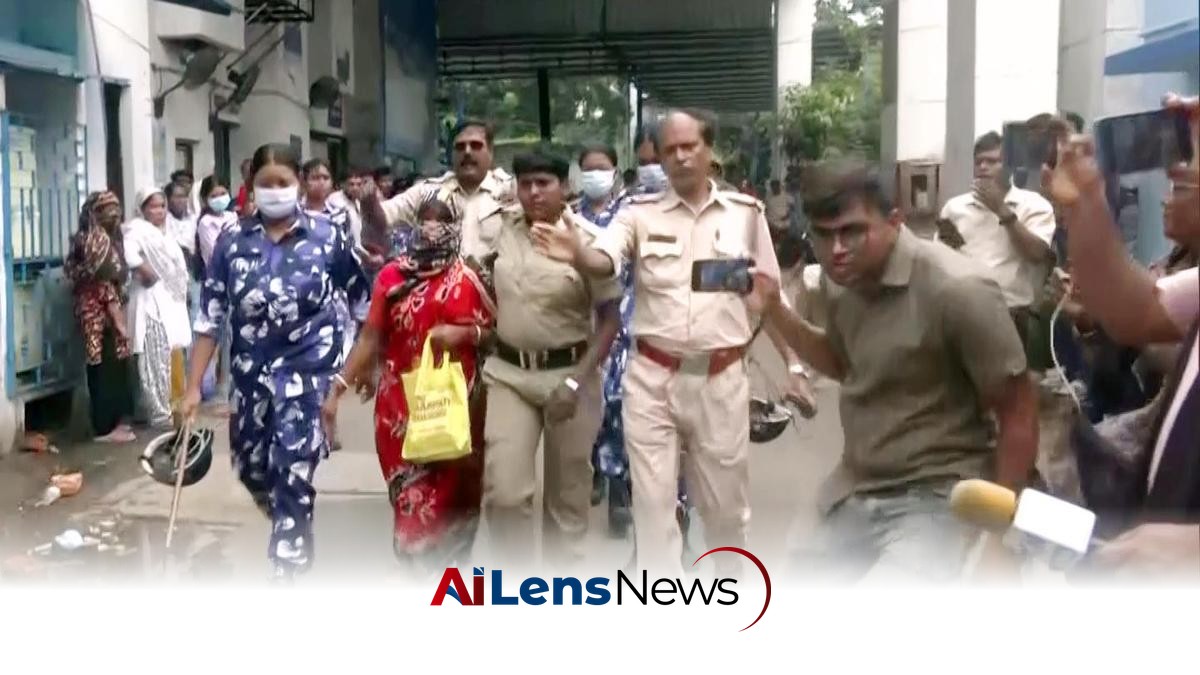


The last rites of Prabhas Mondal, accused in a heinous crime, were conducted by local authorities as his family declined to claim his body. The CID is now investigating the police encounter that led to his death.
New Delhi, India Jul 10, 2026 ALN: The tragic case surrounding the death of Prabhas Mondal, a man accused of the heinous crime of raping and murdering a 12-year-old girl in Baruipur, West Bengal, has sparked a significant public outcry and raised critical questions about law enforcement practices in the region. The events unfolded rapidly, culminating in Mondal's death during a police encounter on July 8, 2026, and the subsequent refusal of his family to accept his body, which has further fueled the controversy.
The background of this case reveals a deeply troubling narrative. The young girl went missing on July 4, prompting her family to file a missing person complaint. Tragically, her body was later discovered, leading to widespread grief and anger among the community. Initial investigations suggested that Mondal, along with three other suspects—Anand Sardar, Dibakar Sardar, and Kabir Mollah—had been involved in the abduction, sexual assault, and murder of the girl. The police claimed to have evidence, including CCTV footage, that placed Mondal with the victim prior to her death, which intensified the public's demand for justice.
This incident is not isolated; it is part of a broader pattern of violence against women in India, where cases of sexual assault and murder of minors have been on the rise. According to the Crime Records Bureau (NCRB), crimes against women have shown an alarming increase, leading to public outcry and demands for stricter laws and better enforcement. The case in Baruipur has amplified these calls, with community members and activists demanding justice not only for the victim but also for stronger protections against future crimes.
In the wake of the girl's murder, violence erupted in the area as local residents expressed their outrage. A mob attacked police personnel, vandalized police vehicles, and blocked roads and railway tracks, highlighting the community's frustration with the perceived inability of law enforcement to protect its citizens and bring the perpetrators to justice. This unrest underscored the emotional toll of the crime and the urgent need for a comprehensive response from authorities. The anger was not merely about this single incident but reflected a broader discontent with systemic failures in protecting vulnerable members of society.
In the aftermath of Mondal's death, the West Bengal government decided to transfer the investigation of the encounter to the Criminal Investigation Department (CID). The police reported that Mondal had allegedly attempted to escape during a reconstruction of the crime scene, during which he reportedly snatched a police officer's weapon and fired a shot. The circumstances surrounding his death have raised questions about the use of lethal force by law enforcement, particularly in the context of a highly charged public sentiment following the girl's murder. The narrative of an attempted escape is often scrutinized, as it can be seen as a justification for the use of deadly force, which many argue should be reserved for the most extreme situations.
Sandhya Mondal, Prabhas Mondal's mother, publicly stated that she refused to claim her son's body, asserting that he had faced the consequences of his actions. This sentiment was echoed by Mondal's wife, who alleged that she had suffered abuse at his hands, indicating a complex family dynamic marked by trauma and violence. Their refusal to accept the body signifies a profound moral stance in the face of a crime that has shocked the community. This situation highlights the often-complicated relationships within families where violence is present, and how societal norms around justice and accountability can influence personal decisions in the wake of tragedy.
The political ramifications of the encounter have been significant, with various opposition leaders criticizing the West Bengal government's handling of the situation. Many have drawn parallels between the encounter and the controversial policing practices associated with the governance of Uttar Pradesh under Chief Minister Yogi Adityanath. Critics argue that the ruling Bharatiya Janata Party (BJP) is adopting a similar approach, characterized by a heavy-handed response to crime that often bypasses due process. This comparison raises important discussions about the balance between public safety and civil liberties, a debate that is increasingly relevant in a country grappling with high crime rates and public demand for swift justice.
BJP Minister Dilip Ghosh defended the police action, asserting that law enforcement should be empowered to take decisive action against criminals. His remarks reflect a broader narrative within certain political circles that advocates for a tough-on-crime approach, often at the expense of civil liberties and due process. Ghosh's comments about "throwing eggs at intellectuals" who defend criminals further illustrate the polarized political climate surrounding issues of crime and justice in India. This rhetoric can have significant implications for public discourse, potentially discouraging nuanced discussions about justice and the need for reform in law enforcement practices.
Leaders from the Communist Party of India (Marxist) and other opposition parties have condemned the encounter as a "planned" and politically motivated act, suggesting that it was designed to distract the public from systemic failures in governance and the communal undertones of the crime. This accusation points to a broader concern regarding the politicization of crime and justice in the state, where sensational cases can quickly become battlegrounds for political rivalry. The politicization of such incidents often complicates the pursuit of justice, as public sentiment can be manipulated for electoral gain rather than focusing on genuine reform and accountability.
Former Congress State president Adhir Ranjan Chowdhury articulated a profound concern regarding the rule of law in West Bengal, asserting that the encounter reflects a breakdown of legal standards and the rise of a "law of the jungle" mentality. His remarks resonate with a growing apprehension among civil society and legal experts about the implications of extrajudicial killings and encounters on the fabric of democracy and justice in India. Chowdhury's visit to Baruipur underscores the importance of political engagement in addressing public grievances and restoring faith in the justice system. This situation presents an opportunity for civil society to advocate for reforms that prioritize accountability and transparency in law enforcement practices.
The Baruipur encounter raises several critical questions about the future of policing in West Bengal and India as a whole. As public outrage continues to simmer, there is an urgent need for a transparent investigation into the circumstances of Mondal's death, as well as a broader examination of police practices and accountability. The implications of this case extend beyond the immediate tragedy, touching on issues of human rights, the rule of law, and the responsibilities of the state to protect its citizens while upholding justice. The need for reform in police practices is echoed by many activists and legal experts who argue that a shift towards community-oriented policing and accountability mechanisms is essential for rebuilding trust between law enforcement and the public.
Moreover, the response from the community and political leaders reflects a society grappling with the aftermath of violence, trauma, and a quest for justice. The intersection of crime, politics, and public sentiment in this case highlights the complexities of governance in contemporary India, where the pursuit of justice is often fraught with challenges and contradictions. As the CID takes over the investigation, the hope remains that a thorough and impartial inquiry will shed light on the events surrounding both the girl's murder and the subsequent encounter, ultimately contributing to a more just and equitable society. The outcome of this investigation may also set important precedents for how similar cases are handled in the future, influencing public perceptions of justice and law enforcement in India.
To learn more about the latest developments in Crime & Law, stay updated with our exclusive reports and analyses on AiLensNews.

