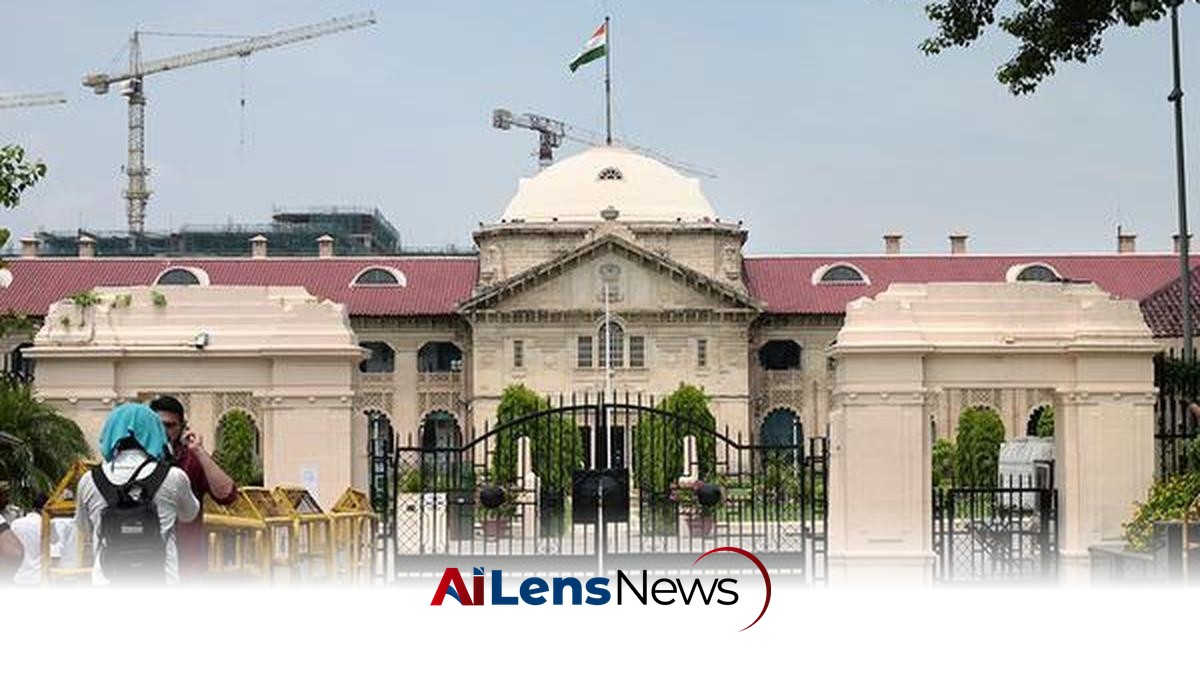


The Allahabad High Court affirms that the Prohibition of Child Marriage Act applies to all citizens, stating Shariat law cannot override it.
New Delhi, India Jul 8, 2026 ALN: The Allahabad High Court's recent ruling regarding the minimum legal age of marriage underscores a significant legal and social issue in India, particularly as it relates to the intersection of personal laws and statutory provisions aimed at protecting minors. This decision, rendered by a Division Bench consisting of Justice J.J. Munir and Justice Achal Sachdev, reaffirms that the Prohibition of Child Marriage Act (PCMA) of 2006 applies uniformly to all citizens of India, regardless of their religious affiliations. This ruling comes against the backdrop of ongoing debates about the legal status of marriage, particularly in the context of differing personal laws that govern various religious communities in India.
The Prohibition of Child Marriage Act was enacted with the intent of preventing child marriages, which have been a persistent issue in many parts of India. The Act sets the minimum legal age for marriage at 18 years for women and 21 years for men, aligning with the broader goals of child protection and empowerment. The decision by the Allahabad High Court to uphold this age limit is particularly relevant in light of the case that brought this issue to the forefront: a writ petition concerning the attempted marriage of a 16-year-old girl in Bulandshahr district, Uttar Pradesh, which had resulted in a police intervention and subsequent legal action against several individuals.
In the case in question, the girl was reportedly rescued by officials from Childline and local police, who faced resistance from her relatives during the operation. This incident highlights the complexities surrounding child marriage in India, where cultural practices and personal laws often clash with statutory regulations designed to protect minors. The petitioners in the case argued that under Muslim personal law, a girl who has reached puberty—typically considered to be around 15 years of age—can be deemed eligible for marriage. They contended that the provisions of the PCMA do not supersede these personal laws, citing historical statutes such as the Indian Majority Act of 1875 and the Muslim Personal Law (Shariat) Application Act of 1937.
The Allahabad High Court's ruling is significant because it aligns with a growing consensus among various High Courts in India regarding the application of the PCMA and the Protection of Children from Sexual Offences (POCSO) Act, 2012. The court noted that there have been differing opinions among High Courts on whether Muslim personal law or the PCMA governs marriages involving minors. However, the Bench ultimately sided with the Kerala High Court's reasoning in the case of Moidutty Musliyar v. Sub Inspector, Vadakkencherry Police Station, which asserted that personal laws cannot override statutory prohibitions against child marriage or diminish the protections afforded by the POCSO Act.
This ruling reinforces the notion that the age of marriage, as articulated in the PCMA, is a matter of public policy and health, emphasizing the need for a consistent legal framework that protects minors from early marriage and its associated risks. The court's statement that permitting marriage below the age of 18 would contradict the POCSO Act, which criminalizes sexual relations with minors, further illustrates the legal and moral imperative to uphold these laws. The judges articulated that both the PCMA and the POCSO Act are grounded in scientific understanding and legislative intent aimed at safeguarding children, thus creating a robust framework against child marriage.
Moreover, the court's refusal to quash the FIR against the individuals involved in the attempted marriage of the 16-year-old girl underscores the judiciary's commitment to enforcing laws that protect vulnerable populations, particularly children. By recognizing the role of law enforcement and child protection agencies in preventing violations of these statutes, the court has sent a clear message that adherence to the law is paramount, regardless of cultural or religious justifications for early marriage.
The implications of this ruling extend beyond the immediate case and reflect broader societal trends in India regarding child marriage and women's rights. Despite legal prohibitions, child marriage remains a pervasive issue in various regions, often perpetuated by cultural norms and economic factors. According to various reports, child marriage is prevalent in rural areas where traditional practices hold significant sway over the lives of families. The High Court's decision may serve as a catalyst for increased awareness and enforcement of child protection laws, encouraging communities to reconsider traditional practices that conflict with statutory regulations.
Furthermore, this ruling may prompt discussions within religious communities about the need to reconcile personal laws with contemporary legal standards aimed at protecting children. As India continues to grapple with the complexities of plural legal systems, the judiciary's role in interpreting and enforcing laws that promote the welfare of minors becomes increasingly critical. The intersection of personal laws and statutory laws raises important questions about how communities can adapt to modern legal frameworks while respecting cultural traditions.
The issue of child marriage is not only a legal concern but also a public health crisis in India. Early marriage often leads to early pregnancies, which carry significant health risks for both mothers and children. The World Health Organization has highlighted that adolescent girls face a higher risk of complications during pregnancy and childbirth, which can have long-lasting effects on their health and well-being. By enforcing the minimum age of marriage, the court's ruling indirectly addresses these public health concerns, promoting the well-being of future generations.
In conclusion, the Allahabad High Court's decision to uphold the minimum legal age of marriage as prescribed by the PCMA is a landmark ruling that reinforces the principle that child protection laws apply uniformly across all religious communities in India. This ruling not only affirms the legal framework designed to prevent child marriage but also highlights the ongoing struggle to balance personal laws with the rights and protections afforded to minors under legislation. As the legal landscape evolves, it will be essential for lawmakers, communities, and the judiciary to work collaboratively to ensure that the rights of children are upheld and that harmful practices such as child marriage are eradicated from society. The ruling stands as a testament to the commitment of the Indian judiciary to safeguard the rights of the most vulnerable members of society and to uphold the principles of justice and equality in a diverse and pluralistic nation.
To learn more about the latest developments in Crime & Law, stay updated with our exclusive reports and analyses on AiLensNews.

