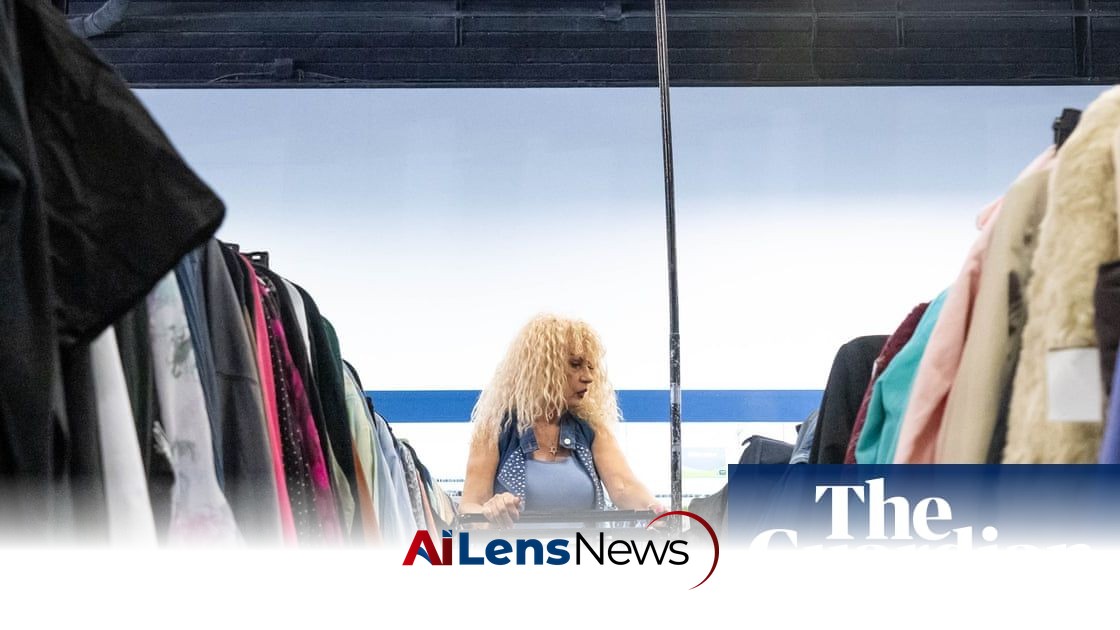


As Gen Z embraces thrifting, the secondhand fashion market has exploded into a $350 billion industry, transforming its cultural roots and pricing dynamics.
London, United Kingdom Jul 24, 2026 ALN: Vintage boutique owner Janelle Best has been rummaging in thrift shop bins since the 90s. When she started, she says, there was a stigma about it. “It was either you were a freak, or you were poor – and I was a freak.”
Initially, she sourced stage outfits while playing in psych-rock bands. In 2005, she began “casually reselling” on eBay, and by 2015, she was trading as Desert Stars Vintage at street markets. By 2023, she had opened a showroom specializing in upmarket silk dresses in her Williamsburg apartment. Just a few years ago, she still spent hours at places like Goodwill, where the bins were a treasure trove. “There were so many bangers,” she recalls. However, as thrifting became a social media sensation, the landscape changed dramatically. “The hell gates of high school students flooded in. Twelve people to each bin. Everyone fighting. Suddenly everyone’s a reseller, and instead of these kids intuitively knowing what’s good, they’re on their phones trying to figure out if it’s valuable.”
Secondhand clothing has never been more popular. On TikTok, teenage girls share thrift haul videos, showcasing bags of clothes acquired for less than $100. Meanwhile, billionaires flaunt rare vintage pieces to signal status and taste.
Many attribute the meteoric rise of secondhand clothing to Gen Z, who are reportedly more environmentally conscious and entrepreneurial than previous generations. However, the real catalyst is technology, with platforms like Depop, The RealReal, Vestiaire Collective, Vinted, ThredUp, and Poshmark making secondhand buying and selling more accessible than ever.
The pandemic served as a tipping point, with increased screen time making online buying and selling feel like a unique way to “hunt for endorphins,” as writer and dedicated thrifter Linnea Pejcha describes her own Depop habits during that time. Thrifting surged globally by 28% between 2021 and 2022, and has continued to grow. Revenue is not limited to apps; Goodwill, North America’s largest thrift chain with 3,400 stores across the US and Canada, reported a record $7 billion in revenue last year, with plans to open between 50 and 100 new stores across North America. ThredUp projects the market will reach $367 billion by 2029, growing 2.7 times faster than the overall global apparel market.
While a boom in reused clothing should be good news, many long-time thrifters feel disheartened by the changes that have come with this growth.
It’s not just musicians and artists selling vintage anymore; even oligarchs have entered the resale game. Client advisers for top fashion brands report that some customers, with wardrobes overflowing with luxury items, seek help listing their clothing on secondhand apps as a strategy to buy new pieces. Analyst Claudia D’Arpizio from Bain & Company notes that by helping clients “get rid of some of their wardrobe,” they unlock potential new purchases.
A recent Bain report found that half of luxury shoppers check an item’s price on the secondhand market before deciding whether to buy new. In high-end vintage, certain brands are becoming exclusive to the wealthiest collectors. Best notes that Cavalli pieces, in particular, have skyrocketed in price, “probably five times in value in four years.” She observes that “all of these rich girls started hoarding brands like Cavalli and Blue Marine.”
Historically, thrifting has been associated with rebellion and alternative lifestyles. Jennifer Le Zotte, author of From Goodwill to Grunge, explains that every generation believes they are rediscovering thrifting. In the past, a lingering stigma—attributed to antisemitism and germ theory—made thrift feel like a resource for rebellion. This sentiment was shared by grunge enthusiasts in the 1990s and the surrealists in the 1920s. “I think every generation for a long time has thought that they’re discovering this repository of fashionable possibilities,” Le Zotte says.
However, this vintage boom is different. While it has benefited businesses, Best notes that it’s harder to make a living now due to rising costs of gas and shipping. The fierce competition for popular stock has led her to describe vintage hunting as “a nepo baby sport.”
Best also faces challenges with tariffs. The US market is “really dry,” prompting her to source items from Italy and France, but she now pays 15% on all imports after the removal of a tariff exemption on imports worth less than $800. She believes prices will continue to rise: “Because vintage is finite, only so many pieces were made at a certain time, and everyone’s looking for it.”
At the lower end of the secondhand market, shoppers express frustration over rising prices, which many say have become unfeasible for low-income individuals who rely on thrift stores. Complaints about inflated prices have become common, with videos titled “Goodwill what crack are you smoking??” circulating online. A dedicated Reddit community, ThriftGrift, compiles examples of distressing price tags, such as a stained Carhartt hoodie priced at $12 or a $6.99 shirt with a wasp’s nest attached to it. Some items still bear their original tags, revealing that a pair of peach, pleated pants priced at $8.99 in Goodwill was originally sold for $7.99 new. Recently, Goodwill’s western and northern Connecticut branch launched a Thrift Tour, offering a “private bus” to three stores, exclusive early shopping, lunch, a custom T-shirt, a 20% off coupon, and the chance to “meet new thrifting besties” for $75.
Thrift store workers attribute some price increases to inflation, as costs for labor, rent, and cleaning have risen. However, much of it is also driven by awareness of the booming resale market. Managers now post cheat sheets of brands to watch for in backrooms, use resale prices on eBay or Depop to gauge value, and utilize Google Lens for price comparisons. The days of finding a bargain at the bottom of a bin may be over.
The secondhand fashion ecosystem is vast, ranging from high-end consignment operations that authenticate and sell clients’ items for a share of the profit, to independent thrift stores where shoppers might still find a pair of jeans for a few dollars. In between are vintage stores, particularly in fashion-centric urban centers like New York City, which stock rare Y2K pieces from designers like Jean Paul Gaultier and Dior. Online, numerous for-profit sites specialize in high street brands, such as ThredUp, which sends bags to fill with clothes for resale, and platforms like Poshmark and Depop where sellers retain more profits but do more legwork.
However, the largest for-profit thrift chain in North America, Savers, backed by private equity, operates over 300 stores and plans to open another 26 this year. The giants of thrift, however, are non-profits: Goodwill and the Salvation Army, which has 887 stores in the US.
Critics of these large thrift chains often refer to Goodwill as “Greedwill” online, claiming it operates more like a for-profit store than a charity. Central to their complaints is the high salaries of executives, which range from $300,000 to $700,000. Goodwill states that it helped nearly 2 million individuals with job training and support services in 2025, though some of those placements were with Goodwill itself, which has faced controversy for paying disabled workers as little as 22 cents an hour due to a loophole in the Fair Labor Standards Act.
Some frustrated with the professionalization of the thrift economy blame individual resellers for rising prices. Sheri Pavlović, a sustainable fashion expert, notes that tensions can arise on the shop floor, with younger resellers being confronted by older shoppers who blame them for inflated prices. Pavlović argues that the real issue lies with the corporate suits running thrift chains who hike prices because they can, not because they must.
Robert, who runs a mom-and-pop thrift store in Monterey, California, has only raised prices about a quarter of the inflation rate since the pandemic, prioritizing customer retention. He believes larger chains can charge higher prices due to their scale and brand recognition, and he faces aggressive competition from them.
Additionally, many thrift stores engage in “picking,” where antique and vintage dealers buy the best items before they hit the sales floor, a practice that has become increasingly common.
David Eagles, executive vice-president of Goodwill Industries International, stated that prices are set by local organizations and that the average retail price per item across Goodwill remains below $5. He emphasized that while average item pricing has gradually increased since the pandemic, it has remained lower than the broader inflationary environment.
The challenges of peak thrift extend beyond pricing. Donors have historically enjoyed a sense of virtue from participating in the secondhand market. Le Zotte notes that Goodwill’s model was tailored to a time of high immigration and wealth inequality, encouraging middle-class homeowners to donate old items they could replace without feeling wasteful.
However, in the era of fast fashion, that sense of virtue seems to appease guilt about buying new clothing. A recent Yale University study found that participation in secondhand fashion often drives, rather than replaces, new garment purchases. While 37.2% of people reported increasing clothing donations between 2020 and 2024, there was also a 38% rise in new clothing purchases. This contradicts the “moral social buy-in” that many shoppers feel when buying secondhand, leading Le Zotte to caution that this sentiment is often exaggerated.
Despite the challenges, true believers in thrifting remain. Liisa Jokinen, who runs an app aggregating secondhand clothing, insists that “not everything is expensive – but you need to be patient.” She recommends visiting yard sales, clothes swaps, and local shops where fill-a-bag sales still exist.
Pavlović has temporarily stepped back from thrifting due to rising prices, opting instead to alter her existing garments. However, she disagrees with the notion that all the “good” items are gone from thrift stores. “What is good stuff to you is not good stuff to me. I don’t give a shit about the label,” she asserts, advocating for a focus on personal taste rather than brand names.
Pat Noecker, owner of Other People’s Clothes in New York City, has developed what he calls his “double PhD in thrifting” through years of touring the US as a musician. He maintains low prices for his area, selling Zara pieces for $15.98 to $21.98. His business is profitable, but he acknowledges the challenges posed by the evolving thrift landscape.
To learn more about the latest developments in Sustainable Living, stay updated with our exclusive reports and analyses on AiLensNews.

