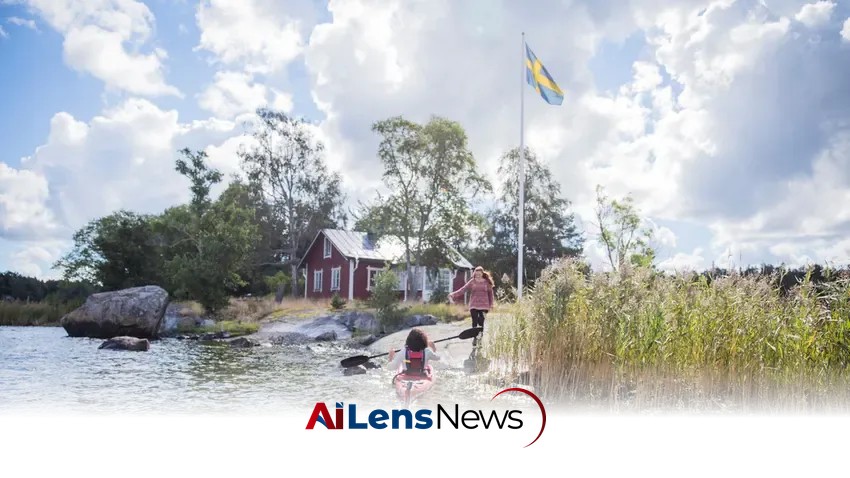


In Sweden, discussing summer vacations at work is a norm, contrasting with North American expectations. This article explores the cultural significance of 'semester' in Swedish society.
London, United Kingdom Jul 19, 2026 ALN: Coming from North American work culture, where you're often expected to pretend to love your job, it can be a bit of a shock to find that, in Sweden, a common conversation in the workplace is how eager you are to get away from it for a whole month. This stark contrast highlights the fundamental differences in work-life balance and employee satisfaction between these two cultures, which can be quite telling about broader societal values.
I think what my Swedish husband disliked the most about living in Toronto was the work culture. He had great colleagues and a good job, but couldn't escape the pervasive cultural expectation that if you don't actually love your work you should pretend that you do – or, at the very least, never explicitly say that you can't wait to get away and go on holiday. This pressure to maintain a facade of enthusiasm can lead to burnout and dissatisfaction among employees, as they feel compelled to conform to an unrealistic standard of perpetual happiness at work.
I will never forget the look on my husband's face the time he emerged from a Zoom meeting in the basement of our rented Toronto bungalow and said: "Someone on the meeting was just back from a week of vacation. She kept talking about how good it was to be back at work. And a bunch of people agreed. One. Week." This moment encapsulated the disconnect between his experiences in Sweden and those in North America, where the emphasis on productivity often overshadows the importance of taking breaks and recharging.
It wasn't until I moved to his home country that I understood just how different this is from Swedish work culture norms. In Sweden, the conversation around vacations is not only accepted but encouraged. The cultural emphasis on work-life balance is deeply rooted in the Swedish psyche, where the idea of enjoying life outside of work is seen as essential for overall well-being. This perspective is not merely a trend but is supported by historical and social frameworks that prioritize the welfare of workers.
Many Swedish institutions are built on a cultural valuing of work – the effects of the temperance movement, with its strong basis in the ideal of good (sober) labour, are still felt here, as are the many years of worker-focused governance. The temperance movement, which aimed to reduce alcohol consumption, played a significant role in shaping the Swedish labor market and its policies. It fostered a sense of responsibility and commitment to work that has persisted over generations. However, this commitment does not equate to the notion of sacrificing personal time for the sake of work; rather, it emphasizes the importance of a balanced life.
But there's nothing more Swedish than talking, at work, about how you can't wait to get away from work for your state-sponsored vacation. The concept of vacation, or semester, is not just a personal indulgence but a societal right that is celebrated and anticipated. The right to vacation is enshrined in Swedish law, ensuring that employees receive a minimum of four weeks of paid vacation annually. This policy reflects the understanding that time away from work is crucial for maintaining mental health, fostering creativity, and enhancing productivity when employees return.
Historically, the key element in Swedish society and institutions has been the workers who do said valued work – the idea being that a person who is nurtured by society will be a more effective contributor to that society. This belief in nurturing individuals extends beyond mere economic productivity; it encompasses a holistic approach to life that values social welfare, health, and happiness. The signs of this ideal are maybe less glaringly visible in modern Sweden than rows of dyed blonde hair or the towering fluorescent letters "H&M", but they are nevertheless everywhere – in the built environment and in the lived lives of Swedes – and arguably more deeply embedded than the (admittedly ubiquitous) hair dye or fast fashion.
This history of social democracy is broad and deep enough that even in today's Sweden, which has swung, like many places, much farther to the right, many of the institutions built by social democratic policies, along with the cultures that grew out of them, are considered axiomatically Swedish to people who otherwise express more right-wing views on individualism and unfettered capitalism. While there are ongoing debates about the balance between individualism and collectivism, the cultural appreciation for vacation time remains a unifying factor across the political spectrum.
In the built environment, there are the folkets hus ("people's houses" – basically community centres, but community owned and operated) and folkparker ("people's parks"), which serve as spaces for communal activities and gatherings. These institutions reflect the Swedish commitment to community engagement and social interaction, reinforcing the idea that leisure and relaxation are integral parts of life. In the less tangible realm, there is the vast web of supports and protections for workers, which includes strong labor laws, parental leave policies, and comprehensive healthcare systems. And of these perhaps the most cherished is the right to semester – that is, to vacation.
Semester means "vacation" in Swedish, because in the 1930s a finance minister named Ernst Wigforss of the ruling Social Democratic party noticed that in France, army service was divided into semestres – half-years. Soldiers had some semestres when they were working and others, still paid, when they were not. It seemed to him a handy way of referring to a thing he would soon successfully pass through parliament: the right to at least two consecutive weeks every year – during the summer, while the precious light lasts – of paid time off of work. This historical context is essential to understanding how the concept of vacation has evolved into a fundamental aspect of Swedish life.
Those two consecutive weeks of paid vacation between the months of June and August have since grown to four, with one of the effects being that if you want to get anything done in Sweden after Midsummer, you're pretty much going to have to wait until autumn. The extended vacation period reflects the cultural importance placed on summer as a time for relaxation, family bonding, and enjoying nature. The long summer days, characterized by the midnight sun, encourage Swedes to take full advantage of their time off, leading to a collective exodus from cities to vacation homes and rural areas.
Another effect is that, especially as the summer approaches, everyone talks all the time and everywhere – including, maybe even especially, at work – about how they can't wait to go on vacation. How many weeks a person has left until semester, how much they're looking forward to not being at work for a solid month, and just generally standing in a circle reminding one another that semester is coming, are universal activities for the employed Swede. This ritualistic anticipation fosters a sense of camaraderie among colleagues, as they share in the collective excitement of upcoming breaks from work.
Similarly, once one returns to work after semester, the usual workplace topic of conversation is how bummed everyone is to be back. This shared experience of post-vacation blues serves to reinforce social bonds, as employees empathize with one another's feelings of reluctance to return to the daily grind. It also highlights the importance of taking breaks and the understanding that returning to work can be an adjustment after a period of relaxation.
So if you're new to working in Sweden and are looking to fit in with the group (also quite important in Swedish culture!) as holidays approach, don't be shy about talking about how you're längtar efter semester ("looking forward to vacation" – literally "longing for vacation") or sighing to your colleagues (when, say, you're all dealing with a gnarly work problem) snart är det semester ("it's vacation soon"). Engaging in these conversations not only helps you integrate into the workplace culture but also allows you to share in the collective excitement surrounding vacation time.
But remember not to be too dramatic about it. As crucial as acknowledging the desire for summer time off in Sweden is the accompanying attitude that this is all, the good and the bad, part of the normal ebb and flow of life. Back at work but wish you were still on semester? Feel free to mention it to your colleagues, who will no doubt commiserate, but also add men så är det – "but so it is". C'est la vie. This phrase encapsulates the Swedish attitude towards life, emphasizing acceptance and resilience in the face of life's ups and downs. It serves as a reminder that while work is important, it is equally essential to embrace the joys of life outside of work.
To learn more about the latest developments in Mind & Soul, stay updated with our exclusive reports and analyses on AiLensNews.

