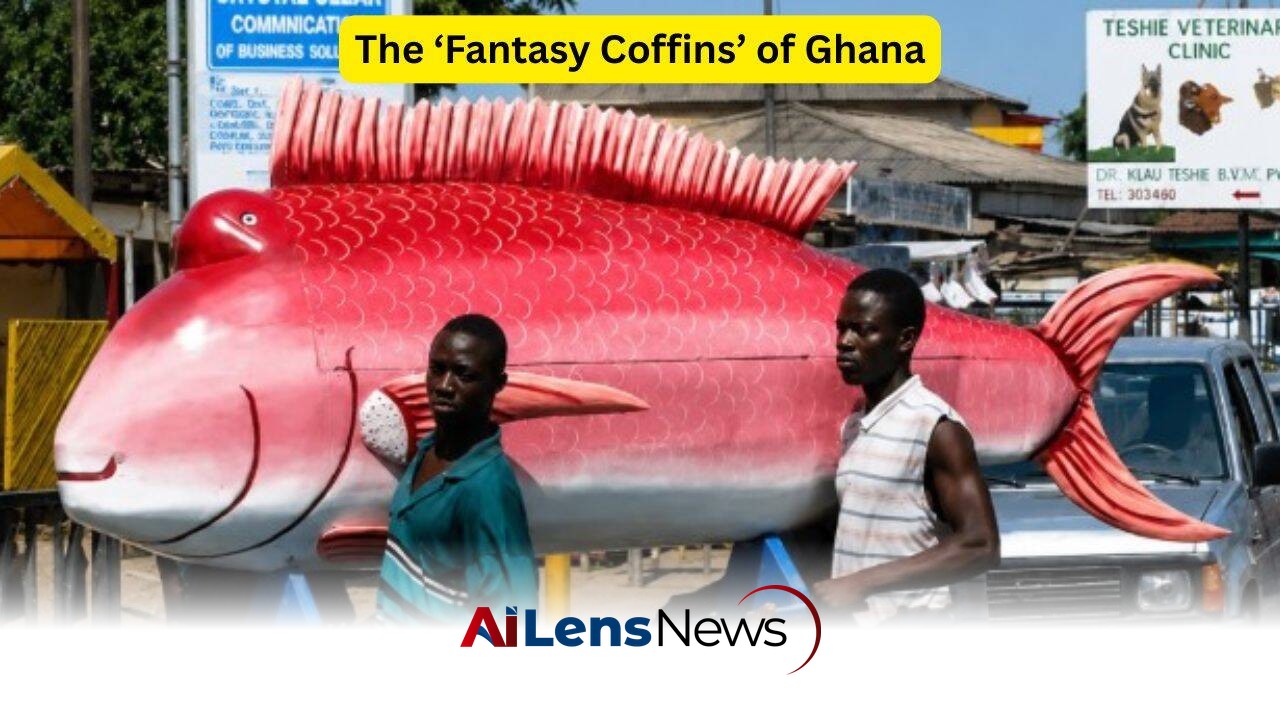


In Ghana, the Ga community transforms funerals into vibrant celebrations with handcrafted coffins shaped like objects that represent the deceased.
New Delhi, India Jul 2, 2026 ALN: In Ghana, a unique tradition transforms death into vibrant art with designer coffins. The Ga community crafts elaborate, handcrafted coffins shaped like objects representing the deceased—ranging from fish for fishermen to airplanes for pilots. This practice, which originated in the 1950s, turns funerals into celebrations of individuality and legacy, offering travelers a profound cultural experience.
The Art of Fantasy Coffins
Fantasy coffins are not merely containers for the deceased; they are a reflection of the person's interests, hobbies, and profession. The craftsmanship involved in creating these coffins is remarkable, showcasing the skills of local artisans who dedicate themselves to this unique form of art. Each coffin is custom-made, often taking weeks to complete, and is designed to capture the essence of the individual it represents. Artisans use various materials, primarily wood, to construct these coffins, and they often incorporate vibrant colors and intricate designs that illustrate the personality or profession of the deceased. The process involves not only skilled woodworking but also painting and embellishing the final product, making each coffin a unique piece of art.
The tradition of fantasy coffins is rooted in the Ga people's beliefs about death and the after. For the Ga, death is not seen as an end but as a transition to another existence. This perspective influences their approach to funerals, where the deceased is celebrated rather than mourned. The coffins serve as a means to honor the deceased's journey and to ensure that their spirit is recognized in the after. The significance of the coffin's design is paramount; it is believed that the more elaborate and personalized the coffin, the better the deceased will be received in the next world.
A Celebration of
Unlike traditional funerals that may focus on mourning, the Ga community views these ceremonies as celebrations of . The vibrant colors and imaginative designs of the coffins contribute to a festive atmosphere, where family and friends gather not only to honor the deceased but also to celebrate their legacy. This cultural approach to death encourages a positive reflection on and the impact one has had on others. During these ceremonies, music, dancing, and storytelling often accompany the viewing of the coffin, creating an environment where memories are shared, laughter is encouraged, and the deceased is remembered fondly.
The fantasy coffins also symbolize the community's values and beliefs. They reflect the importance of individuality and personal expression, as each coffin is tailored to the person's unique characteristics. This practice fosters a sense of connection among the living and the dead, reinforcing community bonds and cultural identity. The act of commissioning a fantasy coffin can involve the entire family, as they collaborate with artisans to ensure that the final design aligns with the deceased's wishes and personality, thus making the funeral a collective effort of love and remembrance.
Travelers' Fascination
For travelers, the fantasy coffins of Ghana offer a unique glimpse into the country's rich cultural heritage. Many visitors are drawn to the idea of witnessing a funeral that embraces creativity and individuality. This experience allows them to engage with local customs and understand the deeper meanings behind the art of fantasy coffins. Tourists often visit the workshops of the artisans, where they can see the painstaking process of coffin-making firsthand. These interactions provide insights into the cultural significance of the coffins and the broader context of Ghanaian funeral practices.
Moreover, the fantasy coffins have gained international attention, with exhibitions showcasing this art form in galleries and museums around the world. This global interest has further solidified the coffins' status as a cultural phenomenon, inviting discussions about death, art, and the ways in which different societies honor their deceased. As travelers share their experiences on social media and travel blogs, the fascination with fantasy coffins continues to grow, encouraging more people to explore Ghana and its rich traditions.
However, this increasing interest also raises questions about cultural appropriation and the commercialization of a deeply personal and spiritual practice. While many artisans welcome the attention and the economic opportunities it brings, there is a delicate balance between sharing their culture with the world and preserving the integrity of their traditions. It is essential for visitors to approach these experiences with respect and understanding, recognizing the significance of the rituals and the artistry involved.
Historical Context
The fantasy coffin tradition began in the 1950s, a time of significant cultural and social change in Ghana. The Ga people, located primarily in the Greater Accra Region, have long had a distinct cultural identity, and their beliefs about death reflect a rich tapestry of history and tradition. The emergence of fantasy coffins coincided with a period when traditional practices were being reinterpreted in the context of modernity. As Ghana gained independence in 1957, there was a resurgence of interest in local customs and a desire to celebrate cultural heritage. The fantasy coffins became a way to express individuality and creativity, allowing families to showcase their loved ones' lives in a manner that was both personal and culturally significant.
This tradition has continued to evolve, with artisans increasingly incorporating contemporary themes and materials into their designs. The coffins now can take on various forms, including cars, fruits, and even symbolic representations of the deceased’s aspirations. This evolution reflects broader societal changes and the ways in which the Ga community adapts to modern influences while maintaining a connection to their roots.
Cultural Significance
The fantasy coffins serve not only as artistic expressions but also as cultural artifacts that encapsulate the values and beliefs of the Ga people. They embody the notion that should be celebrated, and they challenge conventional Western views of death as a somber occasion. In many Western cultures, funerals are often characterized by grief and mourning, whereas the Ga approach invites joy and reflection on the lived. This distinction highlights the diversity of human experiences surrounding death and the myriad ways cultures navigate this universal aspect of existence.
The coffins also play a role in preserving the oral history of the community. As family members share stories about the deceased during the funeral, they contribute to a collective memory that reinforces cultural identity. The fantasy coffins become a focal point for these narratives, serving as a catalyst for storytelling that honors the past while fostering connections among generations.
Conclusion
The ‘fantasy coffins’ of Ghana serve as a powerful reminder that death can be celebrated in ways that honor the deceased's and contributions. This tradition not only enriches the cultural landscape of Ghana but also provides travelers with an unforgettable experience that challenges conventional perceptions of funerals. By engaging with this unique practice, individuals can reflect on their own beliefs about and death, fostering a deeper appreciation for the diverse ways in which cultures navigate these universal experiences. As Ghana continues to share its rich traditions with the world, the fantasy coffins stand out as a testament to the creativity, resilience, and vibrancy of the human spirit in the face of mortality.
To learn more about the latest developments in Home & Living, stay updated with our exclusive reports and analyses on AiLensNews.

