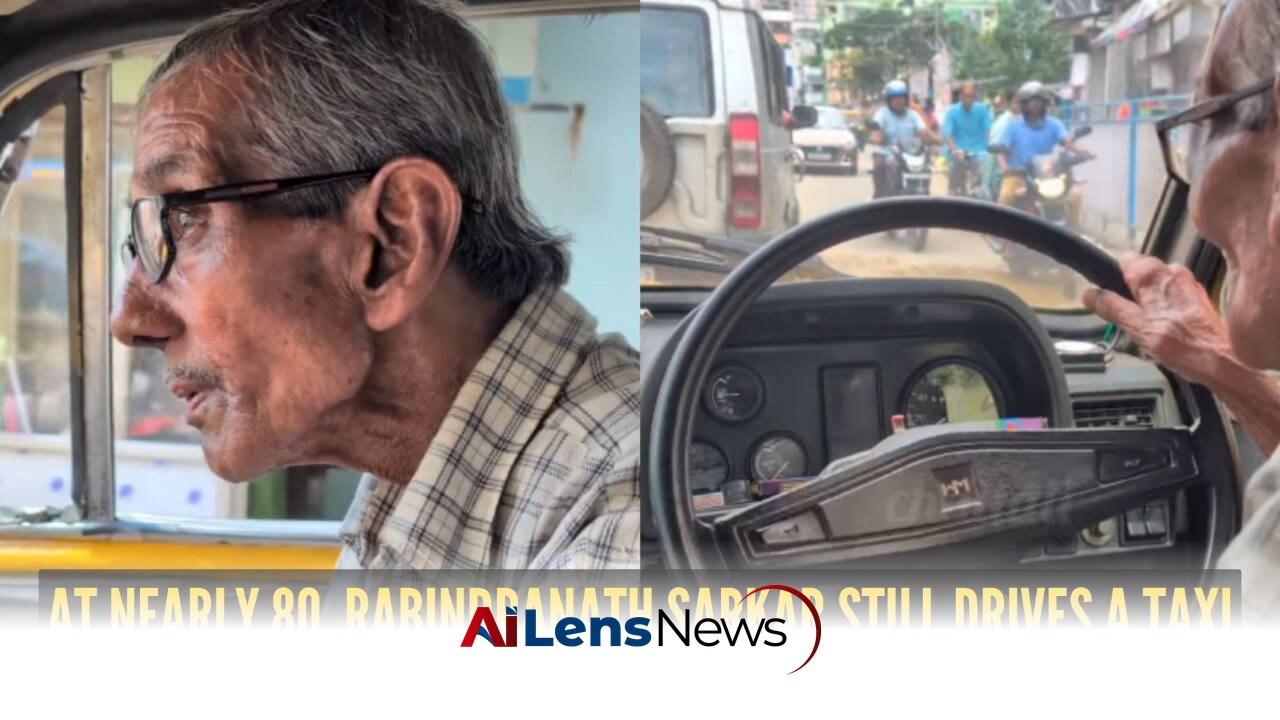


An 80-year-old Kolkata taxi driver works tirelessly to support his ailing wife, showcasing love and commitment amidst financial challenges.
New Delhi, India Jul 9, 2026 ALN: At the age of 80, Rabindranath Sarkar continues to drive a taxi in Kolkata, working an exhausting sixteen hours each day. His primary motivation is to support his ailing wife, who requires ongoing medical care. This dedication to his spouse exemplifies the profound love and responsibility that drives him forward. In a city as vibrant and bustling as Kolkata, where the cacophony of honking cars and the chatter of pedestrians create a unique urban symphony, Sarkar’s story stands out as a poignant reminder of the sacrifices made in the name of love.
Sarkar rents his taxi, which adds to the financial uncertainty he faces daily. Each day is a struggle, as he must earn enough to cover not only the rental cost of the vehicle but also the expensive medicines that both he and his wife need. Their ongoing health conditions place additional strain on their limited resources. The cost of healthcare can be a significant burden, particularly for those who are elderly and on fixed incomes. For many, the challenge is not just about affording treatment, but also about accessing the necessary healthcare services in a timely manner. This reality is compounded for Sarkar, who must balance the demands of his work with the urgent needs of his wife's health.
Despite these challenges, Sarkar has a unique approach to his work. He offers his passengers the option to pay what they feel is fair for the ride. This practice reflects his understanding of the difficulties many people face, as well as his own humble circumstances. It is a testament to his character and his commitment to treating others with kindness. In a city where the cost of living is rising and many people struggle to make ends meet, Sarkar's approach provides a sense of community and mutual support. It fosters a connection between him and his passengers, many of whom are likely to be dealing with their own financial and personal challenges.
His story is not just about survival; it is about unwavering commitment and love. Sarkar's daily routine is a reminder of the sacrifices many make for their loved ones. Each day, he rises early, often before dawn, to prepare for a long day of work. He navigates the busy streets of Kolkata, a city known for its traffic congestion and chaotic road conditions, with a blend of experience and determination. His resilience in the face of adversity showcases the strength of the human spirit, particularly among the elderly who often face marginalization in society. In many cultures, including n society, the elderly are revered for their wisdom and experience; however, economic pressures can some overshadow this respect, leading to situations where older individuals must continue to work long past traditional retirement ages.
In a world where financial pressures can often overshadow personal relationships, Sarkar stands out as a beacon of hope. His dedication to his wife and his willingness to work tirelessly for her well-being highlight the importance of love and responsibility in our lives. This narrative resonates deeply, especially in a society where familial bonds are often prioritized. The sacrifices made by individuals like Sarkar not only reflect personal devotion but also underscore the broader cultural values surrounding marriage, caregiving, and family responsibilities.
As he navigates the busy streets of Kolkata, each passenger he encounters becomes a part of his journey. Through his struggles, he teaches us valuable lessons about compassion, sacrifice, and the enduring power of love. Each interaction with a passenger is an opportunity for connection, where stories may be exchanged, and empathy cultivated. This human element in his work transforms what might otherwise be a transactional relationship into a meaningful exchange, enriching both his and the lives of those he meets.
Moreover, Sarkar’s story sheds light on the broader issue of aging in urban . As the population ages, more individuals find themselves in similar situations, working well into their senior years to support family members or themselves. The challenges faced by elderly workers are often exacerbated by inadequate social safety nets, limited access to healthcare, and rising living costs. Sarkar’s experience highlights the urgent need for policies that support aging populations, including affordable healthcare and pension schemes that can alleviate some of the financial burdens faced by older adults.
In many urban areas, the reality of aging is often overlooked. While younger generations may have the opportunity to pursue education and employment in diverse fields, older individuals like Sarkar frequently find themselves trapped in a cycle of labor that offers little respite. The physical demands of a job like taxi driving can take a toll on an elderly body, raising questions about the sustainability of such work. Additionally, the lack of adequate retirement plans and social security further complicates their situation, leaving many to rely on their own resources and the support of family members.
Furthermore, Sarkar's story is a microcosm of the broader societal issues that challenge many families in . The healthcare system, while improving, still faces significant hurdles, particularly for those in lower-income brackets. Access to quality medical care can be a daunting task, and for many, the cost of medications and treatments can lead to financial ruin. This reality is particularly harsh for elderly couples like Sarkar and his wife, who may find themselves in a position where their health deteriorates faster than their financial resources can manage.
As he continues to drive through the bustling streets of Kolkata, his story resonates with many, encouraging a greater understanding of the sacrifices made by individuals for their loved ones. It challenges us to reflect on our values and the ways in which we can support those around us, particularly the elderly, who often carry the weight of their families on their shoulders. In a world that can some feel disconnected, Sarkar's journey inspires us to foster connections through kindness, empathy, and love.
In conclusion, Rabindranath Sarkar’s as an 80-year-old taxi driver in Kolkata is a compelling narrative of love, resilience, and the human spirit. His dedication to his wife, coupled with his innovative approach to his work, serves as a powerful reminder of the importance of compassion and community in overcoming ’s challenges. As we reflect on his journey, it becomes evident that stories like his are not merely tales of hardship, but also of hope and the enduring bonds of love that can prevail even in the face of adversity. Sarkar's encourages us to recognize the contributions of the elderly in our communities and to advocate for policies that support their dignity and well-being.
To learn more about the latest developments in Relationships, stay updated with our exclusive reports and analyses on AiLensNews.

