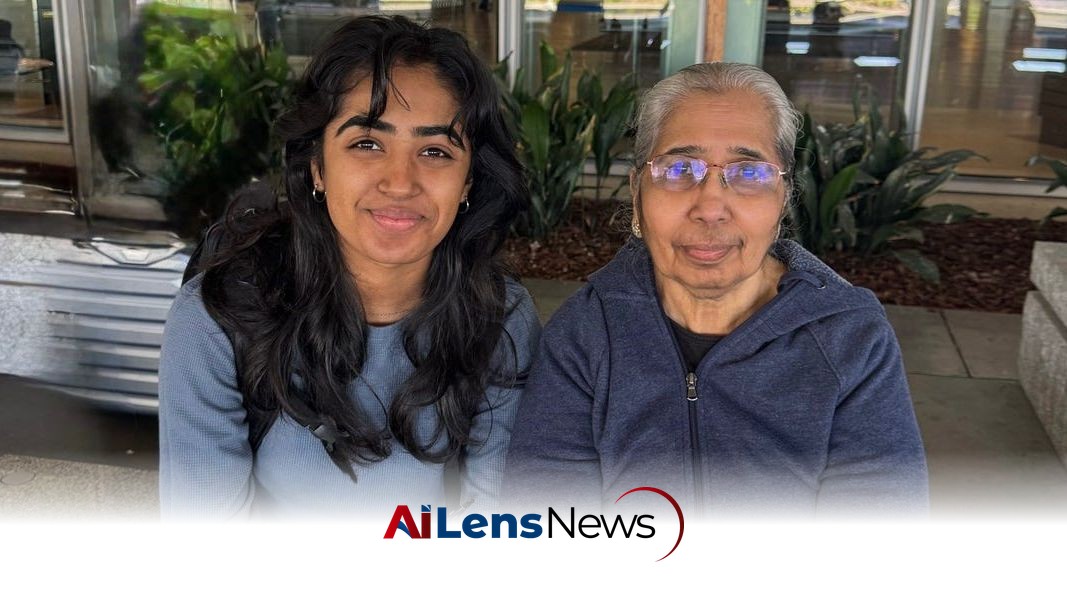


The author reflects on how living with her aging mother has changed her perspective on parenting, mirroring her mother's worries in her own relationship with her daughter.
Washington DC, United States Jul 11, 2026 ALN: I bounded upstairs to retrieve the laundry basket, trying to tack on one more chore before losing the day to my remote job's endless emails and Zoom meetings. The mundane tasks of daily life often feel like a race against time, especially when balancing work and family responsibilities. As I picked up the strewn-out clothes — this is why my husband's a software engineer rather than a basketball player — I noticed my phone screen light up. It was Mom. She's away visiting my sister for a few weeks.
"Are you OK. Send me a message you are OK," her WhatsApp text read. The lack of punctuation in her text is not just a reflection of her not being a native speaker, but an echo of her anxious personality. Above all, it's a symbol of her new reality, a universe where I, her firstborn, unwittingly find myself center stage. The shift from being the child to the caregiver is a role reversal that many individuals experience, but it often comes with emotional complexities and challenges.
When Dad died in India almost a decade ago, I didn't want to deal again with the agony of having an aging parent thousands of miles away, and I insisted Mom move in with us. This decision was not made lightly; it involved a significant emotional and logistical adjustment for everyone involved. The last time I'd lived with my parents was at 17, when I headed to college 1400 miles away, after which life took me around the world and eventually to California and a family of my own. The years in between had shaped my identity and independence, but now I was faced with the reality of my mother's dependence on me.
As Mom and I started to reacquaint ourselves, I grappled with watching my once-strong, independent mother become vulnerable and dependent, a result of biological aging exacerbated by geographical and cultural upheaval. This transition is often fraught with emotional turmoil, as children witness their parents' decline and must navigate their own feelings of sadness and helplessness. Ostensibly, she didn't see me differently, though, peppering me with questions that would have made sense 30 years ago: "Where are you going?" "Why aren't you eating enough?" "When did you get home last night?" These inquiries stem from a place of caring, but they can feel suffocating at times, leading to a tug-of-war between my sense of independence and her instinct to protect.
"I'm fine. I was out for a walk when you called yesterday. I'll call later," I texted Mom back. In that moment, I felt a pang of guilt for my annoyance, realizing that her worries were rooted in love and concern. "I just talked to you yesterday afternoon," I said out loud to the phone. Only Siri heard. As I waited for my work computer to power up, having lost the laundry battle, I picked up my phone and texted my daughter away at college in New York.
"Good morning, my child. I miss you. How are you? Call today." My modus operandi these days is to blame everything on my hormones, a middle-aged gift that keeps on giving. Misplaced keys, names that elude you when the person is in front of you, vanishing nouns when you're desperately trying to explain something, all collateral damage thanks to hormones. Yet, beneath the humor lies a deeper recognition of how these hormonal changes can alter perspectives and emotional responses, making us more reflective about our roles as caregivers.
Two hours later, in the middle of a meeting to discuss metrics on how many code defects were resolved, the irony hit me. I did to my daughter what Mom had done to me. I laughed out loud, and I'm sure my coworkers must have also thought, "Hormones!" This realization was a turning point, highlighting the cyclical nature of parenting and caregiving. It made me acutely aware of the patterns we inherit from our parents, often without realizing it.
My daughter jokes about it all the time. When my husband and I visited her a few weeks ago, I sensed the edges of exasperation on her face and voice, as she grabbed the phone from my hand and took control of a family selfie, a skill I'll never master. "I don't miss Paati (grandma) now," she said, as she handed me the phone back. This playful banter reflects the generational gap and the evolving dynamics of our relationships. Already gifted with tall genes, she has further increased her stride length living in the city. I almost jog to keep pace with her as she turns around and smiles, "Keep up, marathoner!" Was it only 10 years ago when she'd cling to my leg at the sight of strangers?
During spring break, when she was at home, I headed out for a Costco run. Mom reminded me, for the fourth time, to pick up Pepto Bismol. When I asked my daughter what she needed, she told me she'd go shopping on her own. This exchange illuminated the stark contrast between my daughter's growing independence and my mother's increasing reliance on me. At dinner, when I made roti and dal, my daughter stood by me in the kitchen, finely slicing scallions to garnish her high-protein salad, as she delivered a TED Talk on macros and nutrition. Her confidence and knowledge were impressive, reminding me of how far she had come and how quickly children can grow up.
I watched her, spellbound, the same way Mom watches me when I explain digital scams and that not all WhatsApp messages that begin with PLEASE READ CAREFULLY need to actually be read. This moment of connection between generations was bittersweet, as I recognized the roles we play in each other's lives. As I put away laundry, I have a dawning awareness. I recognize all of my mom's clothes, but I wouldn't be able to pick out my daughter's clothes in a laundromat. Some days, I wish I could press pause on the universe. To a time when my mother needs me less, and my daughter needs me more. When Mom wouldn't need me to pick her outfit when we go out to dinner. When Mira would let me go shopping with her. But those moments pass. Thank you, hormones.
At night, I text my daughter again, "Hellooooooo." Unironically. It's the law of the universe. A mother needs her daughter. Who am I to question it? This sentiment encapsulates the essence of motherhood and the inherent need for connection, whether it be between a mother and her aging parent or between a mother and her growing child. The cycle of life continues, with its inevitable transitions, challenges, and joys. Each day brings new opportunities to reflect on the roles we play and the love that binds us, even as we navigate the complexities of caregiving and independence.
To learn more about the latest developments in Relationships, stay updated with our exclusive reports and analyses on AiLensNews.

