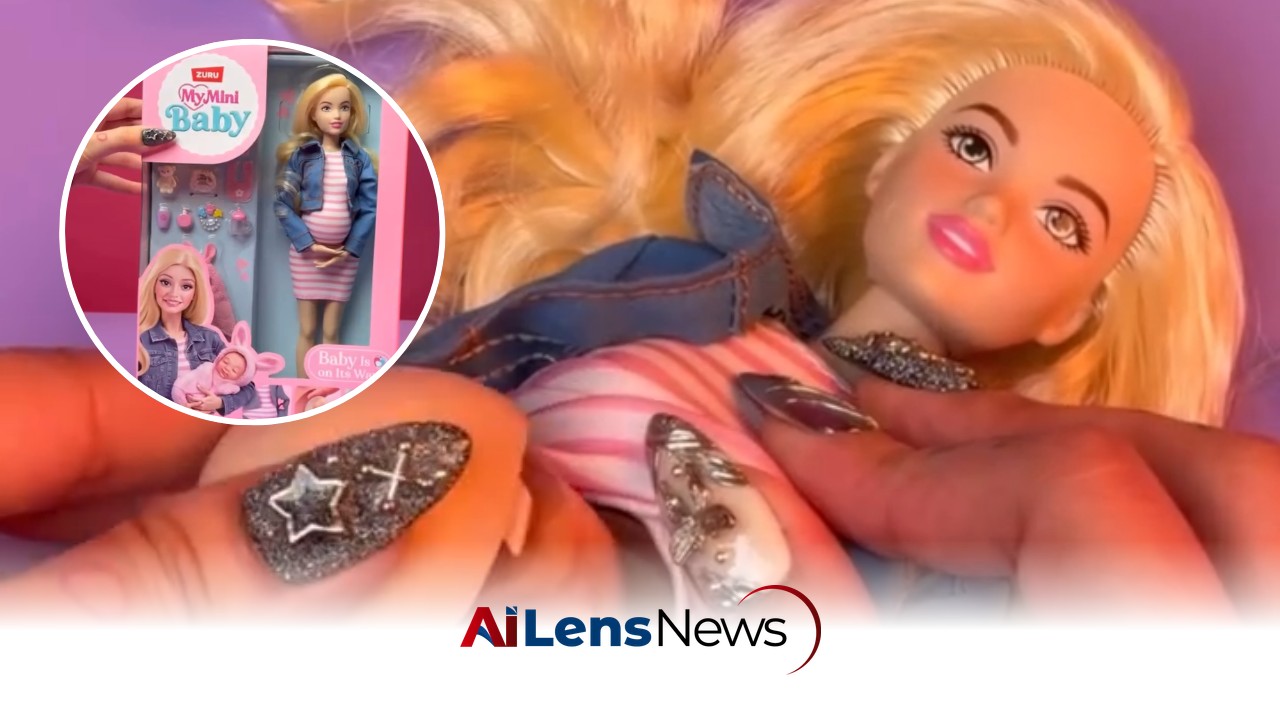


A new doll designed to simulate childbirth has divided opinions online, raising questions about its educational benefits versus its unsettling realism.
New Delhi, India Jul 18, 2026 ALN: A new pregnant doll toy has ignited online discussions about its educational value. The toy, which simulates childbirth with a removable baby and slime, has shocked many viewers. Some parents believe such realistic toys encourage curiosity and conversations about bodies. However, others find the simplified depiction of childbirth unsettling and inaccurate.
This doll, designed to mimic the experience of childbirth, has become a focal point for debates surrounding children's toys and their role in education. Advocates argue that the doll can serve as a tool for teaching children about reproduction and the human body in a safe and engaging way. They believe that introducing such topics early can foster understanding and reduce stigma around natural processes. This perspective aligns with a growing trend in educational philosophy that emphasizes the importance of early sexual education and body awareness as a means of empowering children.
On the other hand, critics express concern over the appropriateness of such a toy for children. They argue that the depiction of childbirth is overly simplistic and may not accurately represent the complexities and challenges associated with the process. Many parents are left questioning whether this type of toy is suitable for young audiences or if it crosses a line into being too graphic. The concern is not just about the toy itself, but also about the implications it has for how children perceive childbirth and their bodies.
As discussions continue to unfold on social media platforms, the doll has sparked a broader conversation about the responsibilities of toy manufacturers. Where should the line be drawn when it comes to educational toys? Should realism take precedence over sensitivity, especially when it comes to topics like childbirth? This question is particularly relevant in a cultural climate where conversations about gender, sexuality, and bodily autonomy are becoming increasingly prominent. Parents are more aware than ever of the messages that toys convey, and many are advocating for products that align with their values and the lessons they wish to impart to their children.
The controversy surrounding the pregnant doll also highlights a significant shift in societal attitudes toward discussing reproductive health and education with children. Historically, these topics have often been shrouded in taboo, leading to a lack of understanding and misinformation. By contrast, proponents of early education argue that discussing reproduction openly can help children form healthy attitudes toward their bodies and relationships. This approach is supported by various educational organizations, which emphasize the importance of age-appropriate discussions about anatomy, reproduction, and consent.
However, the challenge remains in determining what is deemed age-appropriate. The doll's realistic features, including the depiction of childbirth, may be too graphic for some parents, leading to concerns about whether it could cause confusion or anxiety in young children. Critics argue that while education is important, it must be balanced with a child's emotional and cognitive development. They advocate for educational tools that are informative yet sensitive to the developmental stages of children.
In light of this debate, it is essential to consider the implications of introducing such toys into the market. The doll's release raises questions about the role of manufacturers in shaping children's understanding of complex topics. Should they prioritize educational value, or should they be more attuned to the emotional responses of children and their parents? This dilemma is not unique to this particular product but is a recurring theme in the toy industry, where the line between education and entertainment often blurs.
Moreover, the conversation surrounding the pregnant doll reflects broader societal changes regarding parenting and education. Many modern parents are seeking ways to introduce their children to complex subjects in a manner that is both engaging and respectful of their developmental needs. This has led to a demand for toys that not only entertain but also educate. As a result, manufacturers are increasingly exploring innovative designs that aim to strike this balance. However, with innovation comes the responsibility to ensure that products are suitable and beneficial for their intended audience.
As parents navigate these choices, the debate is likely to continue, reflecting diverse opinions on what is suitable for children in today's society. The discussions surrounding the pregnant doll exemplify the challenges that come with parenting in an era where information is readily accessible, and societal norms are evolving. Parents must weigh the potential benefits of educational toys against their own values and the messages they wish to convey to their children.
In conclusion, the introduction of this doll into the market raises important questions about the balance between education and appropriateness in children's toys. It serves as a catalyst for discussions about how society approaches sensitive topics such as childbirth and reproduction. As the dialogue evolves, it will be crucial for parents, educators, and manufacturers to collaborate in creating products that not only educate but also respect the emotional and developmental needs of children. Ultimately, the goal should be to empower the next generation with knowledge while fostering a healthy understanding of their bodies and the world around them.
In addition to the immediate concerns surrounding the doll, it is essential to recognize the broader implications of how toys reflect and shape societal values. Toys are not merely playthings; they are cultural artifacts that convey messages about gender roles, family structures, and social norms. The pregnant doll, in its attempt to educate, also opens up discussions about how society views pregnancy and childbirth. Are these processes celebrated, stigmatized, or simply misunderstood? The way children interact with toys like the pregnant doll can influence their perceptions of these fundamental human experiences.
As discussions about the pregnant doll continue, it is important to consider how this toy fits into the larger context of childhood education. The debate over its educational value raises questions about the effectiveness of different teaching methods and the role of play in learning. Play is a critical component of childhood development, allowing children to explore their environment, express themselves, and develop social skills. Toys that encourage imaginative play can be powerful tools for learning, helping children to process complex ideas and emotions.
Furthermore, the pregnant doll controversy invites a reevaluation of how we approach sexual education in schools and at home. Many educators advocate for comprehensive sexual education that begins at an early age, emphasizing respect, consent, and healthy relationships. Toys like the pregnant doll could complement these educational efforts by providing a tangible, interactive way for children to engage with the material. However, this requires careful consideration of how such toys are introduced and discussed within families and educational settings.
In summary, the pregnant doll toy has sparked a multifaceted debate that encompasses educational philosophy, parental values, and societal attitudes towards childbirth. As the conversation continues, it is essential for all stakeholders—parents, educators, manufacturers, and policymakers—to engage thoughtfully with the issues raised by this product. The goal should not only be to educate children about their bodies and reproduction but also to do so in a way that is respectful, accurate, and developmentally appropriate. By fostering open dialogue and collaboration, we can work towards creating a future where children are empowered with knowledge and understanding, laying the foundation for healthier attitudes and relationships in adulthood.
To learn more about the latest developments in Home & Living, stay updated with our exclusive reports and analyses on AiLensNews.

