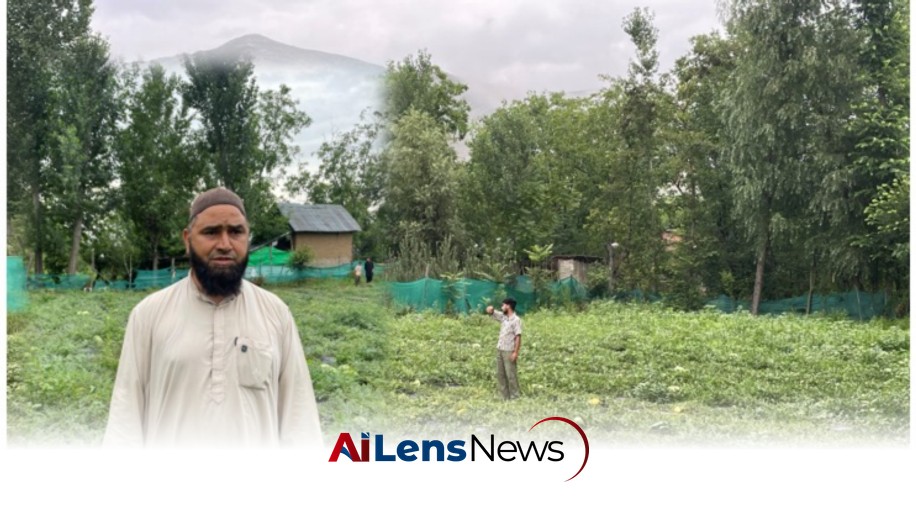


In Cheki-Ishardas, watermelon cultivation has become a vital livelihood for many families, showcasing the village's unique Pashtun heritage.
Leh, India Jul 14, 2026 ALN: Anantnag, a picturesque district in the southern part of Jammu and Kashmir, is known for its rich culture, stunning landscapes, and agricultural diversity. Among its many villages, Cheki-Ishardas stands out not only for its agricultural practices but also for its unique cultural identity rooted in Pashtun heritage. Located approximately 14 kilometers from the main town of Anantnag, this village has seen a remarkable transformation over the years, particularly through the cultivation of watermelon, which has emerged as a vital economic driver for its residents.
The village's Pashtun roots trace back generations, with families believed to have migrated from Afghanistan. This heritage is evident in the local dialect, where residents often converse in Pashto, alongside Kashmiri and Urdu. This linguistic diversity adds a unique flavor to the cultural tapestry of Cheki-Ishardas and sets it apart from other settlements in the region. The community's strong ties to its Pashtun identity are reflected not only in language but also in traditions, festivals, and social practices that have been preserved over time.
Watermelon farming in Cheki-Ishardas began to gain traction in 2008 when farmer Muhammad Aslam Khan decided to take the plunge into this lucrative agricultural venture. Initially, he faced skepticism from fellow villagers who were not convinced of the crop's potential. "I started four times in 2008," Khan recalled, emphasizing the perseverance required to establish a successful farming operation. Despite the initial ridicule, Khan's determination paid off as he gradually expanded his cultivation to cover 70 to 75 canals of land, with his harvest now measured in quintals.
The shift in perception among the villagers is noteworthy. As Khan's farm flourished and the economic benefits became evident, more families began to embrace watermelon cultivation. Today, an impressive 80 to 85 percent of households in Cheki-Ishardas are involved in some aspect of this agricultural endeavor. The collective effort has transformed the village's economic landscape, providing a sustainable source of income for many families.
The economic impact of watermelon farming extends beyond individual farmers. Khan's farm currently employs six workers year-round, each earning a monthly salary of Rs 20,000. This translates to a total monthly wage bill of Rs 120,000, which significantly contributes to the local economy. The employment opportunities created by watermelon farming have helped alleviate unemployment in the area, particularly among the youth, who are often in search of viable livelihood options.
One of the key factors contributing to the success of watermelon farming in Cheki-Ishardas is the diversification of crop varieties. Khan initially started with a single variety of watermelon but has since expanded his offerings to five distinct types. This year, he introduced a yellow watermelon, which is characterized by its vibrant yellow flesh, alongside the more traditional red variety. This strategic move was made in response to changing consumer preferences and market demand.
Khan's observation about shifting consumer tastes underscores the importance of adaptability in agriculture. As consumers become more health-conscious and seek out organic produce, the demand for unique and diverse varieties of fruits and vegetables has increased. By staying attuned to these trends, Khan and other farmers in Cheki-Ishardas are positioning themselves to meet the evolving needs of the market.
In an era where food safety and quality are paramount concerns for consumers, Khan has taken significant steps to ensure that his watermelons are not only delicious but also free from harmful chemicals. He asserts that all the watermelons grown on his farm are 100 percent organic, a claim that is increasingly sought after in a market often saturated with chemically treated produce. To substantiate this claim, Khan has implemented a system of traceability by placing stickers on each watermelon under the brand name "Pakhtoon Agriculture." These stickers feature a barcode that consumers can scan to verify the origin of the fruit.
This initiative not only enhances consumer confidence but also sets Khan's produce apart in a competitive market. He highlights the challenges that buyers face in distinguishing between organic and chemically treated watermelons, making his commitment to organic farming even more significant. Furthermore, the farm's location is available on the map, inviting consumers to visit in person and witness the farming practices firsthand.
The journey of watermelon farming in Cheki-Ishardas has not been a solitary endeavor. Khan acknowledges the support he has received from the Agriculture Department, which has played a crucial role in facilitating the growth of this agricultural project. Officials from the department have visited the farm as part of their oversight responsibilities, providing guidance and resources to help farmers optimize their practices. Khan specifically credits the Agriculture Zone Tailwani in District Anantnag as a vital channel through which this support has been channeled.
The collaboration between local farmers and agricultural authorities highlights the importance of institutional support in promoting sustainable farming practices. By working together, they can address challenges faced by farmers, share knowledge, and implement best practices that enhance productivity and profitability.
As the success of watermelon farming continues to unfold, Khan envisions a future where more individuals can benefit from this cash crop. He emphasizes the potential for watermelon cultivation to serve as a viable livelihood option for unemployed youth in the area. The new farm set up by Khan and his team is designed to be inclusive, offering advice and guidance to anyone interested in entering the field of watermelon farming.
"Anyone who wants to do this work can do it easily," Khan asserts, reflecting his commitment to empowering others in the community. By sharing knowledge and resources, he hopes to inspire a new generation of farmers who can contribute to the local economy and sustain the agricultural heritage of Cheki-Ishardas.
In conclusion, the transformation of Cheki-Ishardas through watermelon farming exemplifies the intersection of agriculture, culture, and economic development. The village’s Pashtun identity, coupled with innovative farming practices and community collaboration, has created a thriving agricultural landscape that not only sustains livelihoods but also preserves cultural heritage. As more families engage in watermelon cultivation, the village is poised to continue its journey of growth and prosperity, serving as a model for other regions seeking to harness the potential of agriculture for economic empowerment.
To learn more about the latest developments in Food & Cuisine, stay updated with our exclusive reports and analyses on AiLensNews.

