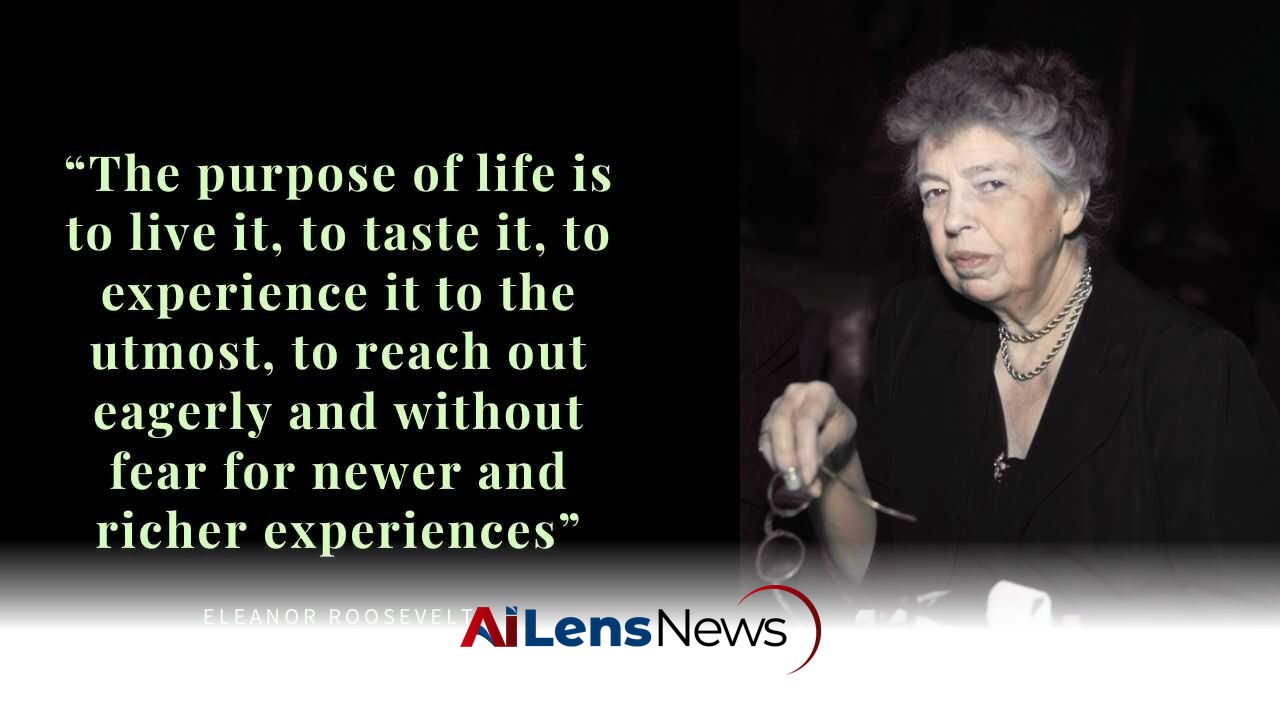


Eleanor Roosevelt encourages travelers to embrace the unknown, highlighting how local cuisine and cultural experiences enrich journeys.
New Delhi, India Aug 14, 2026 ALN: Eleanor Roosevelt, a prominent figure in American history and a champion of human rights, continues to inspire countless individuals to embrace the spirit of adventure. Her advocacy for fearless travel and culinary exploration emphasizes the importance of stepping outside of one’s comfort zone to fully engage with the world. Roosevelt believed that exploring new territories not only broadens one’s horizons but also fosters a deeper understanding of diverse cultures and people.
At the heart of Roosevelt's message is the idea that travel is not merely about reaching a destination; it is about the journey itself. Each new place offers a unique tapestry of experiences waiting to be unraveled. By immersing oneself in local customs, traditions, and, importantly, cuisine, travelers can gain invaluable insights into the heritage of a region. Food, as a cultural artifact, tells stories of the land, its history, and its people. It connects individuals to the essence of a place and often serves as a bridge between different cultures.
Roosevelt’s perspective on travel encourages individuals to embrace uncertainty and the unknown. The act of traveling can be daunting, particularly for those who are accustomed to routine and familiarity. However, it is precisely these challenges that cultivate self-assurance. When individuals venture beyond their usual boundaries, they are often met with new experiences that test their adaptability and resilience. This process of exploration not only enhances personal growth but also enriches one’s understanding of the world.
The culinary aspect of travel is particularly significant. Tasting local foods can evoke a powerful sense of place and identity. For instance, enjoying a traditional dish in its country of origin provides a context that cannot be replicated elsewhere. It allows travelers to engage with the local community, understand their values, and appreciate their way of . Furthermore, culinary adventures can lead to conversations and connections that transcend language barriers, fostering a sense of camaraderie among diverse groups of people.
Roosevelt famously stated, "The purpose of is to live it, to taste it, to experience it to the utmost, to reach out eagerly and without fear for newer and richer experiences." This quote encapsulates her philosophy of living to the fullest. It serves as a reminder that the richness of our experiences often outweighs the significance of the destinations we seek. Each moment spent exploring new cultures and cuisines contributes to the tapestry of our lives, creating memories that last a time.
In a broader context, Roosevelt's call to embrace fearless travel and culinary adventures resonates in today’s globalized world. As barriers between nations continue to diminish, the opportunity to explore diverse cultures has never been more accessible. However, with this accessibility comes the responsibility to approach travel with an open mind and a respectful attitude toward the cultures we encounter. It is essential for travelers to recognize their role as ambassadors of their own culture while also being respectful guests in others.
Moreover, the culinary landscape has evolved significantly over the years, with globalization introducing a myriad of flavors and cooking techniques from around the world. This fusion of culinary traditions offers travelers a chance to experience a diverse array of dishes, each with its own story. The rise of food tourism highlights the growing interest in exploring the world through its culinary offerings. Travelers are increasingly seeking out authentic food experiences, from street food markets to cooking classes, as a way to connect with local communities and gain a deeper understanding of their cultures.
However, it is crucial to approach culinary adventures with cultural sensitivity. As travelers seek out local delicacies, they must be mindful of the cultural significance of certain foods and practices. Engaging with local chefs, families, and communities can provide valuable insights into the traditions and histories behind the dishes, fostering a greater appreciation for the culinary arts.
Understanding the historical context of a region’s cuisine can also enhance the experience of culinary exploration. For example, many traditional dishes have roots in the agricultural practices and climate of the area, as well as in the historical events that shaped the community. By learning about these connections, travelers can appreciate not only the flavors but also the stories that accompany each meal.
The impact of travel on personal development is profound. By confronting the unfamiliar, individuals often discover latent strengths and capabilities. This transformative journey can lead to increased confidence and a more profound sense of identity. Roosevelt’s belief in the power of travel to foster personal growth is echoed in contemporary discussions about the benefits of experiential learning. Engaging with different cultures and cuisines allows individuals to develop empathy and understanding, qualities that are essential in an increasingly interconnected world.
Roosevelt’s legacy also serves as a reminder of the importance of inclusivity in the travel narrative. As travelers engage with various cultures, they should strive to do so in a way that honors and respects the local customs and traditions. This respect fosters mutual understanding and appreciation, which are vital in a world where cultural misunderstandings can lead to conflict. By promoting intercultural dialogue through travel and culinary experiences, individuals can contribute to a more harmonious global community.
Furthermore, the advent of technology has transformed the way people approach travel and culinary experiences. With the rise of social media and travel blogs, individuals can now share their adventures and culinary discoveries with a global audience. This sharing not only inspires others to embark on their own journeys but also creates a platform for cultural exchange. Travelers can learn from the experiences of others, gaining insights into local customs and hidden gems that may not be found in traditional travel guides.
The role of sustainability in travel has also gained prominence in recent years. As travelers become more aware of their environmental impact, there is a growing emphasis on responsible travel practices. This includes supporting local businesses, minimizing waste, and making conscious choices that benefit the communities being visited. Roosevelt’s message of embracing adventure aligns with the principles of sustainable travel, encouraging individuals to explore the world while also taking care of it.
In conclusion, Eleanor Roosevelt's enduring message to embrace fearless travel and culinary adventures encourages individuals to step outside their comfort zones and fully engage with the world around them. By exploring new territories and delving into local cuisines, travelers can cultivate self-assurance, forge meaningful connections, and gain a deeper appreciation for the rich tapestry of human experience. Roosevelt's legacy reminds us that the journey is as important as the destination, and that every experience has the potential to shape our understanding of the world in profound ways. As we continue to explore and share our culinary adventures, let us do so with an open heart and a spirit of curiosity, embodying the essence of Roosevelt's vision for a more connected and understanding world.
To learn more about the latest developments in Travel & Adventure, stay updated with our exclusive reports and analyses on AiLensNews.

