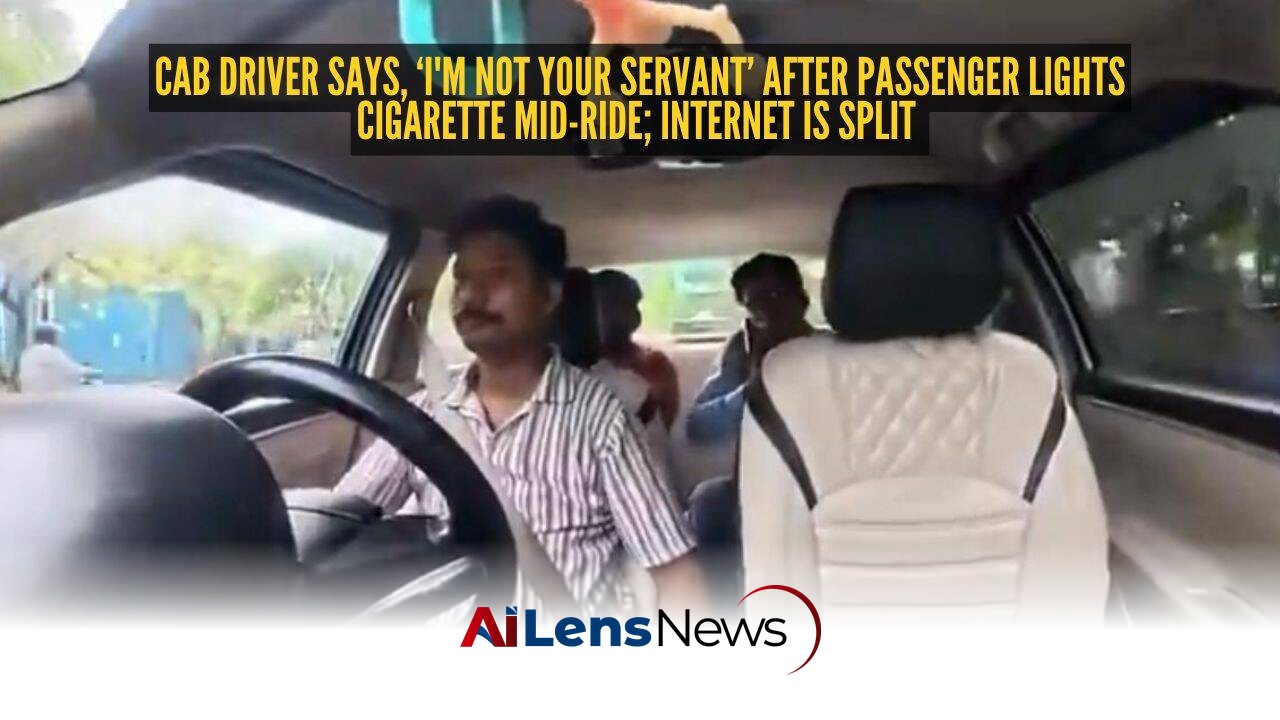


A viral video captures a cab driver confronting a passenger for smoking in his vehicle, igniting a split reaction on social media regarding passenger etiquette.
New Delhi, India Jul 9, 2026 ALN: A recent viral video has brought to light the challenges faced by cab drivers when it comes to maintaining their vehicle's environment. In the clip, a cab driver firmly confronts a passenger who lights a cigarette mid-ride, leading to a heated exchange. This incident underscores the ongoing tensions that can arise in shared spaces, particularly when personal habits clash with the expectations and rights of others.
The driver, visibly upset, refuses to continue the journey and asks the passenger to exit the vehicle. This decisive action has garnered significant attention online, with many social media users expressing their support for the driver's stance. The video has not only sparked discussions about smoking in vehicles but has also opened a broader dialogue about the rights of service providers and the responsibilities of customers.
The incident has sparked a lively debate on various platforms. Many users praised the driver for enforcing his rules and prioritizing the cleanliness and comfort of his vehicle. Comments flooded in, emphasizing the importance of respecting a driver's property and personal space. Supporters of the driver argue that the cab is not just a mode of transportation but also a personal workspace for the driver, where they have the right to impose certain rules to maintain a healthy environment.
Despite the overwhelming support, some users have raised questions about the authenticity of the video. Skeptics argue that the clip may have been edited or taken out of context, leading to a distorted view of the situation. This skepticism highlights the complexities of interpreting viral content in today's digital age. With the prevalence of editing software and the ease of sharing content online, viewers are often left to wonder about the full story behind a viral moment. The debate over the video’s authenticity has sparked discussions about the ethics of sharing content that may not present the whole picture, further complicating public perception of the incident.
This incident serves as a reminder of the ongoing discussions surrounding passenger etiquette and driver rights in the ride-sharing industry. As more people share their opinions online, it becomes clear that the balance between personal freedom and respect for others' spaces continues to be a contentious issue. The ride-sharing industry has grown rapidly, leading to new challenges regarding the interaction between drivers and passengers. With varying expectations and norms across different cultures and regions, establishing a standard for acceptable behavior in shared transportation can be complex.
Moreover, the rise of ride-sharing services has led to a reevaluation of traditional taxi regulations. Many cities have implemented rules to govern the behavior of both drivers and passengers, aiming to create a safer and more respectful environment. However, enforcement of these rules can be inconsistent, leaving drivers to navigate difficult situations on their own. In some cases, drivers may feel compelled to tolerate unacceptable behavior to avoid losing a fare, which can lead to resentment and stress.
From a legal standpoint, the rights of drivers to refuse service based on passenger behavior are generally supported by law, but the specifics can vary significantly by location. In some areas, local regulations explicitly allow drivers to deny service for disruptive behavior, including smoking. However, in other regions, the laws may not be as clear, leading to potential disputes. This incident may prompt further discussions among lawmakers about the need for clearer guidelines and protections for drivers, particularly in the context of health and safety.
Additionally, as public awareness of health issues related to smoking increases, there may be a push for stricter regulations regarding smoking in public transportation, including taxis and ride-sharing vehicles. This could lead to more uniform policies across cities and states, creating a clearer framework for both drivers and passengers.
The video of the cab driver confronting the smoking passenger has resonated with many, highlighting the need for mutual respect in shared spaces. As society continues to grapple with issues of personal freedom versus communal responsibility, this incident serves as a microcosm of larger societal discussions about etiquette, rights, and responsibilities. The ongoing debate surrounding this incident may influence future policies in the ride-sharing industry and beyond, as stakeholders seek to balance the interests of drivers and passengers alike.
Ultimately, the incident reflects broader themes in contemporary society, including the increasing importance of personal space, the rights of service providers, and the expectations of customers. As the dialogue continues, it may pave the way for more comprehensive discussions about how to navigate the complexities of shared environments, ensuring that all parties feel respected and valued.
To learn more about the latest developments in Relationships, stay updated with our exclusive reports and analyses on AiLensNews.

