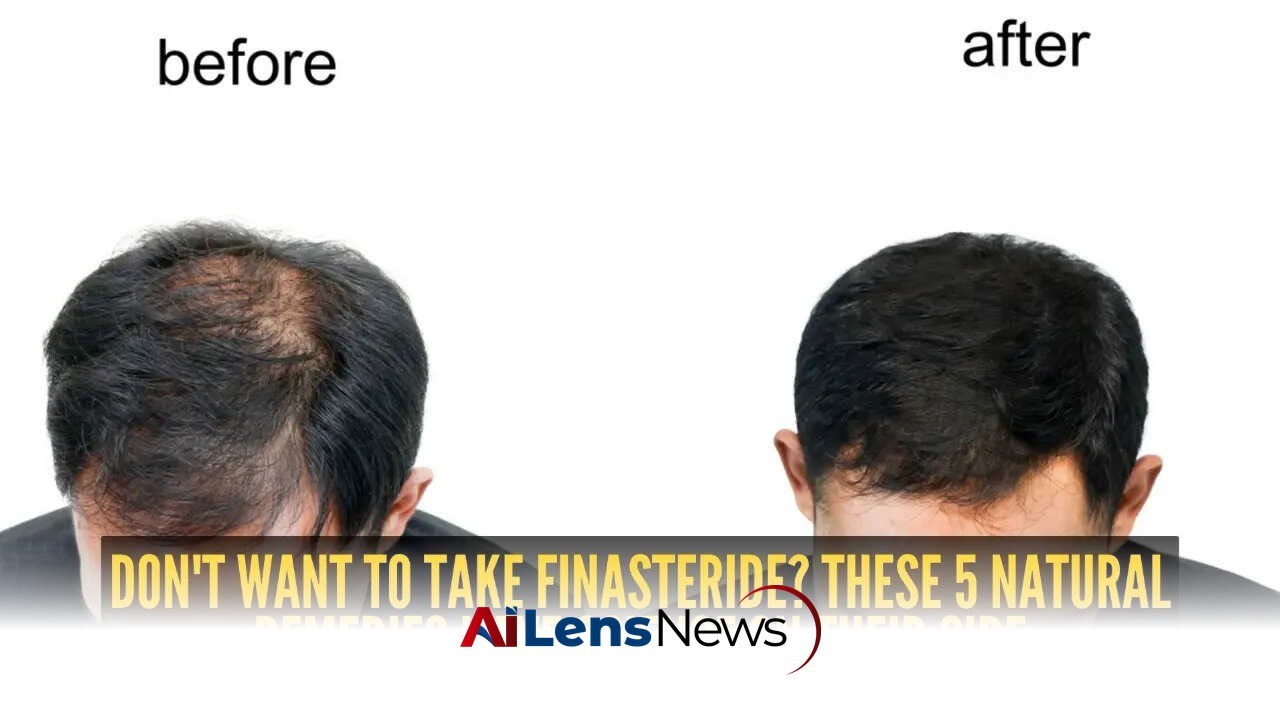


Explore five natural ingredients that may support hair growth as alternatives to finasteride. While not miraculous, they show promise based on research.
New Delhi, India Jul 4, 2026 ALN: Hair loss is a common concern that affects millions of individuals worldwide, leading to a search for effective treatments. Among the various options available, finasteride has emerged as a prominent pharmaceutical treatment for androgenetic alopecia, commonly known as male or female pattern baldness. Finasteride works by inhibiting the enzyme 5-alpha-reductase, which converts testosterone into dihydrotestosterone (DHT). Elevated levels of DHT are linked to hair follicle shrinkage and eventual hair loss. While finasteride has shown effectiveness in clinical trials, some individuals prefer to explore natural alternatives due to concerns over potential side effects or a desire for more holistic treatments. This article delves into five natural alternatives to finasteride that may support hair growth.
1. Saw Palmetto
Saw palmetto is derived from the berries of the Serenoa repens plant, which is native to the southeastern United States. This herbal remedy has gained popularity in recent years as a natural treatment for hair loss. Research suggests that saw palmetto may block the conversion of testosterone to DHT, similar to the mechanism of action of finasteride. A study published in the Journal of Alternative and Complementary Medicine found that men who took saw palmetto showed a significant increase in hair density after several months of treatment. While the exact dosage and method of application can vary, saw palmetto is often available in capsule form, liquid extracts, or topical solutions. However, more extensive clinical trials are necessary to establish its efficacy and safety conclusively.
In addition to its potential benefits for hair growth, saw palmetto has been studied for its anti-inflammatory properties and its role in supporting prostate health. Some men use it as a preventive measure against benign prostatic hyperplasia (BPH), a condition that affects the prostate gland. While the connection between prostate health and hair loss is not fully understood, some researchers believe that addressing hormonal imbalances through saw palmetto may have dual benefits.
2. Pumpkin Seed Oil
Pumpkin seed oil is extracted from the seeds of the pumpkin (Cucurbita pepo) and is rich in essential fatty acids, antioxidants, and vitamins that are beneficial for overall health. Recent studies have indicated that pumpkin seed oil may also have a role in promoting hair growth. Research published in the journal Evidence-Based Complementary and Alternative Medicine demonstrated that participants who consumed pumpkin seed oil experienced a 40% increase in hair count after 24 weeks. The oil is thought to inhibit DHT production, potentially reducing hair loss. Additionally, its high levels of zinc and other nutrients may strengthen hair follicles and promote healthier hair growth. Pumpkin seed oil can be taken as a supplement or applied topically to the scalp for best results.
This oil is not only beneficial for hair growth but also offers other health benefits, such as supporting heart health due to its high content of unsaturated fatty acids. Furthermore, the antioxidants present in pumpkin seed oil can help combat oxidative stress, which is linked to various chronic diseases. As a natural source of nutrients, pumpkin seed oil can be a valuable addition to a balanced diet.
3. Biotin
Biotin, also known as vitamin B7 or vitamin H, is a water-soluble B vitamin that plays a crucial role in the health of hair, skin, and nails. Biotin deficiency can lead to hair thinning and loss, making it an essential nutrient for those looking to enhance their hair growth. While biotin is naturally found in foods such as eggs, nuts, and whole grains, supplementation has become increasingly popular. Studies suggest that biotin supplementation may improve hair thickness and promote growth in individuals experiencing hair loss. However, it is important to note that biotin deficiency is relatively rare, and most individuals can obtain sufficient amounts through a balanced diet. For those considering biotin supplements, it is advisable to consult with a healthcare provider to determine the appropriate dosage.
Biotin’s role in hair health has led to its inclusion in numerous hair care products, including shampoos, conditioners, and topical treatments. While there is anecdotal evidence supporting its effectiveness, scientific research is still ongoing to determine the optimal dosages and forms for hair growth. Additionally, biotin is often marketed as a beauty supplement, appealing to those seeking to improve their overall appearance.
4. Rosemary Oil
Rosemary oil, derived from the leaves of the rosemary plant (Rosmarinus officinalis), has a long history of use in traditional medicine, particularly for its potential to improve circulation and stimulate hair growth. A study published in the journal Skinmed found that rosemary oil was as effective as minoxidil, a common topical treatment for hair loss, in promoting hair growth over a six-month period. Rosemary oil is believed to enhance blood flow to the scalp, which can nourish hair follicles and promote healthier hair growth. Additionally, its anti-inflammatory properties may help to maintain a healthy scalp environment. Rosemary oil can be diluted with a carrier oil and massaged into the scalp or added to shampoos and conditioners for added benefits.
Moreover, rosemary oil is known for its aromatic properties and is often used in aromatherapy practices. Its calming scent can contribute to stress reduction, which is an important factor in overall hair health. Stress is known to exacerbate hair loss in some individuals, and incorporating rosemary oil into a self-care routine may provide additional psychological benefits.
5. Nettle Root
Nettle root, derived from the stinging nettle plant (Urtica dioica), has been used in traditional medicine for centuries, particularly for its anti-inflammatory and diuretic properties. Recent research suggests that nettle root may also play a role in preventing hair loss. Like saw palmetto, nettle root is believed to inhibit the conversion of testosterone to DHT, potentially reducing hair loss associated with hormonal changes. A study published in Journal of Dermatology indicated that nettle root extract could improve hair growth in individuals with androgenetic alopecia. Nettle root can be consumed as a tea, taken in supplement form, or applied topically as an extract to the scalp.
Nettle root is also rich in vitamins and minerals, including iron, calcium, and magnesium, which can contribute to overall health. Its historical use in herbal medicine underscores its potential as a natural remedy for various ailments, not just hair loss. The anti-inflammatory properties of nettle root may also provide relief from other conditions, such as arthritis and allergies.
While these natural alternatives may not work as effectively as finasteride, they offer potential benefits for those seeking to enhance their hair growth naturally. It is essential to understand that results can vary widely among individuals, and the effectiveness of these treatments may depend on various factors, including the underlying cause of hair loss and individual health conditions. The biological mechanisms of hair loss are complex and can involve genetic, hormonal, and environmental factors, making it crucial for individuals to understand their specific situation.
Furthermore, the use of natural remedies should not replace professional medical advice or treatment. Individuals experiencing significant hair loss or other related concerns should consult with a healthcare professional or a dermatologist to determine the most appropriate course of action. This is especially important as some natural remedies may interact with other medications or health conditions. A thorough evaluation by a medical professional can help identify the root cause of hair loss and guide individuals toward the most effective treatment options.
In conclusion, while finasteride remains a popular option for treating hair loss, natural alternatives such as saw palmetto, pumpkin seed oil, biotin, rosemary oil, and nettle root present promising options for those looking to enhance their hair growth through more holistic approaches. As research continues to evolve, these natural treatments may provide beneficial support for individuals seeking to maintain their hair health. The growing interest in natural remedies reflects a broader trend toward holistic health and wellness, as individuals seek solutions that align with their values and choices. As more studies are conducted, the understanding of these natural alternatives will continue to develop, potentially leading to new insights and applications in the field of hair restoration.
To learn more about the latest developments in Health & Wellness, stay updated with our exclusive reports and analyses on AiLensNews.

