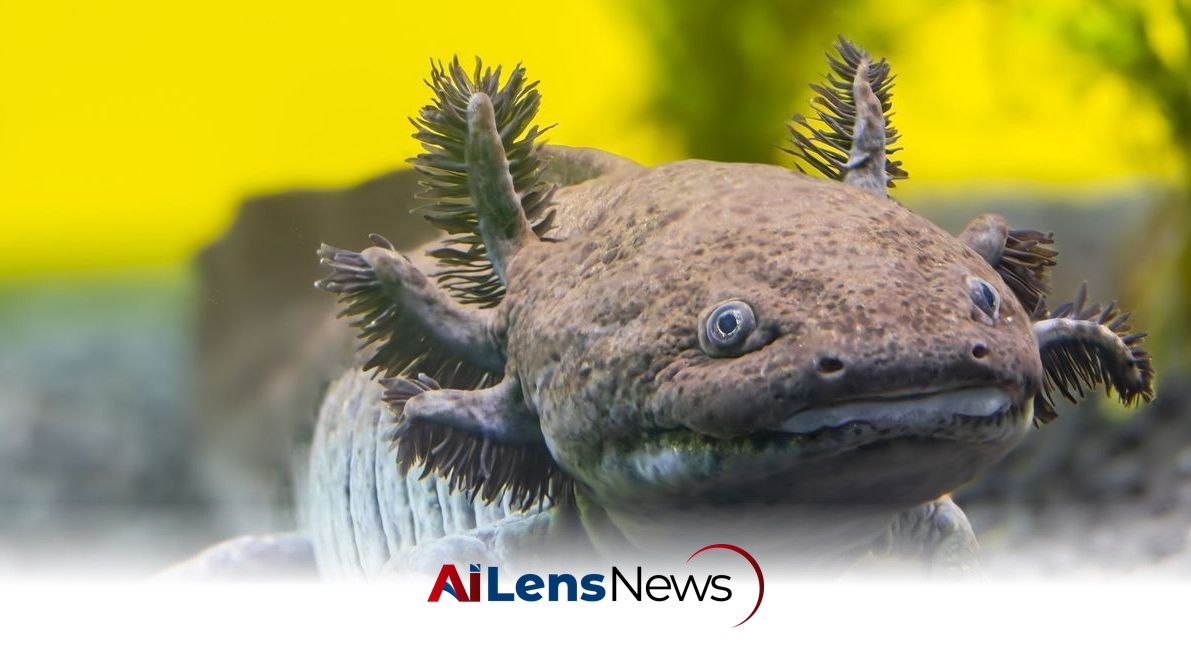


Researchers have discovered a new fossil axolotl species, Ambystoma quetzalcoatli, in Mexico, revealing insights into the evolution of these amphibians.
New Delhi, India Jul 4, 2026 ALN: Researchers at the Zaragoza School of Advanced Studies (FES Zaragoza) at the National Autonomous University of Mexico (UNAM) have made a groundbreaking discovery by identifying a new fossil species of axolotl in the state of Hidalgo. This new species, named Ambystoma quetzalcoatli, marks a significant milestone as it is the first fossil salamander species to be formally described in Mexico and represents the oldest known record of the genus Ambystoma documented within the country. The implications of this discovery extend far beyond the mere identification of a new species; it offers vital insights into the evolutionary history and biodiversity of modern Mexican fauna.
The fossils were unearthed in the municipality of Atotonilco el Grande, located in Hidalgo, a region characterized by a rich geological history. This area was once home to an extensive freshwater lake system that spanned approximately 85 square kilometers. The formation of these lakes is believed to have occurred when the course of the Amajac River was temporarily obstructed. The temperate, subhumid environment of this region has yielded a diverse array of fossils, including numerous plants, diatoms, gastropods, ostracods, beetles, and fish. However, until now, the amphibian remains from this site had not been formally studied or described, leaving a gap in the understanding of the area's past biodiversity.
The research team examined a collection of a dozen fossil salamander specimens that had been gathered in the early 2000s by the FES Zaragoza Paleobotany Research Group. Many of these fossils were remarkably well-preserved, featuring complete, articulated skeletons that facilitated a detailed anatomical analysis and a precise assessment of their morphology. The initial identification of these remains suggested they belonged to a species within the Ambystoma genus, which includes the modern axolotls known today. However, a thorough re-evaluation of the material was conducted by a team led by researchers Jorge Herrera Flores and María Patricia Velasco de León, who employed modern techniques such as computed tomography (CT) scanning and detailed anatomical comparisons with living species to refine their identification.
The researchers' analysis revealed that the fossils collected nearly three decades prior belonged to an entirely new species, distinguished from contemporary axolotls by several significant anatomical differences. The study, published in the journal Palaeontologia Electronica, highlights distinctive features in the skull and skeleton of Ambystoma quetzalcoatli that are absent in living species. Among the most notable differences is an elongated opening on the top of the skull, a uniquely structured palate, variations in the arrangement of cranial bones, and a notable increase in the number of trunk vertebrae—17 in this case, compared to 16 or fewer in modern axolotls.
To accurately establish the fossils' identity, the researchers compared them with 13 extant Ambystoma species, including several endemic to Mexico, such as the Xochimilco axolotl (Ambystoma mexicanum), as well as tiger salamanders from both Mexico and the United States. Utilizing three-dimensional imaging and CT scans available through international scientific collections allowed for a comprehensive comparison. Additionally, the team obtained complete skeletons of the modern salamander Ambystoma velasci, using them as direct references to compare the shape and structure of living bones with those preserved in the fossil specimens.
The scientists also delved into the evolutionary relationships between the fossil salamanders and their living relatives through a comparative analysis of skeletal characteristics. This analysis incorporated results from previous DNA-based studies of modern salamanders, enriching the context of their findings. Their research indicates that, much like living species such as the Xochimilco, Pátzcuaro, and Alchichica axolotls, Ambystoma quetzalcoatli exhibited neoteny, a biological trait that allows an animal to retain juvenile characteristics throughout adulthood. This adaptation typically evolves in stable, isolated lake environments, where there is minimal evolutionary pressure to undergo the complete metamorphosis observed in most other amphibians. The discovery suggests that this life-history strategy was already present in Mexican axolotls during the Pliocene epoch, several million years ago.
Moreover, the anatomical and physiological characteristics identified by the researchers clearly indicate that these fossils represent a previously unknown species. This finding confirms that the evolutionary history of axolotls stretches much further back than previously believed, illustrating that these amphibians have inhabited what is now Mexico for millions of years. The implications of this discovery extend to our understanding of the evolutionary processes that have shaped the rich biodiversity of the region.
In a statement issued by UNAM, the significance of the discovery was emphasized: “The discovery of Ambystoma quetzalcoatli shows that the axolotl lineage has a much older evolutionary history than previously thought, with a presence in Mexico dating back to the Pliocene and an early diversification linked to ancient lake systems. Beyond the identification of a new species, this discovery reinforces the idea that Mexico's modern biodiversity has deep roots in ecosystems that disappeared millions of years ago.” This statement underscores the importance of ongoing paleontological research in uncovering the historical narratives that shape our understanding of biodiversity and evolution.
The identification of Ambystoma quetzalcoatli not only enriches the fossil record of Mexico but also highlights the critical role of paleontological studies in revealing the complexities of evolutionary history. As researchers continue to explore the fossilized remains of ancient organisms, they uncover valuable information that can shed light on how species adapt to their environments over time, how ecosystems evolve, and how biodiversity is shaped by geological and climatic changes. The findings regarding this new axolotl species serve as a reminder of the intricate web of life that has existed on Earth and the importance of preserving the biodiversity we have today.
Additionally, this discovery may have implications for conservation efforts aimed at protecting modern axolotl species, many of which are currently facing threats due to habitat loss, pollution, and invasive species. Understanding the evolutionary history of axolotls can provide insights into their resilience and adaptability, which could inform conservation strategies aimed at ensuring the survival of these unique amphibians in the face of ongoing environmental challenges.
In conclusion, the identification of Ambystoma quetzalcoatli represents a significant advancement in the field of paleontology and offers profound insights into the evolutionary history of axolotls and the biodiversity of Mexico. As researchers continue to delve into the past, they will undoubtedly uncover more discoveries that will enrich our understanding of the natural world and the forces that have shaped it over millions of years.
To learn more about the latest developments in Research & Breakthroughs, stay updated with our exclusive reports and analyses on AiLensNews.

