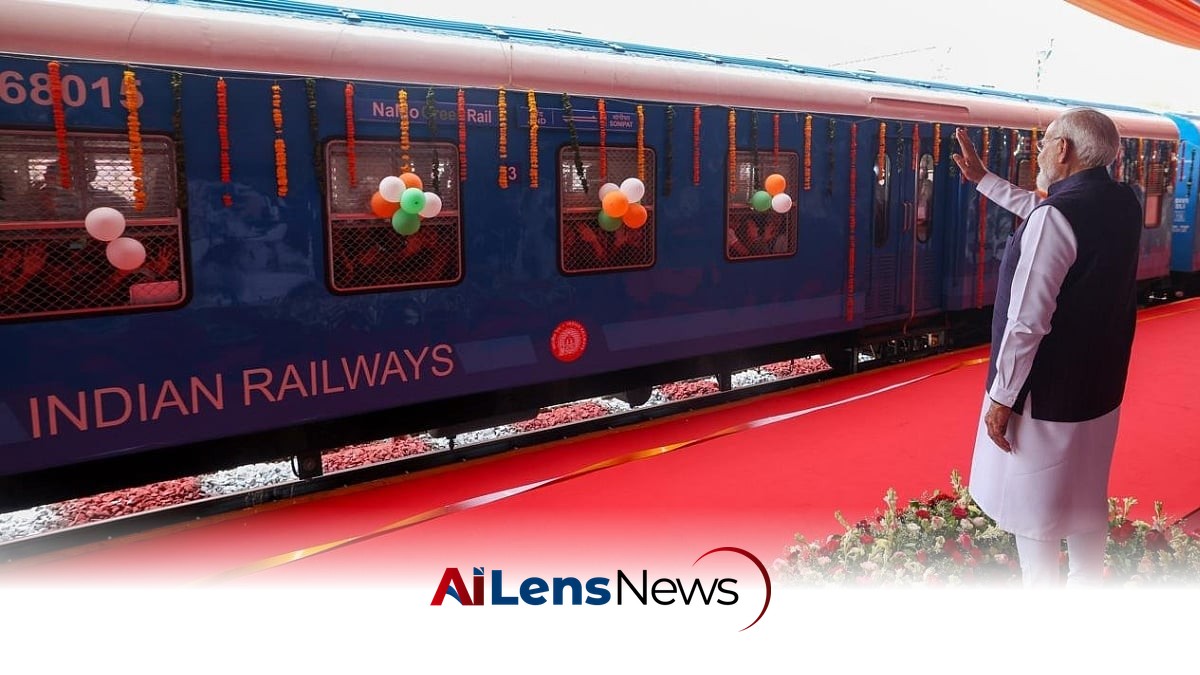


India's first hydrogen-powered passenger train begins service on the Jind–Sonipat route, promoting eco-friendly transportation with affordable fares.
Chandigarh, India Jul 18, 2026 ALN: Jind: India's first hydrogen-powered passenger train will start regular operations on the Jind–Sonipat route in Haryana from Sunday, July 19, marking a major milestone in Indian Railways' push toward clean, eco-friendly transportation.
Commercial operations begin
Earlier on Friday, Prime Minister Narendra Modi flagged off the train. The service, themed as the “NaMo Green Rail”, will be operated and maintained by the Delhi Division of Northern Railway.
"India takes a major leap towards green mobility! In Jind, flagged off India’s first indigenous hydrogen-powered train between Jind and Sonipat. This remarkable achievement reflects the ingenuity and dedication of the Indian Railways team. It is a proud symbol of Aatmanirbhar Bharat and our commitment to cleaner, future-ready transportation," PM Modi posted on X.
Hydrogen train route
The hydrogen-powered train will run between Jind Junction and Sonipat as train numbers 74010 and 74009.
Built by Chennai's Integral Coach Factory (ICF), the hydrogen-powered train will cover the 89-km Jind–Sonipat route in about two hours at a top operational speed of 75 kmph. The Hydrogen Fuel DMU will operate daily, from Monday through Sunday.
Train numbers 74010 and 74009 will operate via Pandu Pindara, halting at 14 stations, including Jind Junction and Sonipat, the route's origin and destination stations.
Which stations will the hydrogen train halt at?
The train will stop at 14 stations along the route: Jind Junction, Jind City, Pandu Pindara, Lalit Khera Halt, Bhambhewa, Ishapur Kheri Halt, Butana Halt, Khandari Halt, Gohana, Rabhra Halt, Lath Halt, Mohana (Haryana), Barwasni Halt, and Sonipat.
Hydrogen train fare
Passengers on the Jind–Sonipat hydrogen-powered train will be charged the same fare as regular DMU services, with no additional cost for travelling on the eco-friendly train.
According to the RailOne mobile app, the ordinary-class fare on the hydrogen-powered train is Rs 10 from Jind Junction to Jind City, while passengers travelling the full Jind–Sonipat route will pay Rs 25.
Background on Hydrogen-Powered Trains
Hydrogen-powered trains represent a significant advancement in the quest for sustainable transportation solutions within the rail industry. Unlike traditional diesel trains that emit greenhouse gases and contribute to air pollution, hydrogen trains utilize hydrogen fuel cells to generate electricity, producing only water vapor as a byproduct. This technology aligns with global efforts to reduce carbon emissions and combat climate change, making it an attractive alternative for countries looking to modernize their transport infrastructure while prioritizing environmental health.
Globally, several countries have already adopted hydrogen trains as part of their public transport systems. In Europe, for instance, Germany has successfully operated hydrogen trains since 2018, showcasing their efficiency and reliability. The success of these initiatives has inspired other nations, including India, to explore the potential of hydrogen as a clean fuel source for rail transport.
Implications for Indian Railways
The introduction of the hydrogen-powered train is a pivotal moment for Indian Railways, which is one of the largest rail networks in the world. The Indian government has set ambitious targets for reducing the carbon footprint of the rail sector, aiming to achieve net-zero carbon emissions by 2030. The deployment of hydrogen trains is expected to play a crucial role in achieving these goals, as they not only reduce dependency on fossil fuels but also enhance energy efficiency.
Furthermore, the initiative could lead to significant cost savings in the long term. Although the initial investment in hydrogen technology and infrastructure may be high, the operational costs are expected to decrease over time as the technology matures and scales up. This transition could also create new job opportunities in sectors related to renewable energy and train manufacturing, contributing to economic growth.
Technological Developments and Future Prospects
The hydrogen-powered train launched on the Jind-Sonipat route is the culmination of years of research and development by Indian Railways and its partners. The Integral Coach Factory (ICF) in Chennai has been at the forefront of this innovation, showcasing India's capability to produce advanced rail technologies in-house. This move towards indigenous manufacturing aligns with the government's Aatmanirbhar Bharat initiative, which promotes self-reliance and local production.
Looking ahead, the success of the hydrogen train on the Jind-Sonipat route may pave the way for further deployment of hydrogen trains across other routes in India. As the demand for sustainable transportation options increases, Indian Railways may explore expanding its hydrogen fleet and investing in the necessary infrastructure, such as hydrogen refueling stations.
Public Reception and Environmental Impact
The public reception of the hydrogen-powered train is expected to be positive, particularly among environmentally conscious travelers. With the growing awareness of climate change and its impacts, many passengers may prefer to use eco-friendly transportation options. The introduction of this hydrogen train could also serve as an educational opportunity, raising awareness about sustainable practices and the importance of reducing carbon emissions in everyday life.
Moreover, the environmental impact of the hydrogen train is anticipated to be significant. By replacing traditional diesel trains with hydrogen-powered alternatives, Indian Railways can substantially lower its greenhouse gas emissions, contributing to national and global climate goals. This shift not only benefits the environment but also enhances public health by improving air quality in regions surrounding train routes.
Conclusion
India's launch of its first hydrogen-powered passenger train marks a significant step towards a more sustainable and environmentally friendly future for rail transportation. As the country continues to invest in clean technologies, the success of this initiative could inspire further innovations and advancements in the rail sector. The Jind-Sonipat route will serve as a model for future hydrogen train projects, potentially transforming the landscape of public transportation in India and contributing to a greener planet.
To learn more about the latest developments in Product Innovations, stay updated with our exclusive reports and analyses on AiLensNews.

