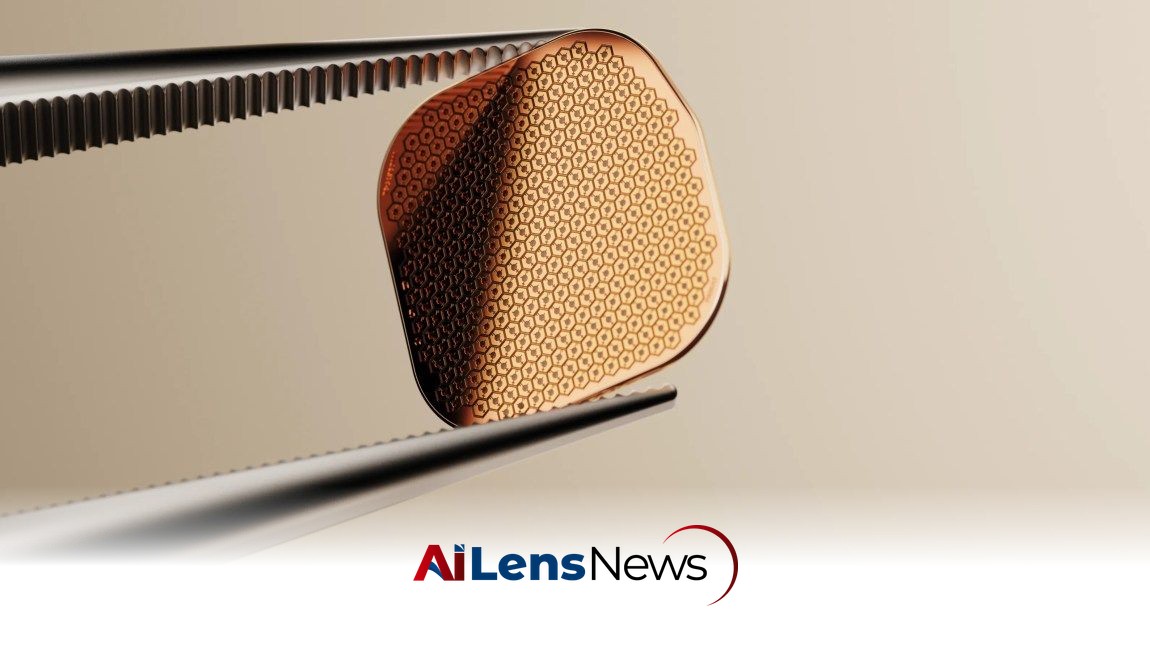


Science Corporation has secured EU approval for its PRIMA device, designed to restore vision lost due to age-related macular degeneration. The device also aims for FDA expedited review for rare blindness treatments.
Washington DC, United States Jul 22, 2026 ALN: Science Corporation, a startup developing novel brain-computer interfaces (BCI), won approval from Europe’s medical device regulator to begin selling a device that restores vision lost from age-related macular degeneration.
The company said the device, called PRIMA, also received a designation from the US Food and Drug Administration that is the first step toward an expedited regulatory review, which could see the device used to treat two rare kinds of blindness.
Millions of people around the world suffer from age-related macular degeneration (AMD), a condition that primarily affects older adults and is a leading cause of vision loss. AMD destroys the light-sensitive cells at the back of the eyes, making it difficult to read, recognize faces, and perform daily activities. This progressive condition can significantly impact a person’s quality of life, leading to increased dependency on others and a greater risk of depression and social isolation.
To use the PRIMA device, patients suffering from vision loss undergo an hour-long outpatient procedure that involves implanting a small chip at the back of their eye. This chip is designed to interact with the remaining healthy retinal cells, enabling the user to perceive visual information. After the implantation, patients wear specially designed glasses equipped with a camera that captures the visual scene and transmits it to the chip. Max Hodak, Science Corp.’s founder and CEO, emphasizes that the product aims to provide functional vision to individuals who have lost it.
“One of our patients in France finished a 300-page novel a little while ago, and sent us the book,” Hodak shared. “We have a sketch on the wall [that] one of our patients drew of the Sydney Opera House. There are videos of patients playing crossword puzzles and filling in Sudoku.” These testimonials highlight the potential of the PRIMA device to significantly enhance the lives of individuals with AMD, allowing them to regain a degree of independence and engagement with the world around them.
Hodak is known as the co-founder and former president of Neuralink, Elon Musk’s brain-computer interface startup. He left Neuralink in 2021 to establish Science Corp., with aspirations to develop a novel BCI that combines silicon chips with living cells. However, before venturing into more complex technologies, the company needed to prove its processes and establish a sustainable business model. “The thing that the space needs is a company making $100 million a year of revenue,” Hodak stated. “There’s this risk that the whole thing enters a winter, and so we think it’s important to build a sustainable business as we develop these longer-term technologies.”
Science Corp. is focused on restoring vision to the blind, particularly for patients whose conditions stem from issues with the light-detecting cells at the back of the eye. After exploring various avenues, the team determined that acquiring Pixium, a French company that developed the PRIMA technology, was the most promising path forward. This acquisition took place in 2024, allowing Science Corp. to leverage Pixium’s existing research and development while utilizing its internal platform to prepare the product for regulatory approval and commercialization.
The PRIMA device is expected to come with a significant price tag, likely costing in the hundreds of thousands of dollars. As a result, Science Corp. and its medical partners in Europe are currently engaged in discussions with healthcare providers regarding reimbursement strategies. The company is laying the groundwork to begin offering PRIMA in Germany, where its clinical trials were conducted, and anticipates that the first procedure could take place as early as September.
Looking ahead, Science Corp. has ambitious plans to enhance the capabilities of the PRIMA device. The company aims to develop a new chip and improve the form factor of its glasses, which currently require a battery pack to operate. The ultimate goal is to create a product that resembles Meta’s augmented reality (AR) glasses, although the power and computational needs for the PRIMA system are considerably more demanding. This endeavor reflects Science Corp.'s commitment to advancing the technology and making it more user-friendly for patients.
In addition to the PRIMA project, Science Corp. is collaborating with Dr. Murat Günel, chair of Yale Medical School’s Department of Neurosurgery, to explore the development of procedures for human trials of a directly implanted bio-hybrid brain sensor. This research could pave the way for future innovations in BCI technology, potentially allowing for even more sophisticated interactions between the brain and external devices.
Hodak emphasizes that successfully bringing the PRIMA device to market is crucial for the company’s long-term vision. He states, “This is the most important thing for the company, because we don’t get to do the bio-hybrid stuff long term if you don’t have a great vision business. That’s what’s really financing the rest of it — that’s the thing that investors know how to build spreadsheets around.” This focus on immediate market viability reflects a broader trend in the BCI industry, where companies are increasingly seeking to establish profitable applications before pursuing more experimental and speculative technologies.
The approval of the PRIMA device by Europe’s medical device regulator marks a significant milestone not only for Science Corporation but also for the field of brain-computer interfaces and vision restoration technologies. As the global population ages, the prevalence of conditions like age-related macular degeneration is expected to rise, underscoring the urgent need for effective treatments. By addressing this critical health issue, Science Corp. is positioning itself as a leader in the emerging market for vision restoration, potentially transforming the lives of millions of individuals affected by blindness.
In conclusion, the journey of Science Corporation and its PRIMA device highlights the intersection of innovative technology and healthcare. As the company navigates regulatory pathways and works towards commercialization, it is also contributing to a growing body of knowledge in the field of brain-computer interfaces. The implications of this technology extend beyond vision restoration, potentially influencing future advancements in neuroscience and rehabilitation, and offering hope to those living with visual impairments.
To learn more about the latest developments in Medical Innovations, stay updated with our exclusive reports and analyses on AiLensNews.

