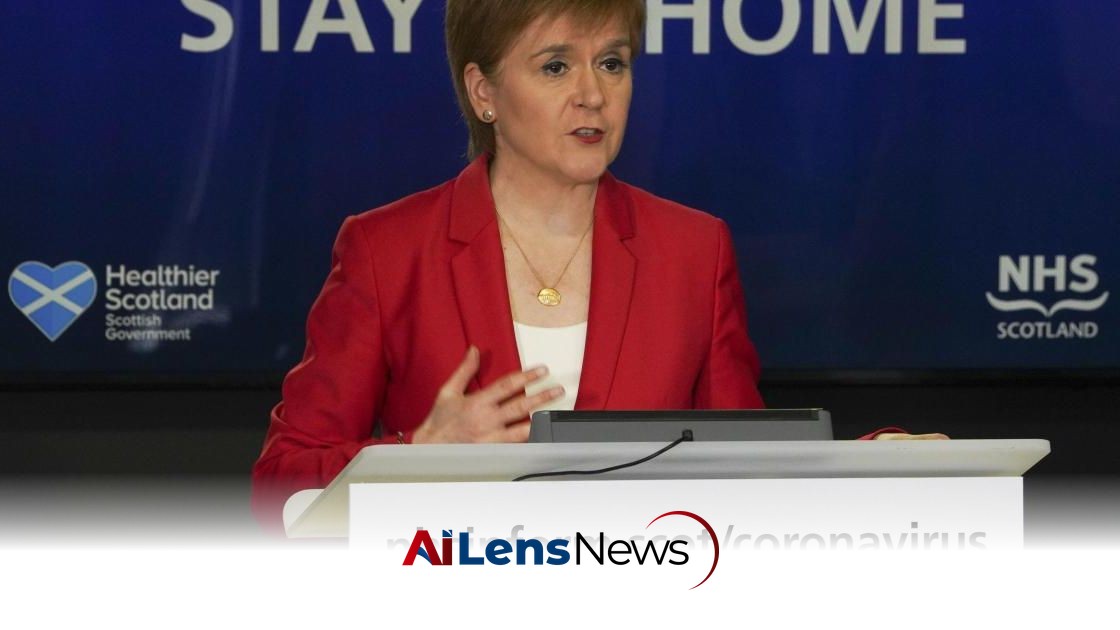


Scottish ministers are developing a national resilience strategy to prepare for a future pandemic that could claim up to 840,000 lives across Britain.
London, United Kingdom Jul 23, 2026 ALN: Scottish ministers are planning for Britain's next pandemic as they develop a new national resilience strategy to prepare for a virus that could claim up to 840,000 lives.
The plans come as officials warn they must be ready for another devastating respiratory virus capable of infecting half the UK's population and leaving around 1.34 million people needing hospital treatment under the government's reasonable worst-case planning scenario.
And ministers say Scotland's islands and remote communities could be among the hardest hit because longer supply routes leave them more vulnerable if another major health emergency disrupts deliveries of food and medicines.
The stark warning is contained in a memo circulated to UK ministers from the Scottish Government over planning for future national emergencies.
Scots government officials say the country must be ready for another devastating pandemic while admitting lessons from the last global health emergency are still being built into future planning.
The stark assessment says the government is planning for a respiratory virus that could last at least nine months.
The warning comes as the UK Covid-19 Inquiry continues to examine how Britain entered the coronavirus pandemic and after its first report concluded there had been serious flaws in the country's resilience and preparedness before Covid struck.
The Scottish Government briefing says a new pandemic scenario within the UK Government’s National Risk Register (NRR) is seen as a grade five "catastrophic risk" - meaning it would have the highest impact.
The pandemic planning scenario is not a prediction of what ministers expect to happen. Instead, it is the government's Reasonable Worst Case Scenario used by emergency planners to ensure the country is prepared if an exceptionally severe respiratory virus emerges.
It assumes 50% of the UK's population fall ill during the course of the pandemic, with about 1.34 million people estimated to require hospital treatment, possibly resulting in up to 840,000 deaths.
The Scottish Government memo warns: "Scotland's rural and island geography can amplify these impacts, with longer supply routes and fewer alternative distribution options making some communities more sensitive to disruption."
"Nicola Sturgeon and Boris Johnson failed us on Covid - and they haven't learned"
Calum Steele: The handling of Covid has left us with a poisonous political legacy
Cash-strapped FOI watchdog delays probe into Sturgeon’s deleted Covid WhatsApps
The Scottish Government says preparing for another pandemic is now one of its highest priorities alongside planning for cyber attacks, severe weather and nationwide power failures.
They confirmed that it is considering the creation of a Scottish Resilience Strategy, which would set out a long-term vision for improving the country's ability to prepare for and respond to major emergencies.
It is confirmed that work is progressing on the scoping of the strategy and that bodies who play a role in protecting people from emergencies will have the opportunity to inform and contribute to its development.
"The strategy would be a publicly available document and therefore accessible to the whole of society, providing transparency and understanding regarding resilience in Scotland," ministers said.
The analysis acknowledges there are still barriers to improving resilience.
Among the challenges identified are differences in local capacity, difficulties turning risk assessments into sustained investment, the complexity of coordinating multiple agencies, limited long-term funding and what it describes as "the need to further embed a genuine whole-of-society approach."
Work is also underway on a crisis preparation programme designed to improve readiness across government departments and identify weaknesses through training exercises before real emergencies happen.
The evidence was distributed to MPs investigating whether the UK is prepared to cope with future national emergencies ranging from pandemics and cyber attacks to blackouts and disruptions to food supplies.
The document says the planning assumptions for a new pandemic were that 4% of those showing symptoms would require hospital care with a case fatality rate of 2.5%. It says the emergency phase alone would last "at least nine months and potentially significantly longer."
The figures dwarf the impact of Covid-19. According to official statistics, more than 232,000 deaths involving Covid have been registered across the UK since the pandemic began, while more than 17,000 deaths involving the virus have been registered in Scotland.
Last week, the UK Covid-19 Inquiry found the lives of NHS staff and patients were put at risk during the pandemic because of a lack of adequate personal protective equipment (PPE), with almost £10 billion of taxpayers' money wasted in a scramble to buy more.
The inquiry said government contingency plans had "never been stress tested" and that officials and ministers were "forced to improvise, establishing new emergency procurement and distribution systems within days".
Inquiry chair Baroness Hallett criticised the "vast" waste in procurement, estimated at £9.9 billion – around two-thirds of the £14.9 billion the Government spent on PPE.
She concluded the UK entered the pandemic with its stockpile of masks, gowns and gloves in a perilous state and was unprepared for the global race to secure supplies.
In Scotland, around £8 million of healthcare equipment, including PPE and Covid testing kits, was later written off by NHS boards.
The Scottish Government says it is reviewing its Preparing Scotland guidance for emergency responders to strengthen planning, including support for people during emergencies, the responsibilities of public bodies and equality considerations.
The submission also says ministers have committed to increasing transparency following recommendations made by the UK Covid-19 Inquiry.
It says the Scottish Government has already published its first Whole System Civil Emergency Preparedness report and has committed to reporting to Parliament at least every three years on preparedness. It has also pledged that the Scottish cabinet will consider regular papers on whole-system civil emergencies.
Its memo said: "Emergencies such as the Covid-19 pandemic had a massive, whole-of-society impact, and lessons are being integrated into current preparedness and resilience activities through the recommendations of the UK Covid-19 Inquiry and Scottish Covid-19 Inquiry."
It adds that ministers are "committed to implementing public inquiry recommendations" and says doing so will contribute towards "building resilience across Scotland."
The concerns extend beyond pandemics.
The briefing warns a nationwide power outage caused by severe weather or a cyber attack could have devastating consequences across Britain.
The Scottish Government says the experience of Covid continues to shape its approach.
And the briefing warns that Scotland faces additional challenges because of its geography.
It says food supplies generally remain resilient but can be disrupted by problems affecting transport, energy, labour shortages or rising costs.
It says: "Overall, the food industry is well placed to manage routine risks, with the main challenge being preparedness for rare, high impact events affecting multiple parts of the supply chain at once."
Officials say similar pressures apply to medicines.
The analysis says pharmaceutical supplies depend on UK-wide "just-in-time" distribution networks and warns Scotland's geography again leaves some communities more exposed during major disruption.
It adds that many non-branded medicines are manufactured in countries including China and India, leaving supplies vulnerable to international events affecting markets, transport or fuel.
The Scottish Covid Inquiry is preparing for its highly anticipated procedural virtual hearing on August 25 which serves as the direct prelude to its major "implementation hearings" scheduled to begin in-person in Edinburgh this October.
To learn more about the latest developments in Health News, stay updated with our exclusive reports and analyses on AiLensNews.

