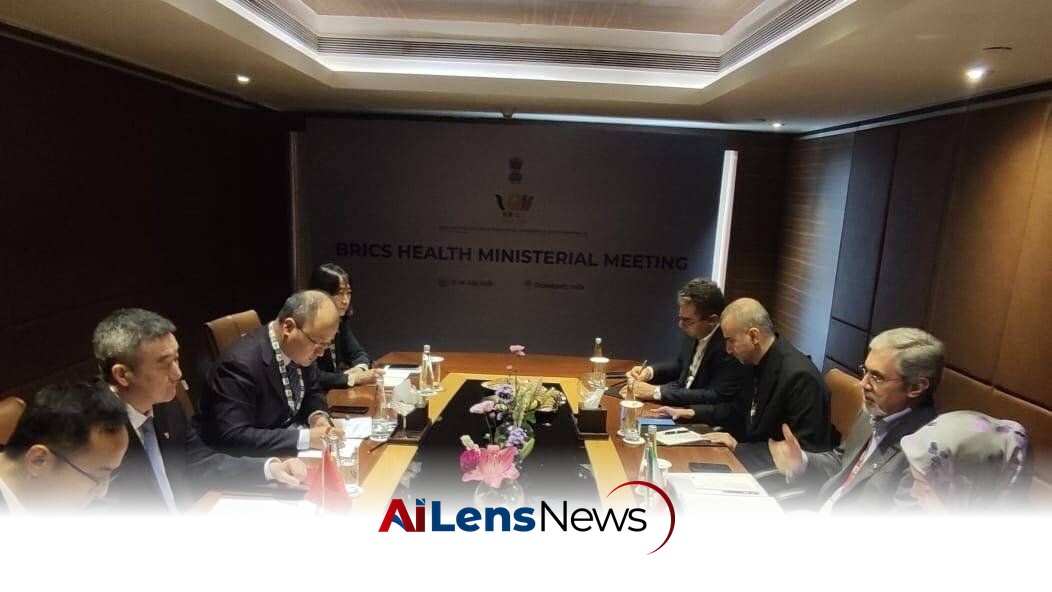


Iranian and Chinese officials discussed enhancing collaboration in the health sector, focusing on pharmaceuticals and medical equipment supply during the BRICS Health Ministerial Meeting.
Tehran, Iran Jul 25, 2026 ALN: Iranian and Chinese officials have engaged in discussions aimed at enhancing cooperation in the health sector, particularly focusing on the supply of pharmaceuticals, raw materials, and medical equipment. This dialogue took place on the sidelines of the 16th BRICS Health Ministerial Meeting, which was held in Chandigarh, India, from July 21 to 25. The BRICS group, which includes Brazil, Russia, India, China, and South Africa, has increasingly become a platform for member countries to collaborate on various sectors, including health, amidst global challenges.
The emphasis on health cooperation between Iran and China reflects a broader trend of strengthening bilateral ties in various domains, especially in light of geopolitical dynamics and economic sanctions that both countries face. The meeting underscored the significance of traditional medicine, which holds a prominent place in both Iranian and Chinese cultures. Ali Jafarian, a senior advisor to the Iranian health minister, articulated the importance of integrating Persian medicine into Iran's national health system. He advocated for an evidence-based approach to ensure the appropriate and safe utilization of traditional medicine, thereby calling for an expansion of ties between the two nations in this sector, as reported by IRNA.
Jafarian also pointed to the potential for research collaboration in vaccine manufacturing within the BRICS framework, emphasizing the capabilities of both Iran and China in the joint development of vaccines. This is particularly relevant in the context of global health crises, such as the COVID-19 pandemic, which highlighted the need for rapid vaccine development and distribution. Sharing knowledge, expertise, and technology between the two countries is seen as a crucial step toward enhancing their health systems and responding effectively to health emergencies.
China’s deputy director for the National Health Commission, Zeng Yixin, expressed enthusiasm for the expansion of bilateral ties, aligning with existing memoranda of understanding between Beijing and Tehran. Zeng acknowledged the cultural significance of traditional medicine in China, noting that it is not only a critical component of the healthcare system but also a vital aspect of the country's cultural heritage. This acknowledgment of cultural commonalities between Iran and China serves as a foundation for deepening health sector cooperation.
Looking ahead, Iran and China have committed to implementing joint programs in the pharmaceutical and medical fields by 2025, as part of a 25-year agreement signed between the two countries. Hamid Inanlou, an official with Iran's Food and Drug Administration (FDA), indicated that these joint programs aim to enhance the commercial, scientific, and industrial capacities of both nations, boost domestic production, and facilitate access to regional markets. This strategic partnership is particularly significant as it seeks to bolster both countries' resilience against external pressures, including sanctions and trade barriers.
The health sector collaboration is set to encompass various areas, including the sharing of expertise and technology, conducting medical research, training healthcare professionals, exchanging specialized human resources, and developing new medicines. Inanlou highlighted the importance of manufacturing medical and laboratory equipment, such as syringes and diagnostic kits, as well as pursuing joint investment initiatives and establishing joint companies. This multifaceted approach is designed to create a sustainable and self-reliant health ecosystem that can withstand external shocks.
In June 2025, Ding Zhisheng, the Vice Premier of the People’s Republic of China, reiterated China’s commitment to enhancing scientific and technological cooperation with Iran under the Belt and Road Initiative (BRI). This initiative, which aims to improve connectivity and cooperation among countries, is seen as a vital framework for fostering collaborative projects in various sectors, including health. During a meeting with Hossein Afshin, Iran's Vice President for Science, Technology, and Knowledge-Based Economy, Zhisheng expressed a desire to effectively implement the Iran-China strategic partnership and promote high-quality cooperation within the BRI framework. He emphasized the goal of developing cooperation in science and technology to yield tangible benefits for the citizens of both countries.
During the 16th BRICS Health Ministerial Meeting, the Iranian delegation played an active role in drafting a declaration and proposing technical and legal measures to strengthen health cooperation among BRICS member states. Iran's approach was characterized by a focus on consensus-building while safeguarding national interests. The delegation underscored the importance of preserving the authority of regulatory bodies, expanding production and research capacities, ensuring equitable access to medicines, vaccines, and health technologies, and promoting cooperation in traditional medicine and mental health.
The Iranian representatives stressed that cooperation within the BRICS framework should evolve beyond mere declarations into actionable initiatives that yield measurable outcomes. They highlighted that access to health products and technologies should remain unobstructed by obstacles that could disrupt supply chains, hinder technology transfer, or delay patients' access to necessary care. This emphasis on practical outcomes reflects a broader desire among member states to translate commitments into real-world benefits for their populations.
Jafarian articulated three key priorities for the development of the ‘BRICS Action Plan’ during the meeting. The first proposal focused on strengthening joint preparedness, which encompasses the development of early warning systems, emergency response networks, and strategies to combat antimicrobial resistance and environmental threats, all while respecting national sovereignty. This is particularly crucial in an era marked by increasing global health threats, necessitating coordinated responses among nations.
The second proposal advocated for developing pharmaceutical innovations, which entails a shift from one-way technology transfer to collaborative research, local manufacturing, and the establishment of resilient supply chains. This approach would not only enhance self-sufficiency in health sectors but also foster innovation tailored to the specific needs of each country.
The third suggestion emphasized the need for enhanced regulatory cooperation. Jafarian announced Iran’s readiness to participate in BRICS Good Practices (GxP) initiatives, highlighting the importance of sharing experiences and reducing duplication of efforts. This would help accelerate access to safe, high-quality medicines, which is a critical component of effective healthcare delivery.
Despite the challenges posed by external pressures, including recent illegal attacks against Iran by the US and Israeli forces that targeted hospitals, health staff, and the pharmaceutical supply chain, Jafarian noted that the provision of essential health services in Iran remained uninterrupted. He cited a noteworthy initiative during a 40-day wartime crisis in March, during which 15 complex liver transplant surgeries were successfully performed in Tehran. This resilience serves as a testament to the capabilities of Iran's healthcare system, even in the face of adversity.
In conclusion, Iran's commitment to expanding cooperation in various health fields, including tuberculosis research, the development of new vaccines, and advanced diagnostics, underscores the importance of international collaboration in addressing global health challenges. The ongoing dialogues with China and other BRICS nations reflect a strategic approach to building a robust health infrastructure that can respond effectively to both current and future health crises.
To learn more about the latest developments in Health News, stay updated with our exclusive reports and analyses on AiLensNews.

