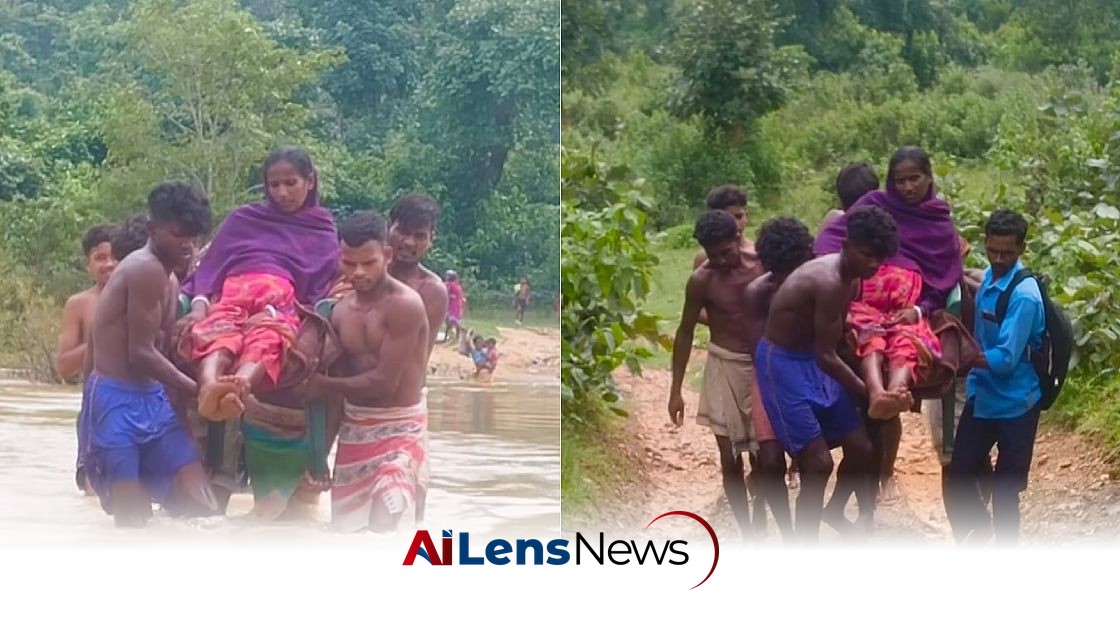


In Jharkhand, villagers had to carry a pregnant woman across a swollen river due to lack of infrastructure, highlighting ongoing rural challenges.
New Delhi, India Jul 14, 2026 ALN: In a striking example of inadequate rural infrastructure in Jharkhand, villagers were compelled to carry a pregnant woman in labor on their shoulders across the swollen Karkari River. The incident occurred in Savmarangbeda village, located in the Arki block, which currently lacks an all-weather road and a bridge. This situation highlights the ongoing challenges faced by rural communities in India, particularly in regions prone to heavy rainfall and flooding.
The Karkari River, like many rivers in the region, can swell dramatically during the monsoon season, which typically runs from June to September. This annual occurrence often leads to severe flooding, isolating villages like Savmarangbeda from essential services. In this case, the swollen river completely severed the village's access to the main road, making it impossible for an ambulance to reach the area in a timely manner. The lack of reliable transportation infrastructure not only complicates immediate medical emergencies but also affects the overall quality of life for residents.
Following the perilous crossing, the woman was taken to the Arki Community Health Centre, where she successfully delivered her baby. Reports indicate that Somvari Devi went into labor as the Karkari River swelled due to heavy rainfall. Faced with this emergency, her husband, Manguchhata Nag, along with other villagers, carried her on their shoulders, braving the strong current to reach the hospital. Such desperate measures underscore the lengths to which residents must go to access basic healthcare services, showcasing a significant gap in rural healthcare infrastructure.
Upon arrival at the Arki Community Health Centre, medical staff confirmed that both the mother and newborn were healthy and stable after the delivery. However, this incident raises broader questions about the reliability of healthcare access in rural areas, especially during adverse weather conditions. The experience of Somvari Devi is not an isolated case; many villagers have similar stories of struggle and hardship when facing medical emergencies.
Villagers expressed their frustration over the absence of a bridge over the Karkari River, which isolates the village from the outside world every monsoon season. They highlighted that patients, pregnant women, elderly residents, and schoolchildren face significant hardships due to this lack of infrastructure. “Often, the lack of timely medical treatment leads to critical situations. Pregnant women are taken to hospitals only after crossing the river in Khunti,” shared a villager who wished to remain anonymous. This statement reflects the broader sentiment among residents regarding the urgent need for improved infrastructure that can withstand seasonal weather challenges.
The implications of inadequate infrastructure extend beyond immediate health concerns. Access to education, economic opportunities, and social services are also severely impacted. Children in rural areas often face difficulties in attending school due to the dangerous conditions created by seasonal flooding. Furthermore, the inability to reach markets or healthcare facilities can hinder economic activity and contribute to a cycle of poverty that is difficult to escape. This cycle is particularly concerning in a country like India, where rural populations make up a significant portion of the overall demographic and where economic disparities are pronounced.
Despite numerous appeals to local authorities and elected representatives for the construction of a bridge and a paved road, no concrete action has been taken thus far. The villagers are left to navigate these dangerous conditions every year, and their plight raises questions about governmental responsibility and the prioritization of rural infrastructure projects. In many cases, rural communities feel overlooked by policymakers who may focus more on urban development, leaving these villages to cope with inadequate resources and infrastructure. This neglect can exacerbate existing inequalities, making it increasingly difficult for rural populations to access the same opportunities available to their urban counterparts.
Mukhiya Mansay Munda reiterated that repeated requests have been made to everyone from the local MLA to the district administration, yet no solutions have been found. “Until a bridge is built over the Karkari River and a road is constructed to the village, the residents will continue to risk their lives in this manner every monsoon season,” he stated. His comments reflect a growing frustration among residents who feel their voices are not being heard in the political arena. The lack of responsiveness from authorities can lead to a sense of hopelessness among villagers, who may feel that their needs are not prioritized or valued.
The situation in Savmarangbeda is not unique to this village but is emblematic of the broader challenges facing rural communities across India. Many villages are similarly situated, lacking essential infrastructure that can support their needs. The government has launched various initiatives aimed at improving rural infrastructure, such as the Pradhan Mantri Gram Sadak Yojana (PMGSY), which aims to provide all-weather roads to unconnected villages. However, the implementation of such programs often faces bureaucratic delays, corruption, and inadequate funding, leading to a gap between policy and reality. This gap can result in significant delays in project completion, leaving communities in limbo and without the resources they desperately need.
In conclusion, the incident involving Somvari Devi and the villagers of Savmarangbeda serves as a poignant reminder of the critical need for infrastructure development in rural areas. As climate change continues to exacerbate weather patterns, the urgency for robust infrastructure that can withstand seasonal challenges becomes even more pronounced. The villagers' plight underscores the importance of community advocacy and the need for government accountability in addressing the infrastructural deficits that endanger lives and livelihoods in rural India. It also highlights the necessity for a more equitable distribution of resources and attention from government bodies, ensuring that rural areas receive the same level of care and investment as urban regions. Without significant changes, the cycle of neglect will likely continue, perpetuating the struggles faced by rural populations in accessing basic services and improving their quality of life.
To learn more about the latest developments in Health News, stay updated with our exclusive reports and analyses on AiLensNews.

