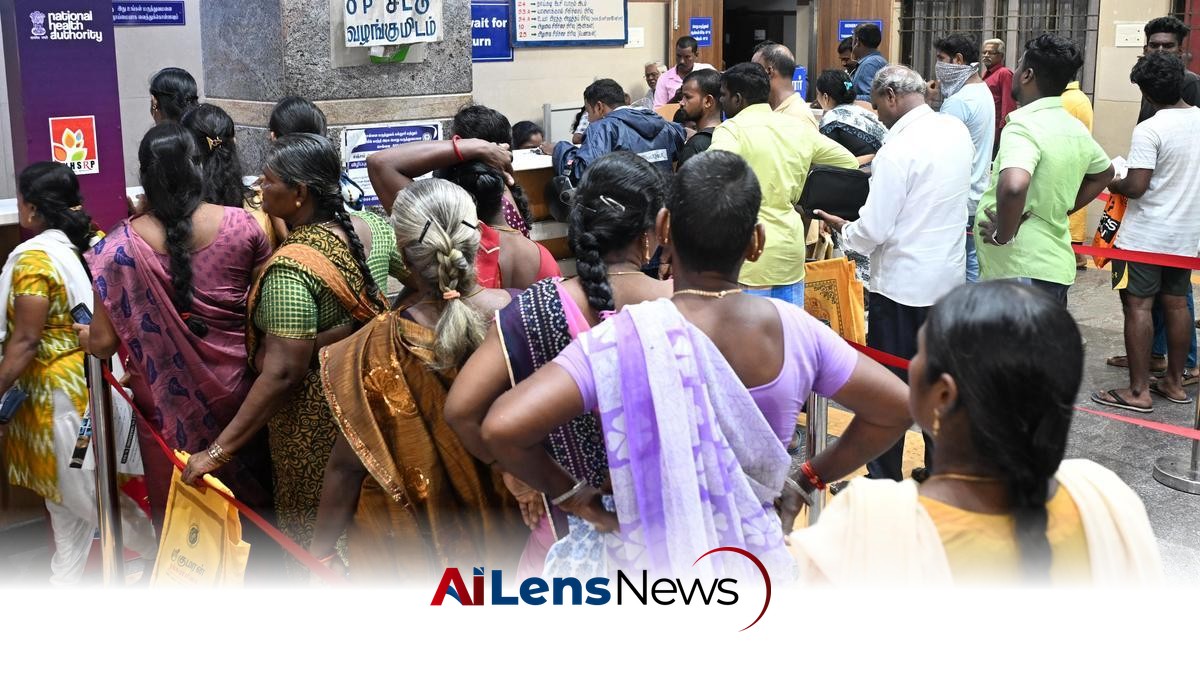


The creation of Ayushman Bharat Health Accounts (ABHA) has surged, with over 2.54 crore accounts established, enhancing digital health records across government facilities.
Chennai, India Jul 20, 2026 ALN: The government has significantly increased the creation of Ayushman Bharat Health Accounts (ABHA), with 2.54 crore accounts established so far. This initiative represents a pivotal step in India's ongoing efforts to digitize its healthcare system, making healthcare access and management more efficient and streamlined for millions of citizens. The expansion of ABHA is part of a broader strategy to integrate technology into healthcare, aiming to improve patient outcomes and enhance the overall efficiency of the healthcare delivery system.
The Ayushman Bharat Digital Mission (ABDM), which was launched in 2021, aims to create a comprehensive digital health records ecosystem in India. Central to this mission is the ABHA, a 14-digit unique health identifier generated using an Aadhaar number. This identifier not only serves as a means of authentication but also as a central repository for an individual's health data, enabling better tracking and management of health records across various healthcare providers. The use of Aadhaar, a biometric identification system, ensures that the process of account creation is secure and linked to a verified identity, promoting trust in the digital health system.
Over the years, government health facilities, including primary health centers, have been actively creating ABHA for patients. The recent integration of ABHA with the State’s Health Management Information System 3.0 (HMIS 3.0) marks a significant advancement in this initiative. HMIS 3.0 is an upgraded digital system designed to streamline healthcare processes, enhance data accuracy, and ensure seamless integration across all government healthcare facilities. This integration is crucial as it allows for real-time updates and access to patient data, thereby improving the quality of care provided. By ensuring that health data is consistently updated and accessible, healthcare providers can make more informed decisions, leading to better patient outcomes.
India's healthcare landscape is vast, with a population of approximately 1.4 billion. Out of this, nearly 50% rely on government hospitals for their healthcare needs. The ambitious goal set by the government is to create ABHA IDs for at least 50% of the population as a first step towards a more digitized healthcare framework. This initiative aims not only to enhance individual access to health records but also to improve overall public health outcomes by facilitating better data sharing and management across facilities. The establishment of a digital health framework is expected to reduce the burden on physical infrastructure and help manage the healthcare demands of a growing population.
To further promote the adoption of ABHA, efforts are being made to increase visibility among individuals visiting government hospitals. This includes the establishment of 'May I Help You' desks, which are designed to assist patients in understanding the benefits of ABHA and guide them through the account creation process. While the initiative has not yet been expanded to government headquarters hospitals, plans are in place to implement it at both headquarters hospitals and medical college hospitals in the near future. This proactive approach aims to educate patients about the advantages of having a digital health account, such as easier access to their health records and the ability to share this information with healthcare providers seamlessly.
Officials have noted that ABHA serves multiple stakeholders, including doctors, patients, and policymakers. By facilitating the creation of digital health records, ABHA reduces reliance on physical medical records, which can often be lost or mismanaged. Under this system, ABDM-enabled hospitals can upload patients’ medical records, including doctors’ prescriptions, laboratory reports, and diagnostic images such as CT scans. This digital transformation allows patients to access their records easily through a personal health record (PHR) application on their mobile phones. Moreover, if they visit any other ABDM-enabled facility, doctors can view the records with the patient’s consent via the PHR app, ensuring continuity of care and improving the overall patient experience. The ease of access to health information fosters a more engaged patient population that can take an active role in their healthcare decisions.
One of the key features of the ABHA system is that its creation is based on consent, providing individuals with control over their health data. Multiple methods are available for account creation, including one-time password (OTP) and biometric authentication, ensuring that the process is both secure and user-friendly. This secure and interoperable digital health account allows individuals easy access to their health records, which is particularly important in a country where many patients may visit multiple healthcare providers for different issues. The design of the ABHA system emphasizes user-centric principles, aiming to facilitate not just access but also the management of health information by individuals.
Despite the significant benefits of digital health initiatives like ABHA, there are concerns that need to be addressed. A government doctor at a medical college hospital remarked that while digital health is beneficial in this technology-driven era, certain issues such as privacy breaches and data theft must be closely monitored. This underscores the importance of implementing robust cybersecurity measures to protect sensitive health information from unauthorized access. The government has recognized these concerns and is working on establishing stringent data protection regulations to ensure that patient information remains secure and confidential.
Additionally, doctors have emphasized the necessity for all hospitals to have the required infrastructure to support the HMIS and ABHA integration. This includes the availability of computers, reliable WiFi connectivity, and sufficient manpower to manage the digital systems effectively. Without these essential components, the full potential of the Ayushman Bharat Digital Mission cannot be realized, and the benefits of digital health records may not be fully accessible to all patients. The government is actively investing in upgrading healthcare infrastructure to support these digital initiatives, ensuring that even remote and underserved areas have access to the necessary technology.
The expansion of Ayushman Bharat Health Accounts is not just about digitization; it represents a broader vision for the future of healthcare in India. By creating a more interconnected health ecosystem, the government aims to reduce inefficiencies, enhance patient care, and ultimately improve health outcomes for millions of individuals. The integration of technology into healthcare is expected to lead to more personalized care, as healthcare providers can access comprehensive health histories and tailor treatments accordingly. As this initiative continues to grow, it will be essential for stakeholders at all levels to collaborate, ensuring that the transition to a digital health framework is smooth, secure, and beneficial for all citizens.
In conclusion, the establishment of 2.54 crore Ayushman Bharat Health Accounts marks a significant milestone in India's healthcare journey. With continued efforts to integrate these accounts into the larger healthcare ecosystem, the government is poised to revolutionize how healthcare is delivered and managed across the country. The implications of this initiative extend beyond mere record-keeping; they touch upon the very fabric of public health policy, patient empowerment, and the future of medical practice in India. As the digital health landscape evolves, it will be imperative for all stakeholders, including government entities, healthcare providers, and patients, to engage actively in shaping a system that prioritizes health equity, accessibility, and quality care.
To learn more about the latest developments in Health News, stay updated with our exclusive reports and analyses on AiLensNews.

